Bedrooms Beneath the Eaves: Turning Attic Angles into Restful Retreats
Sloping ceilings, tucked-away windows and beautifully awkward corners can become the ingredients of a deeply restful bedroom. Explore imagined attic retreats where thoughtful storage, soft light and natural materials make every angle feel intentional.
AI-generated concept imagery. These illustrations are not documentary photographs or proof that a place exists.
Dreams of Legend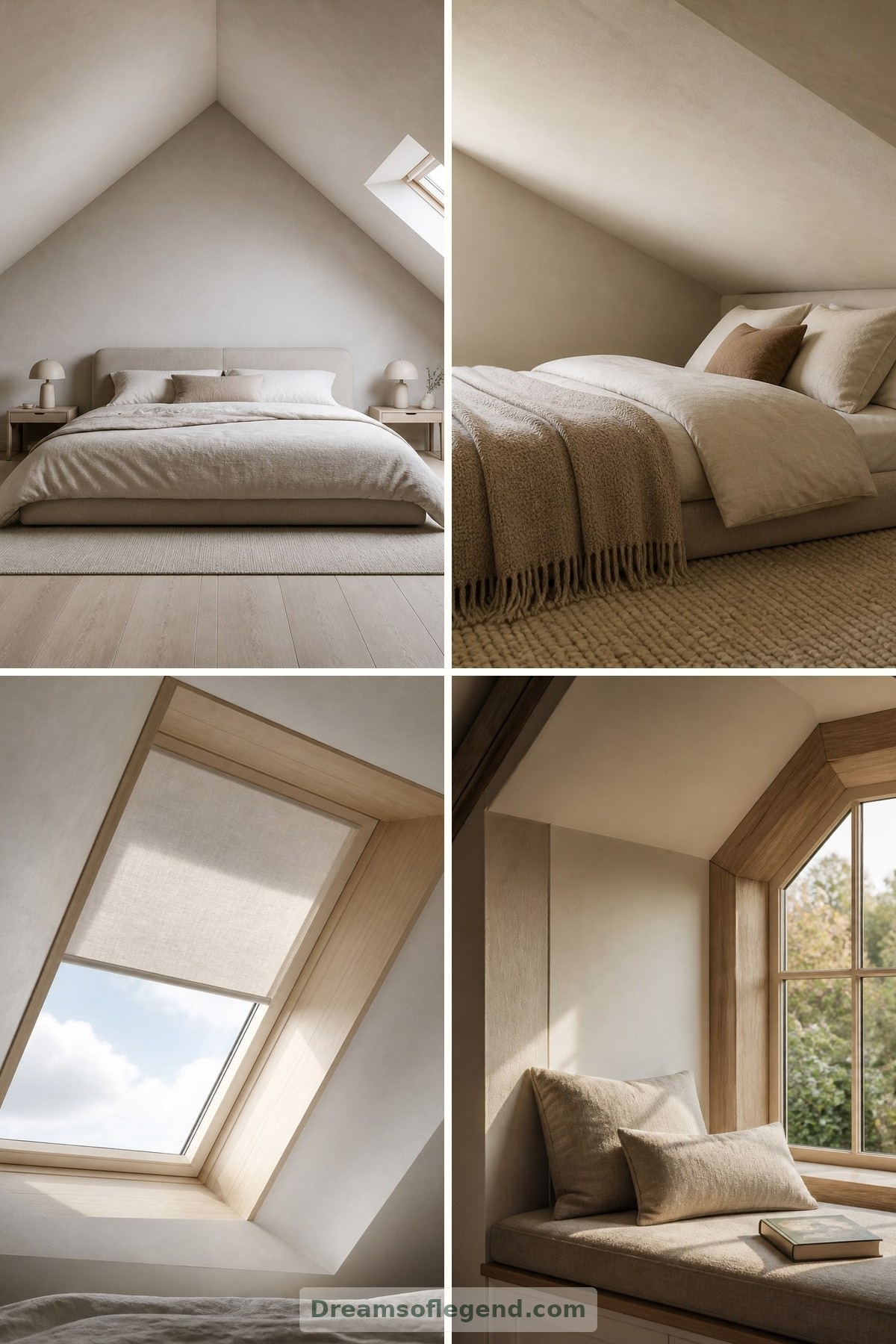
There is something comforting about sleeping beneath a roof you can almost trace with your hand. Attic bedrooms turn a house’s uppermost corners into intimate territory, where rain sounds closer and daylight arrives at unexpected angles. The designs explored here are imagined residential concepts, not real destinations: invitations to see sloping ceilings as possibilities rather than problems.
Let the Roof Shape the Room
Begin with the space where you can stand comfortably. Keep the main walking route within that taller zone, then let lower areas accommodate furniture that needs less clearance. A low upholstered bed can sit beneath a slope, provided there is comfortable room to sit up and move around it.
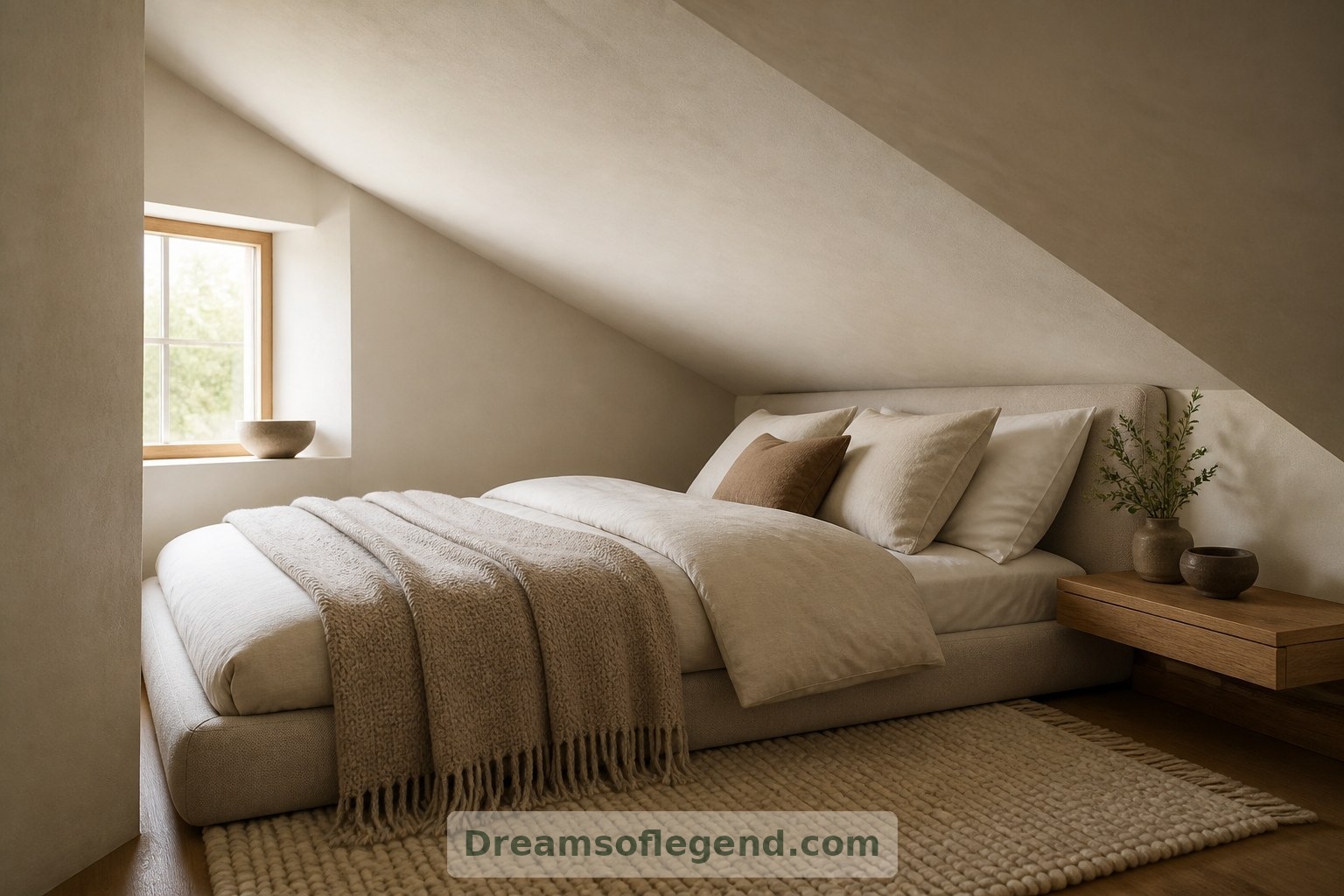
Instead of disguising every angle, paint the ceiling and walls the same soft shade. The continuous colour makes the roofline feel deliberate, while a simple headboard gives the bed a reassuring centre.
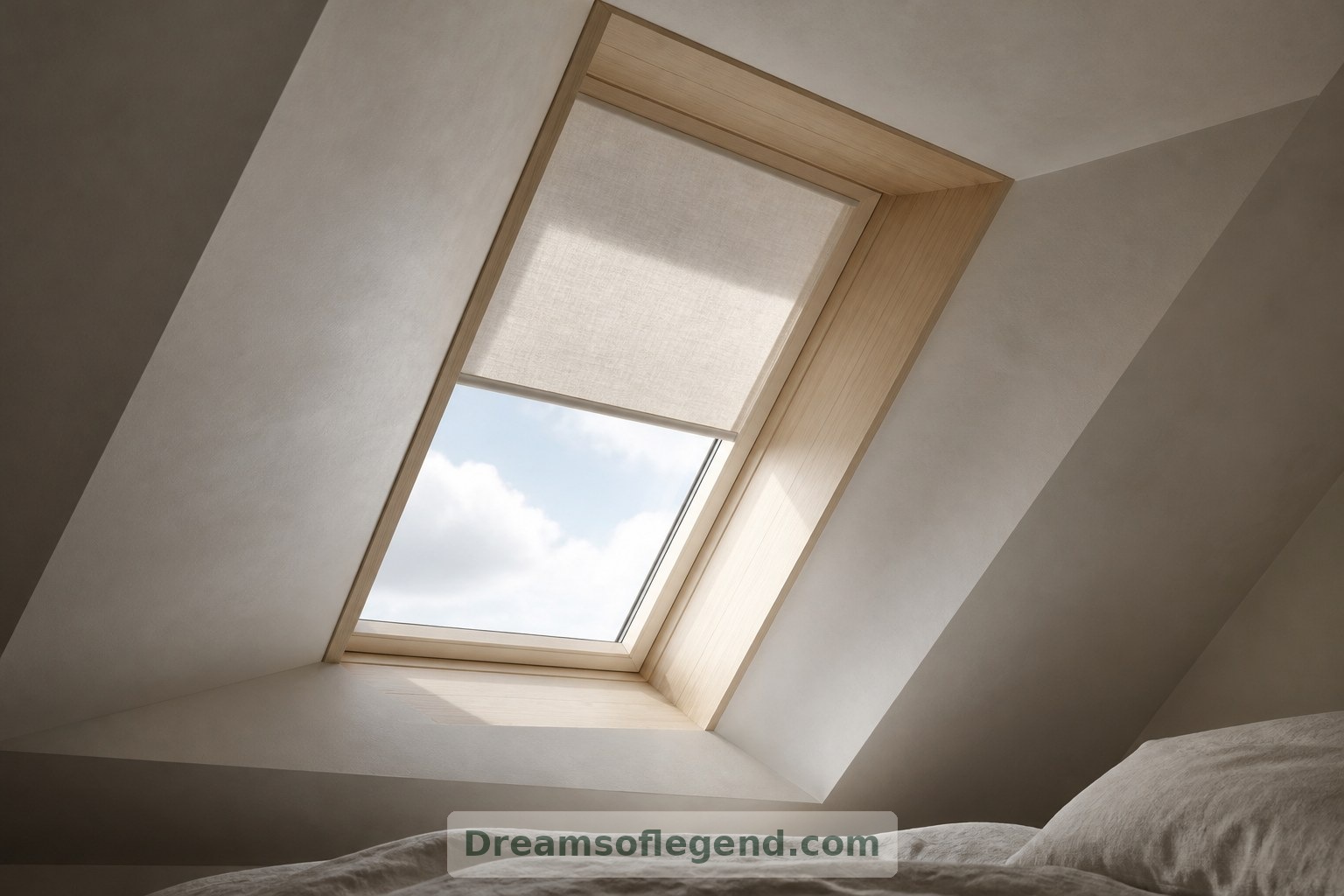
Make Daylight Feel Gentle
A roof window can bring changing skies into the bedroom, but brightness needs a companion: control. Consider suitable blinds, with blackout options for sleep and lighter filtering for daytime privacy.
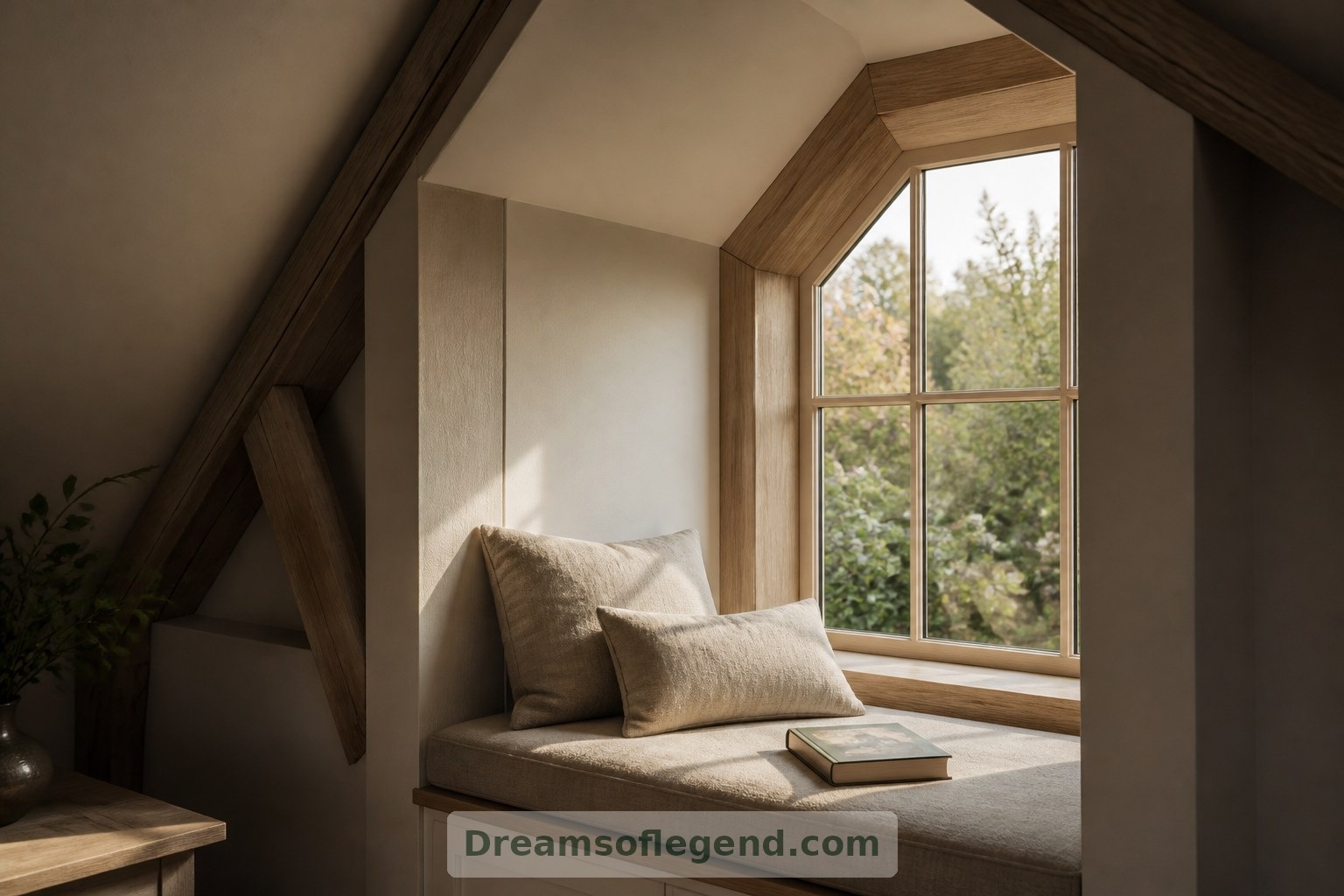
Where a dormer creates a more upright pocket, imagine a reading chair or cushioned window seat. Pale timber reveals and a linen cushion make this small threshold between indoors and sky especially inviting.
Give the Lowest Corners a Job
Deep eaves can swallow belongings unless storage is planned around reach. Shallow drawers, pull-out compartments and cupboards with clearly defined contents are often easier to use than a single cavernous recess.
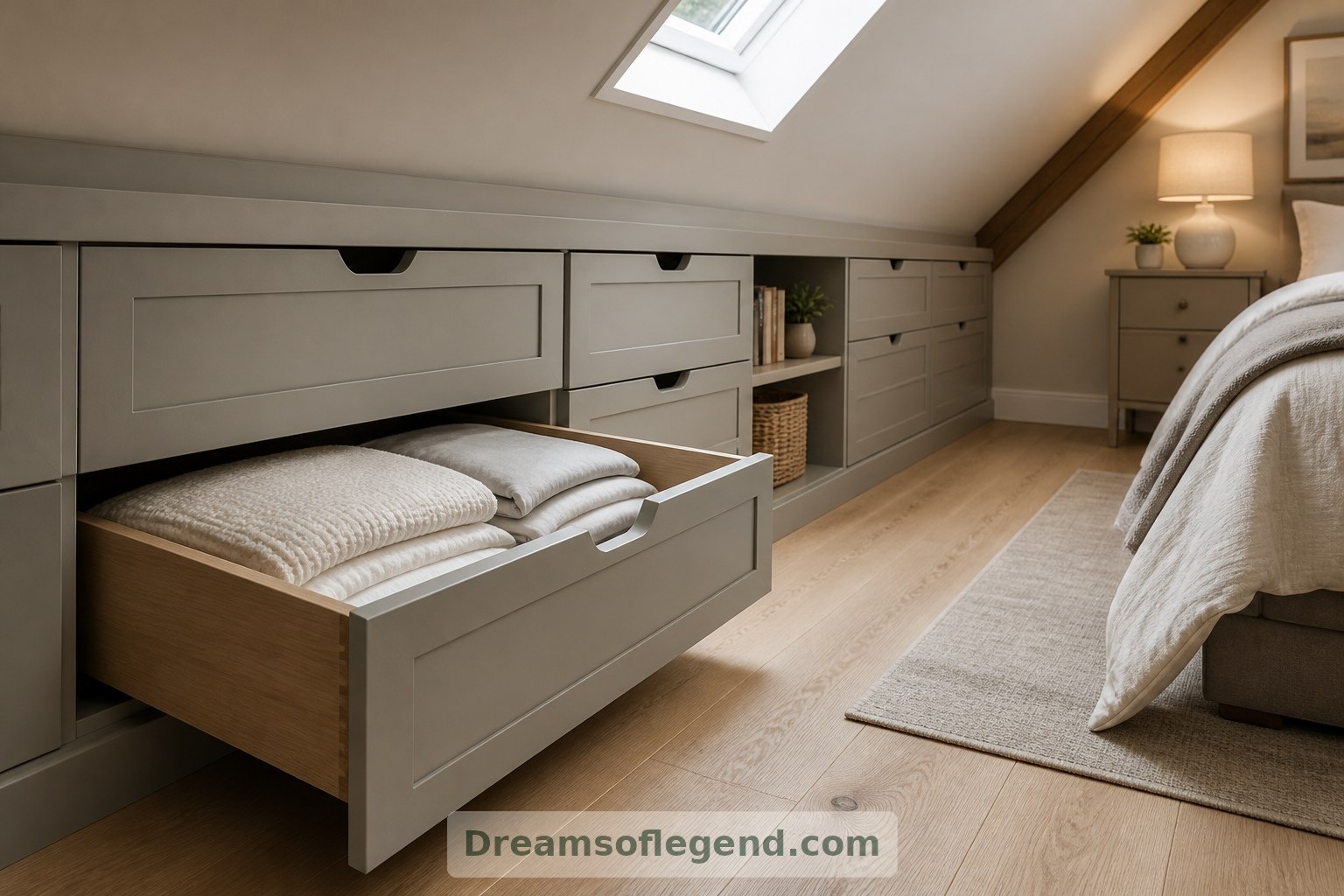
In this imagined scheme, painted cabinetry follows the knee wall, with discreet finger pulls and one open niche for books. Keep any required access to building services clear rather than hiding it behind permanent joinery.
Layer Texture Without Adding Clutter
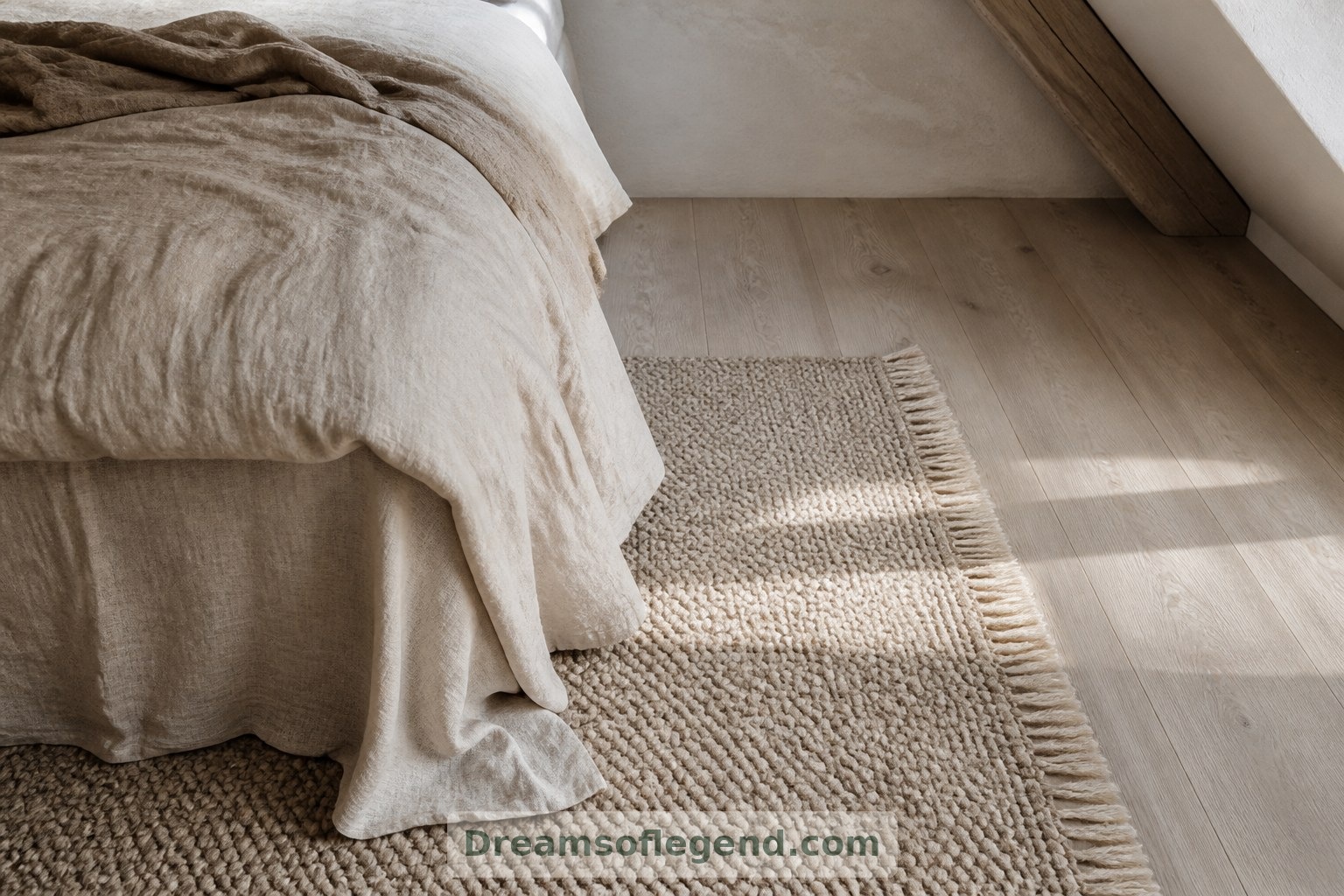
Attic rooms already have strong geometry; their furnishings need not compete. Try chalky walls, an oak floor and a wool rug that softens the first steps out of bed. Washed linen brings a relaxed finish without feeling overly decorative.
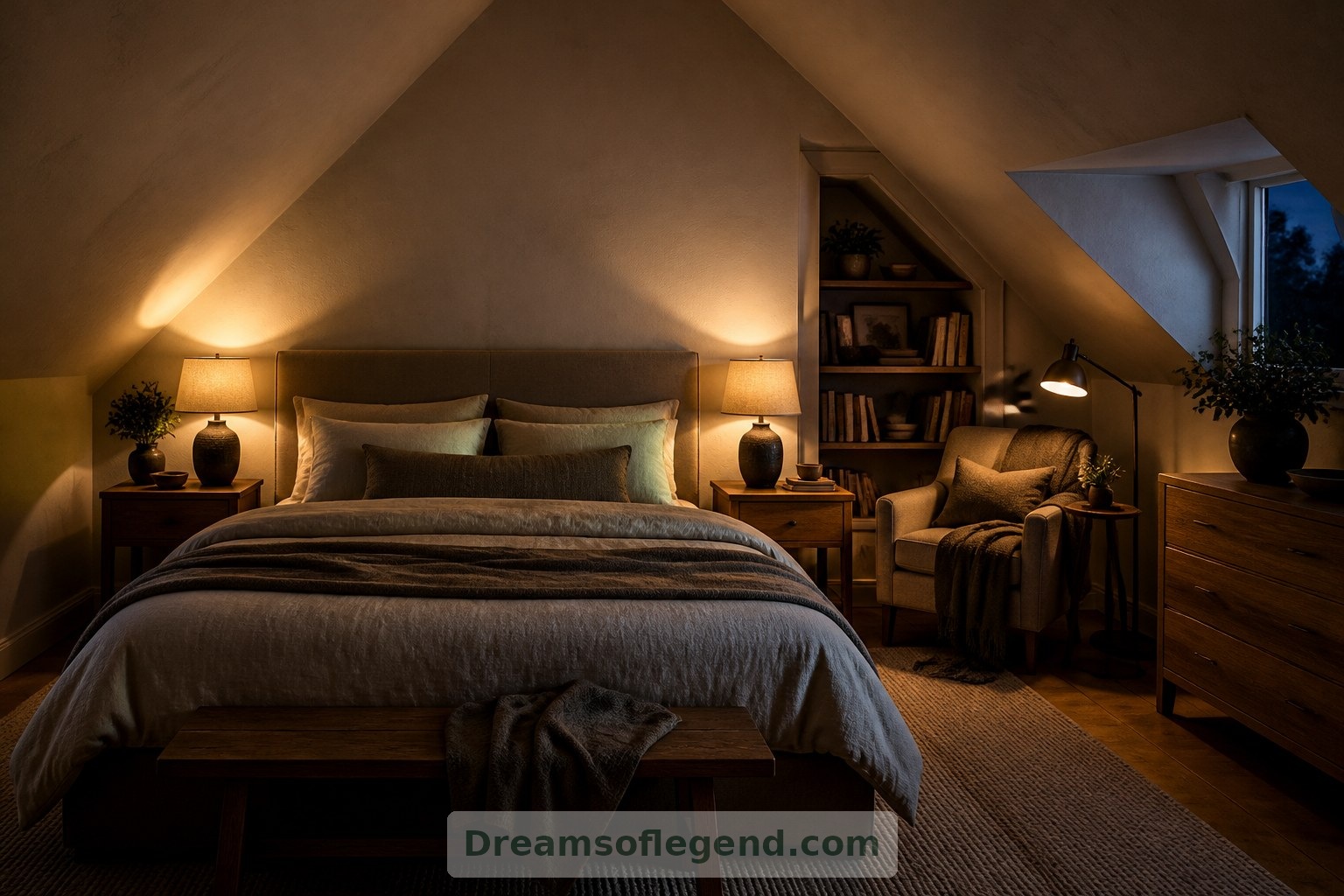
At night, combine shaded bedside lights with a dimmable wall light near the reading corner. Place fittings where they will not become obstacles beneath the slope, and avoid relying on one bright ceiling fixture.
Plan for Comfort Beyond the Photograph
A beautiful attic bedroom must also feel comfortable through the seasons. Insulation, ventilation and shading deserve attention before the final paint colour. Roof alterations, stairs, structural capacity and safe escape arrangements require assessment by appropriately qualified local professionals.
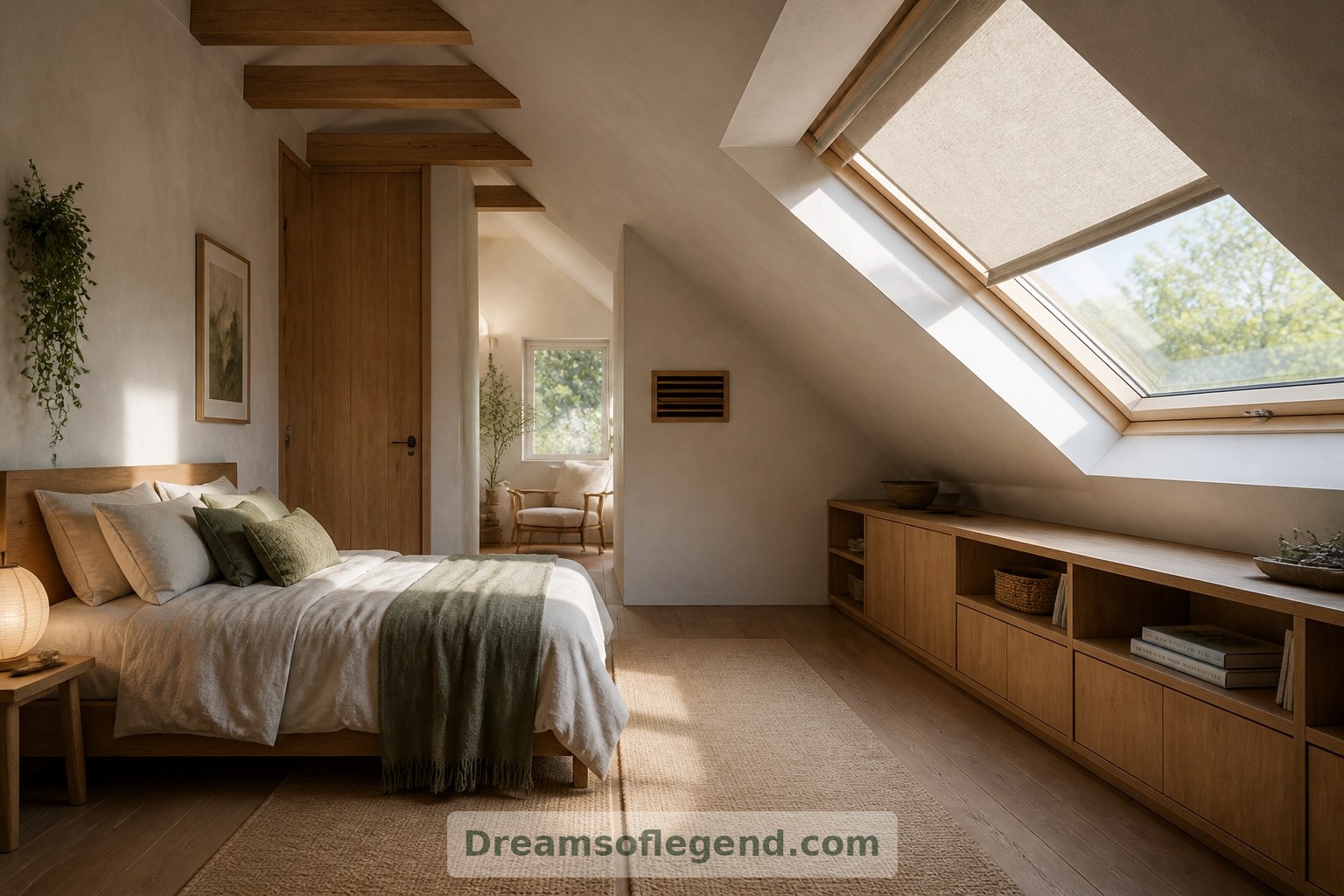
Keep the route from the stair to the bed uncluttered. A restful room begins with being able to move through it easily.
Create a Quiet Arrival
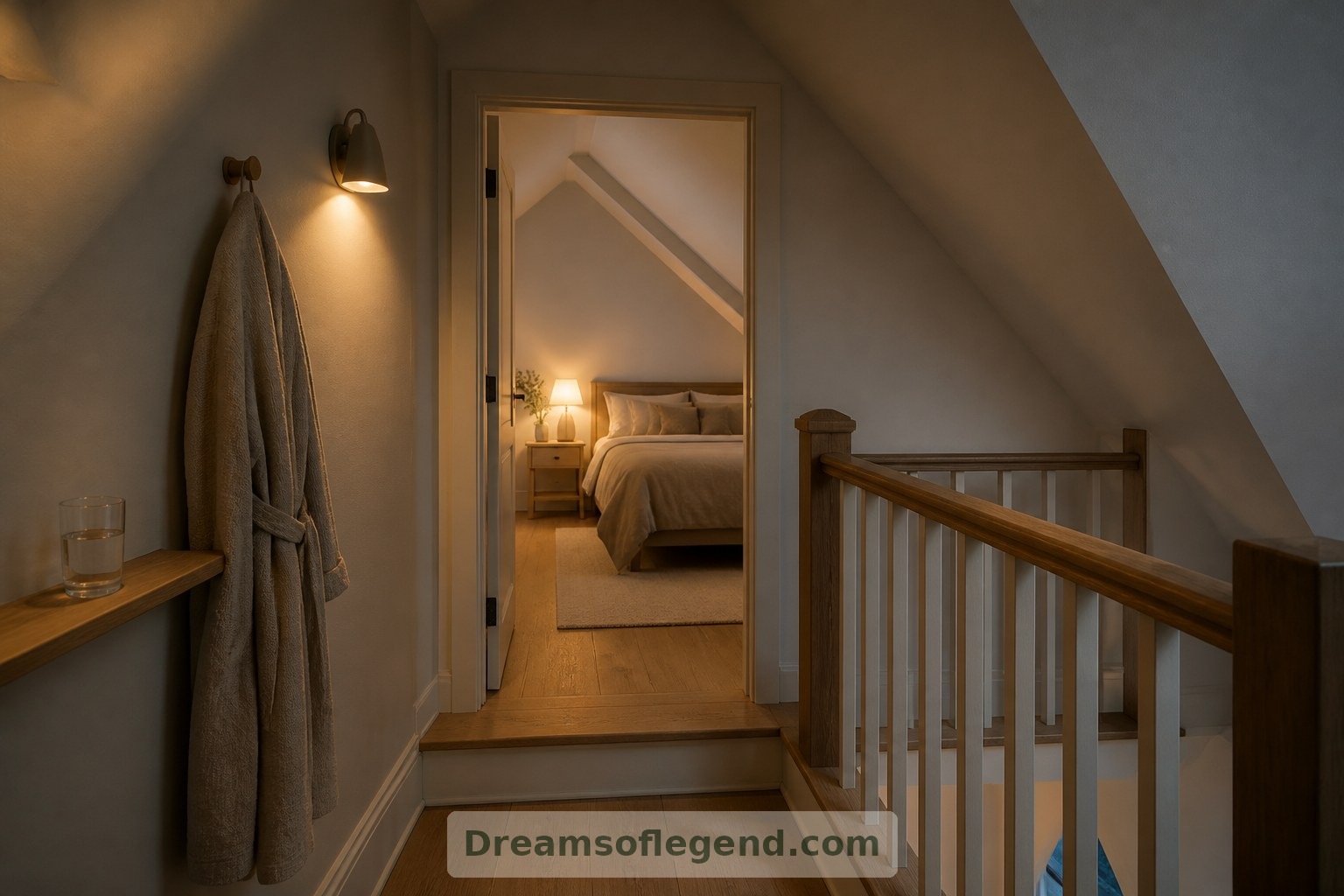
At the top of the stairs, a small pool of warm light can mark the transition to sleep. A narrow shelf for a glass of water, a robe hook and a restrained palette are enough; the architecture supplies the character.
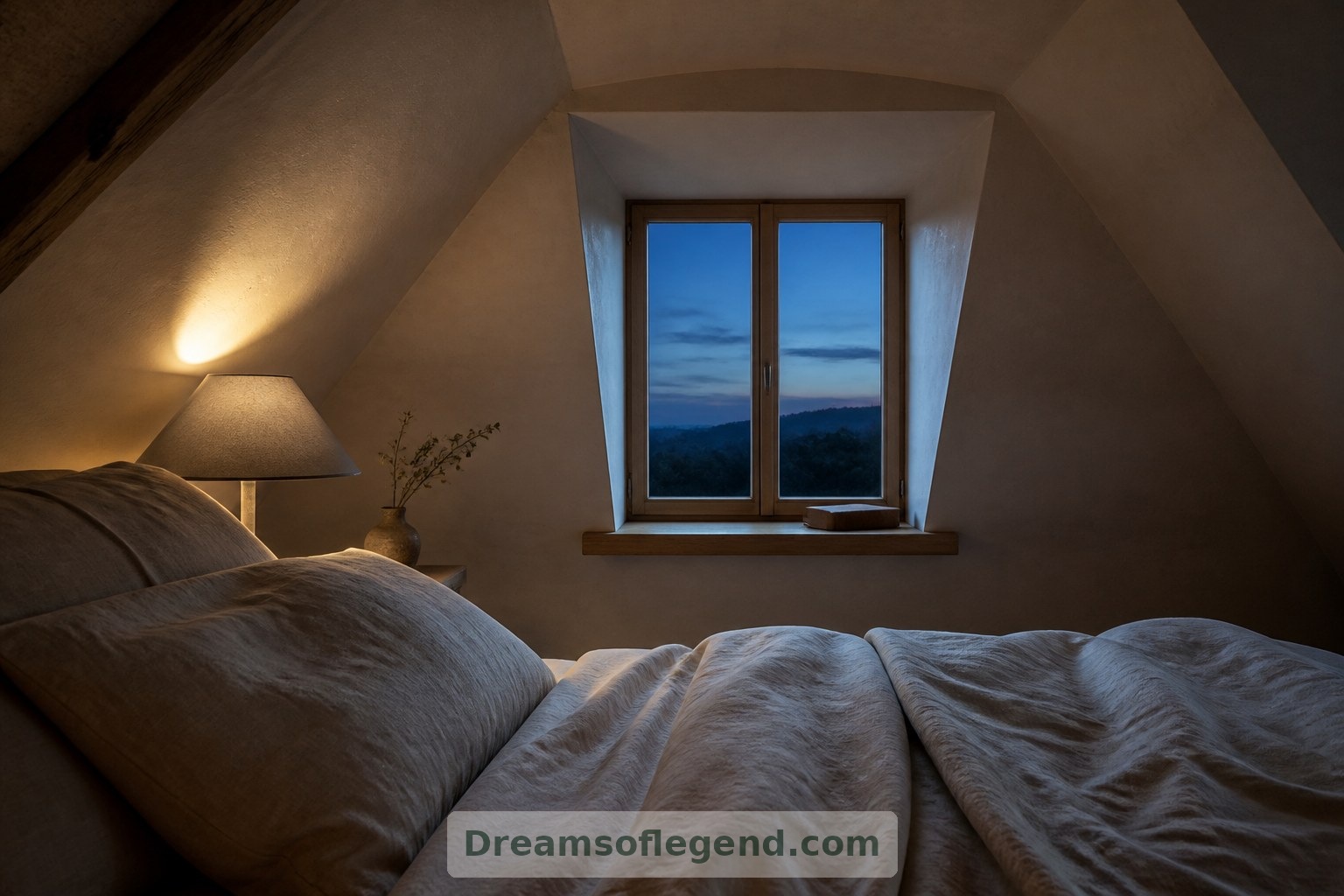
The loveliest attic retreat does not fight its roofline. It makes room for everyday rituals within it: opening a blind, choosing a book, settling beneath linen. With thoughtful proportions and practical planning, those unusual angles become the room’s most comforting feature.
How does this inspire you?
Choose one reaction. Click it again to remove it. Your choice is saved with a browser cookie.
Loading reactions…