Twisting Residential Towers: A Visual Tour of Sculptural Skylines
Explore residential towers that turn geometry into skyline sculpture, from Malmö to Dubai, then step into clearly imagined interiors where curved views and thoughtful details shape extraordinary homes.
AI-generated concept imagery. These illustrations are not documentary photographs or proof that a place exists.
Dreams of Legend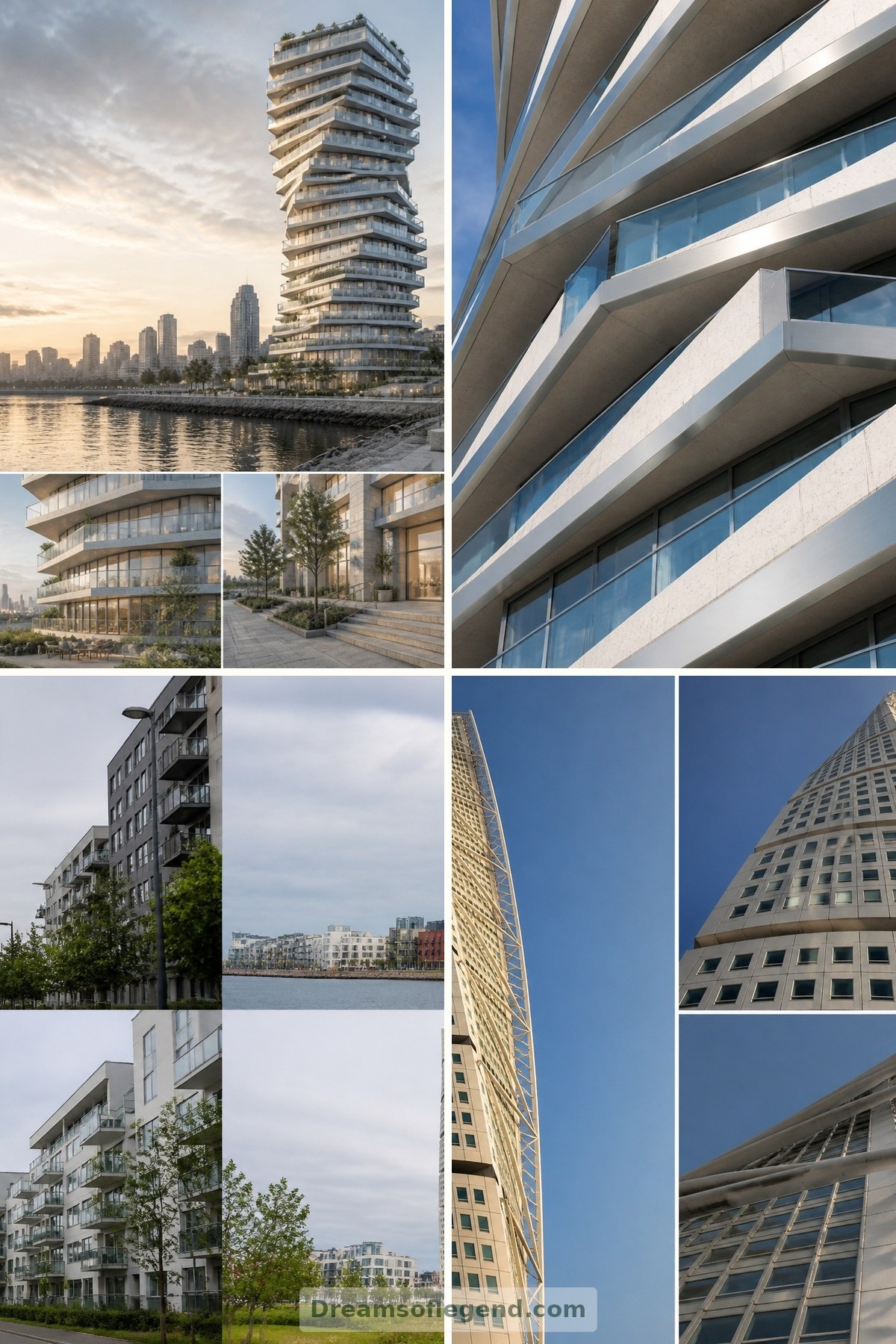
Some homes announce themselves with a garden gate; others seem to turn toward the clouds. Twisting residential towers bring a sense of movement to the skyline, transforming stacked floors into monumental sculpture. For anyone dreaming of an extraordinary home, their appeal extends beyond the silhouette: changing orientations can frame unexpected views and give familiar rooms a wonderfully different relationship with the city.
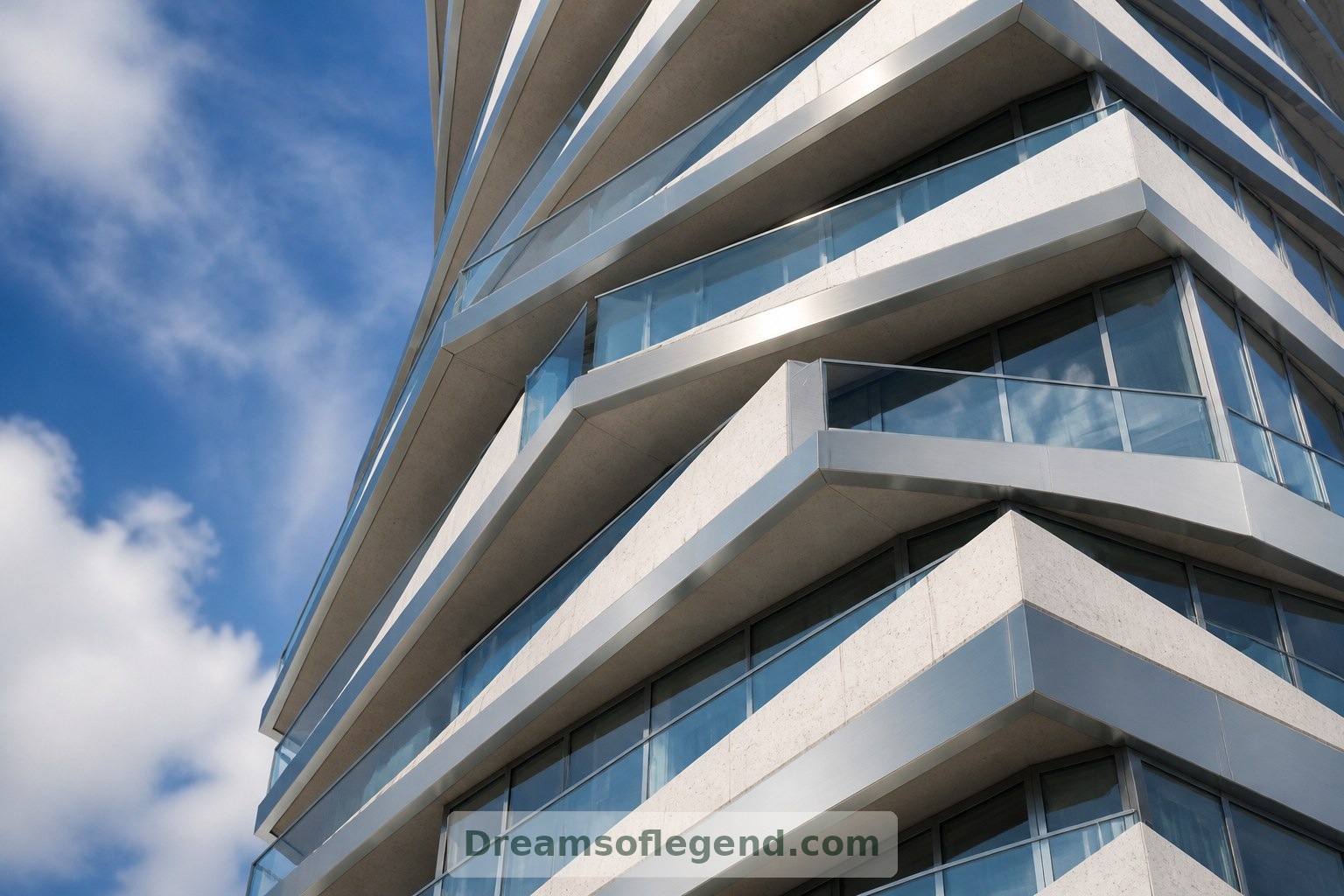
When a Building Appears to Move
A twisting tower usually creates its effect through a sequence of rotated floor plates or building volumes. The structure remains still, but its outline suggests motion. Repeated windows, balcony edges and facade panels make that rotation legible from the street. Inside, however, the experience depends on the individual apartment: a dramatic exterior does not automatically mean curved walls or unconventional rooms.
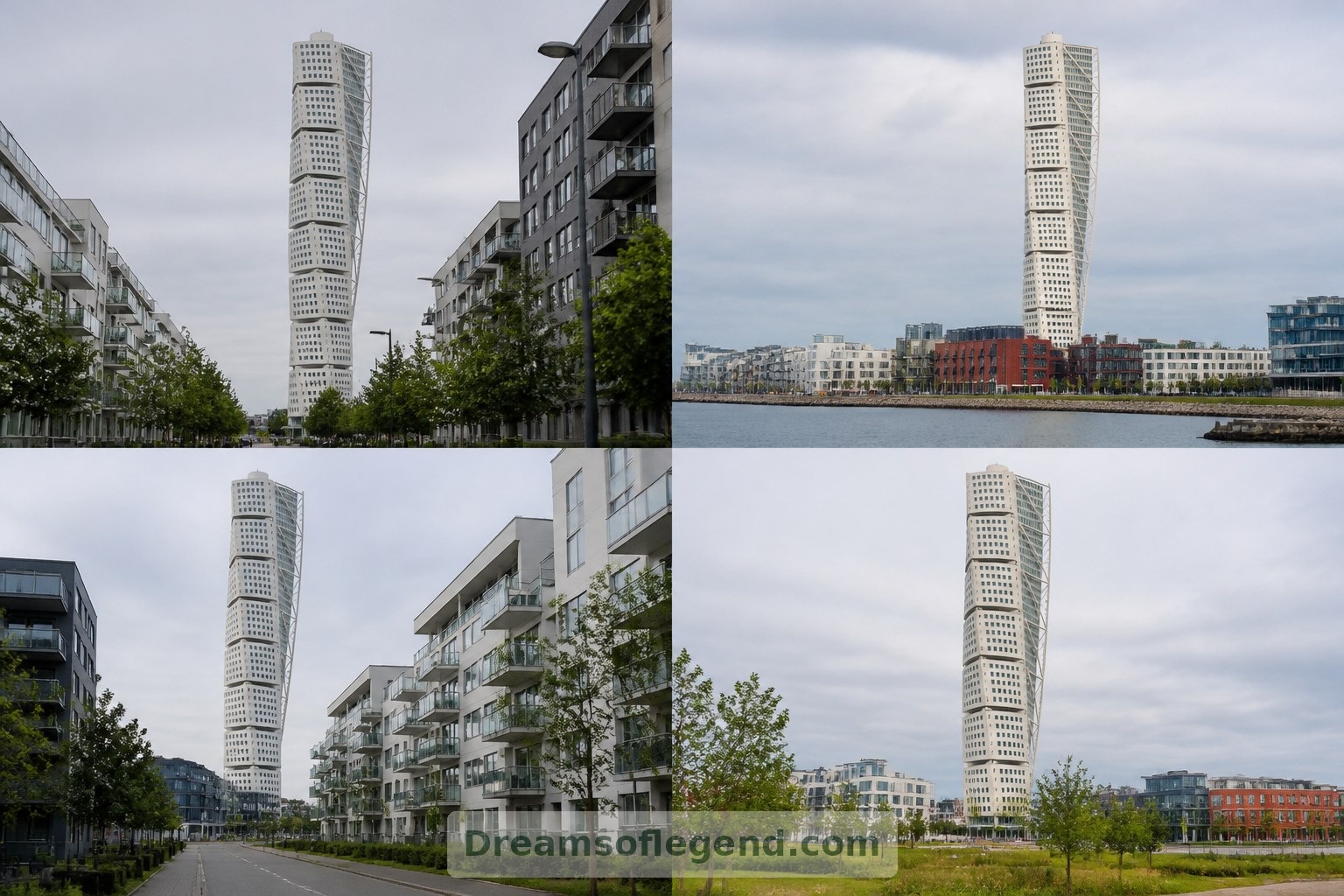
Malmö: Turning Torso
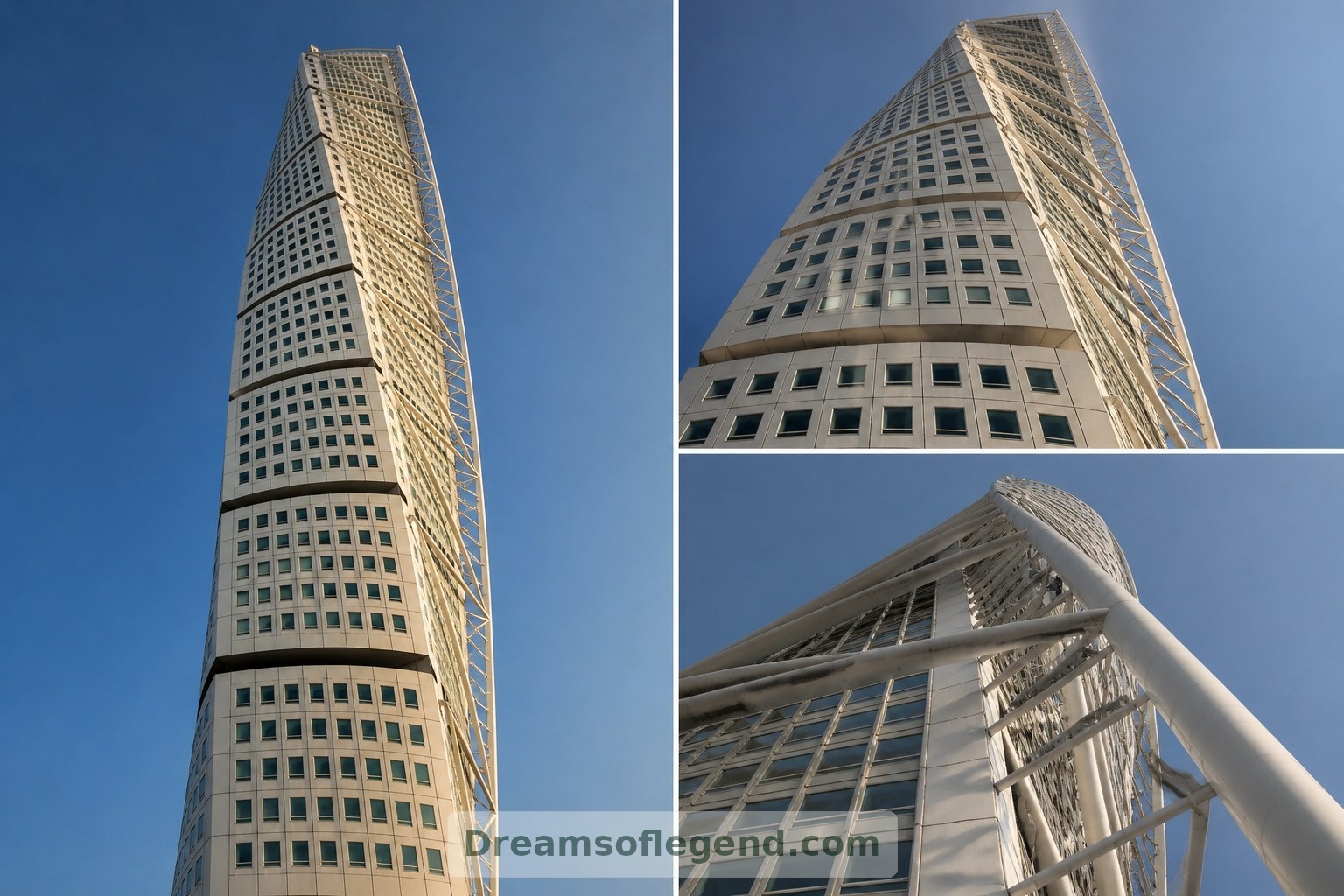
In Malmö, Sweden, Santiago Calatrava’s Turning Torso gives the Western Harbour district a striking vertical landmark. Its stacked volumes rotate as they rise, while a visible external structural framework reinforces the sculptural effect. The pale exterior catches the changing northern light beautifully. As a residential building, it offers a compelling reminder that housing can contribute something memorable to a city’s collective identity.
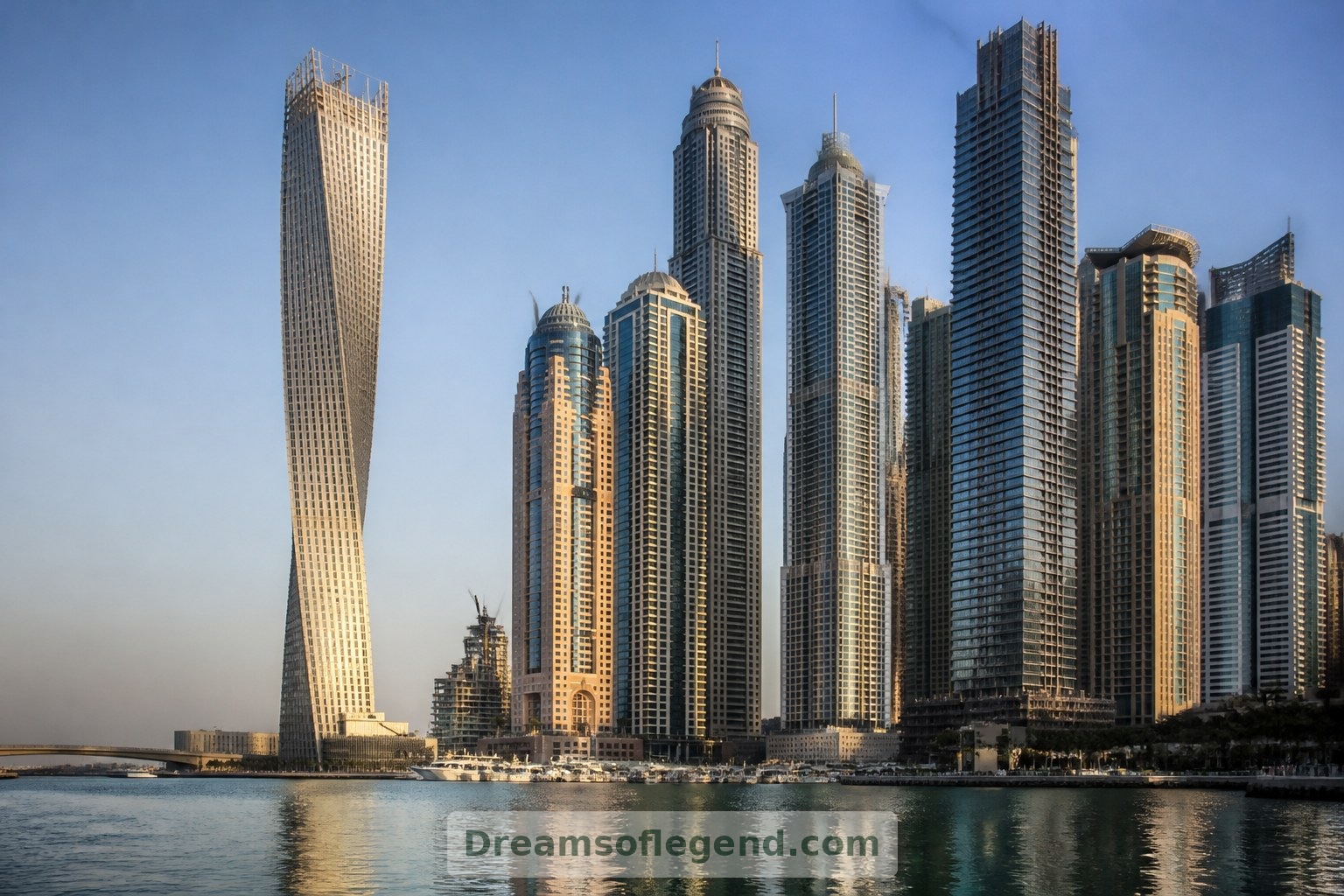
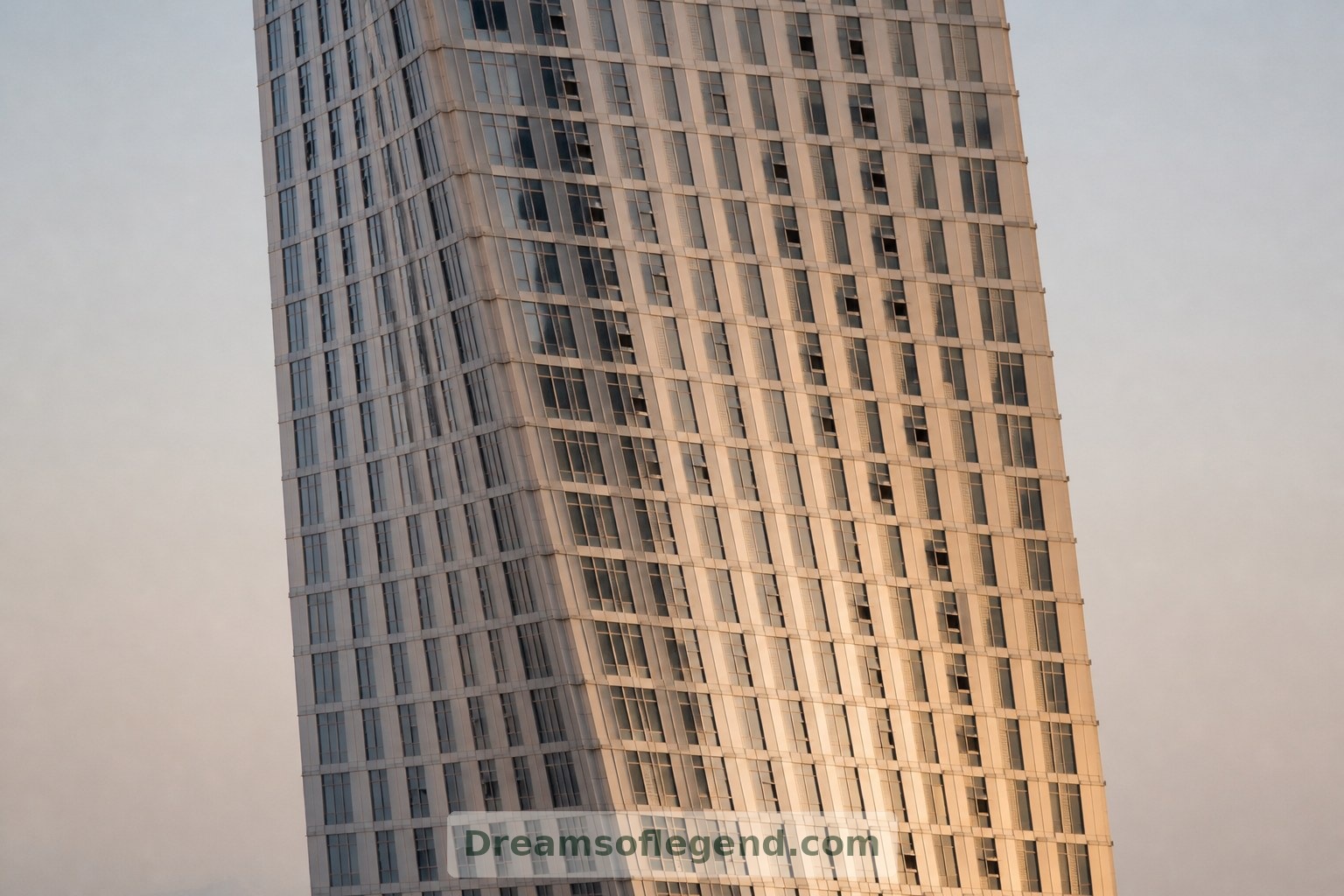
Dubai: Cayan Tower
Cayan Tower brings a different expression of rotation to Dubai Marina. Designed by Skidmore, Owings & Merrill, the residential tower turns approximately 90 degrees from bottom to top. Its closely spaced facade grid makes the transformation especially readable. Against neighbouring high-rises, the building feels both disciplined and fluid: a repeated architectural system producing a surprisingly expressive silhouette.
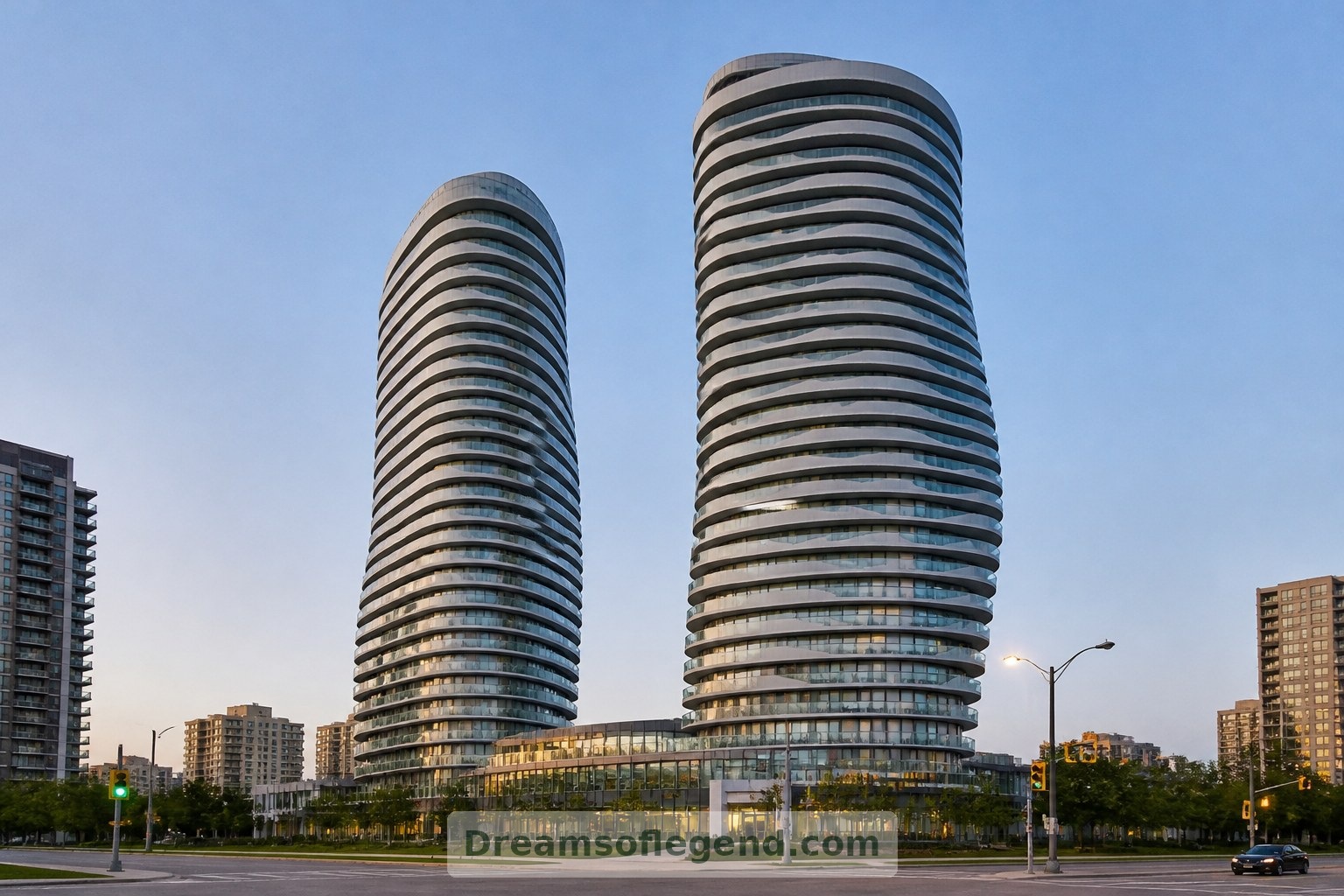
Mississauga: Absolute World
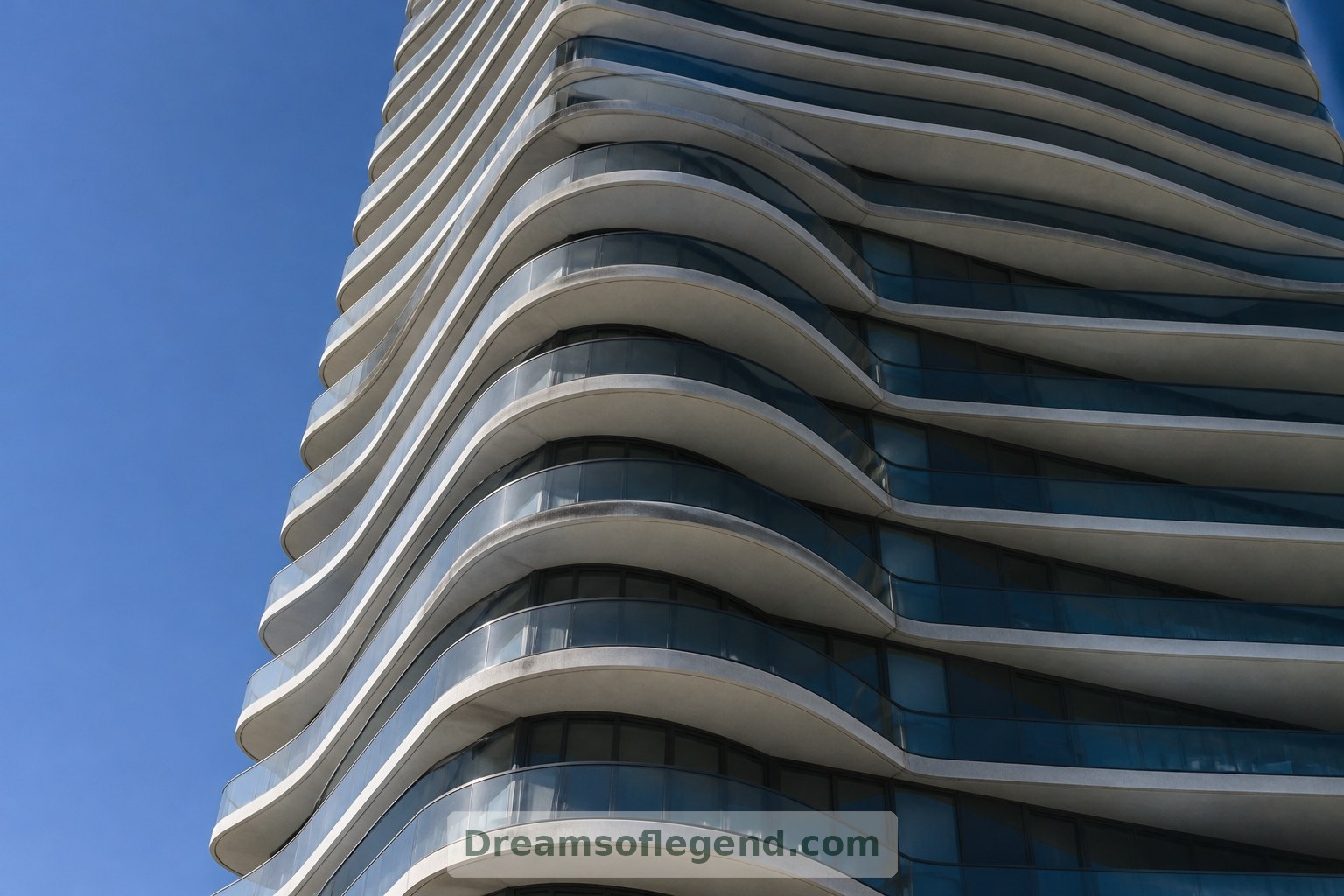
The paired Absolute World residential towers in Mississauga, Canada, offer a softer interpretation. Their rotating floor plates and continuous balcony bands create rounded, shifting profiles rather than a sharply faceted twist. Seen together, the towers demonstrate how outdoor edges can become the defining architectural feature. The balconies also introduce a human scale, suggesting individual households within the larger urban sculpture.
Imagining Life Behind the Glass
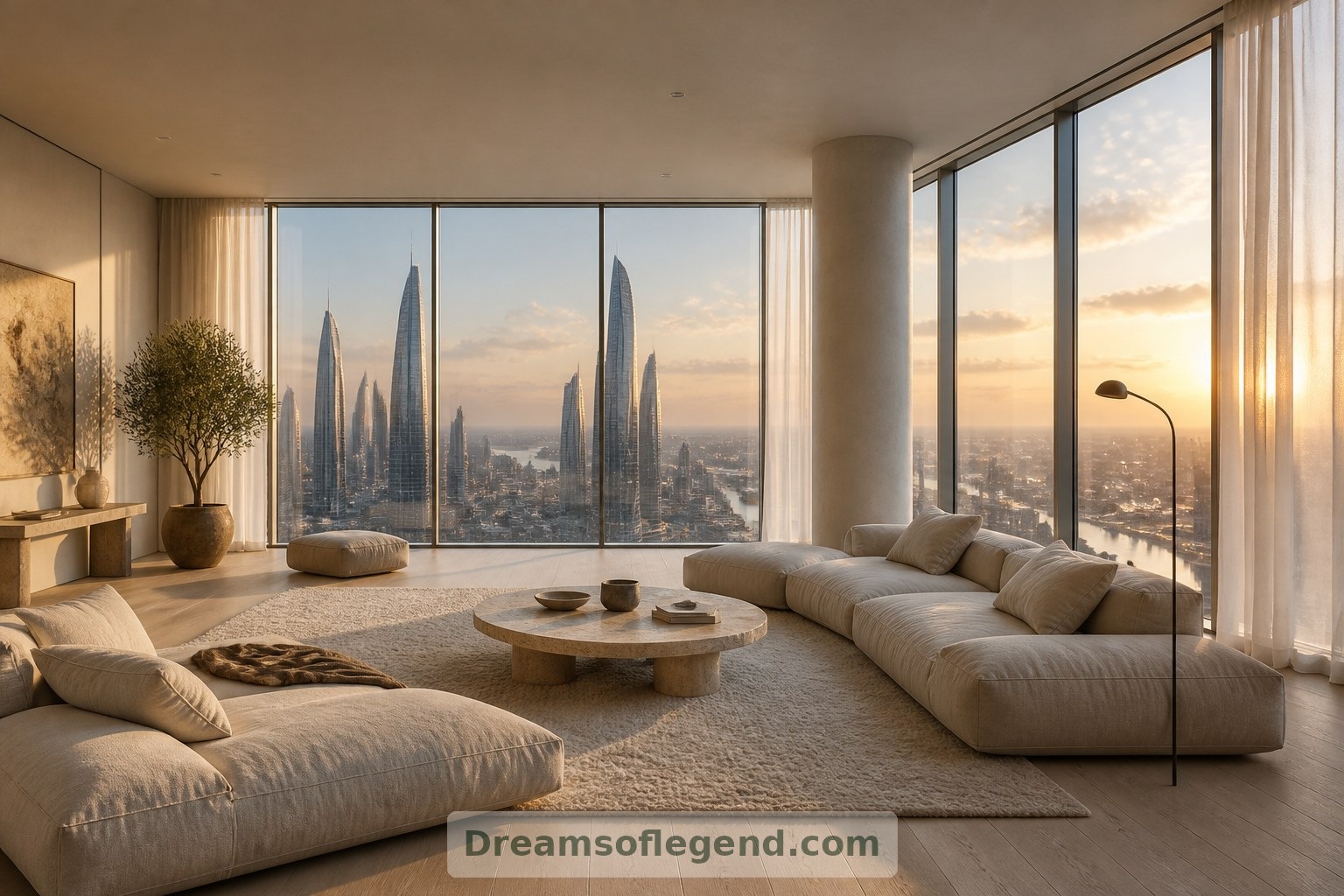
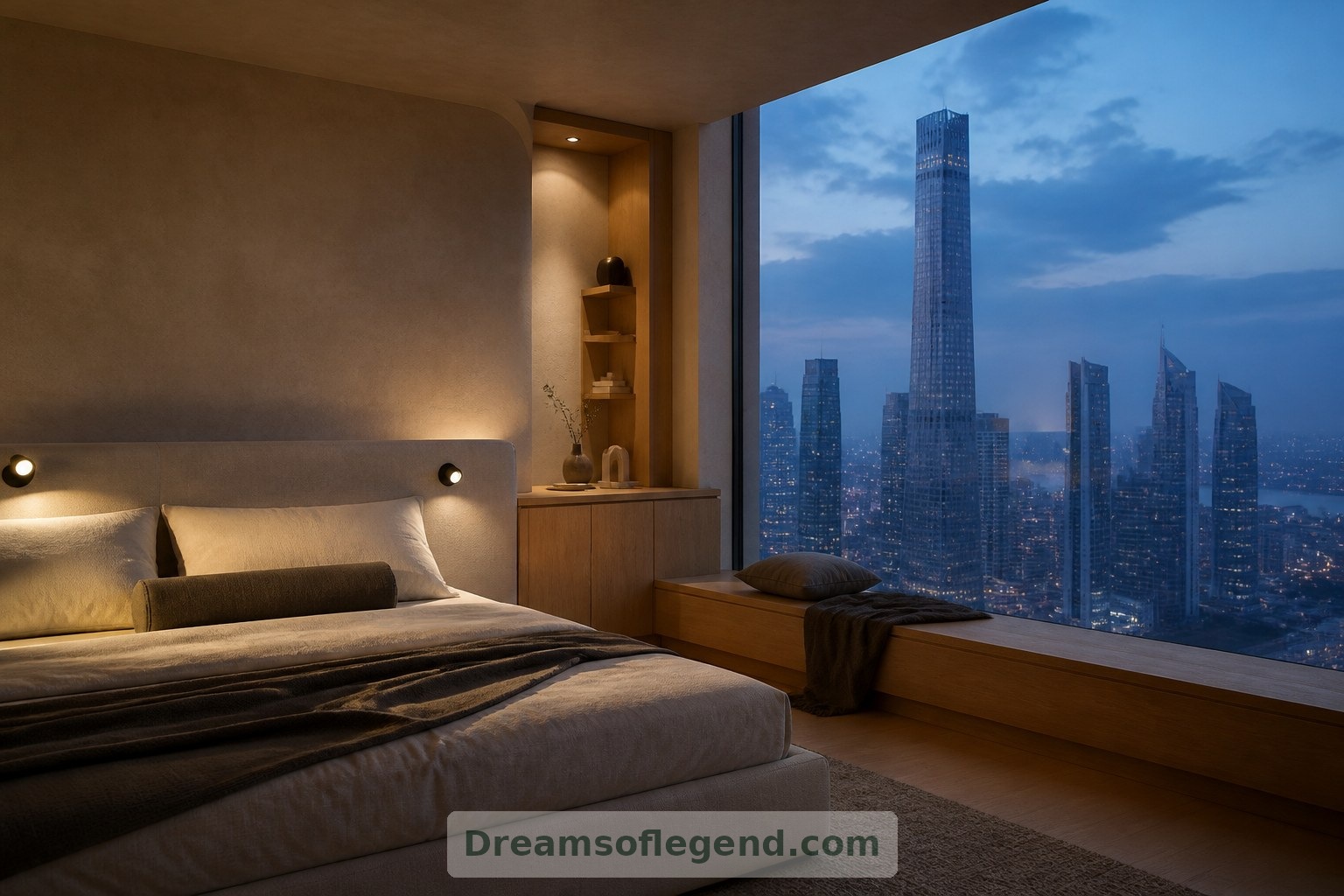
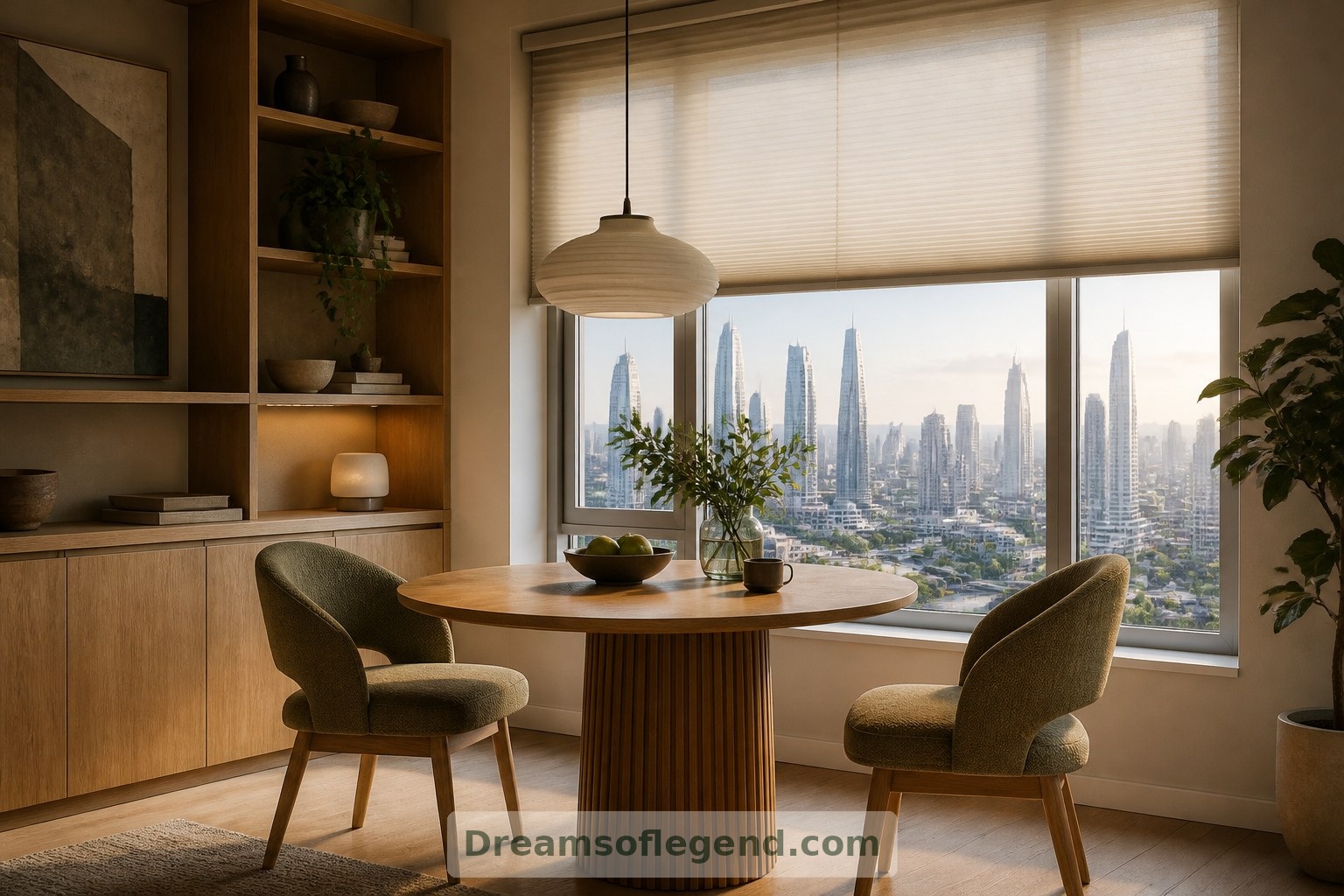
The interiors pictured here are imaginative architectural visualizations, not documented apartments in these buildings. Picture a living room with low, comfortable seating, pale oak flooring and curtains that soften expansive glazing. A dining table could follow the view rather than a rigid central axis. In a bedroom, warm plaster and restrained lighting would let the changing cityscape provide the drama.
The Details That Make Height Feel Like Home
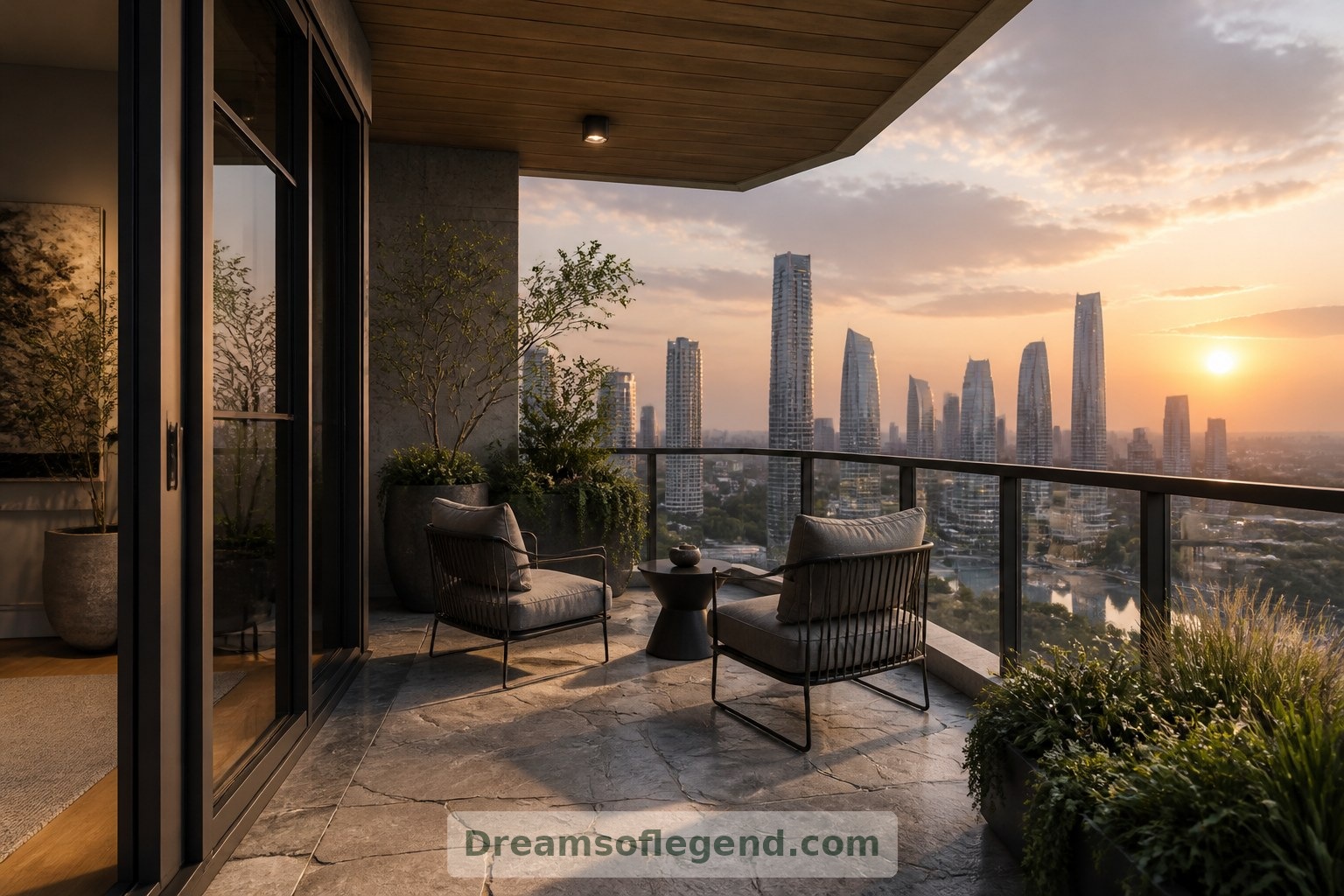
Spectacle is only the beginning. A convincing dream home also needs useful storage, comfortable furniture placement, privacy and manageable daylight. On exposed balconies, wind conditions deserve attention; behind large windows, shading and thermal comfort matter. These considerations are building-specific, not guaranteed benefits of a twisting form. The most satisfying design balances its extraordinary outline with ordinary rituals, from reading quietly to sharing breakfast.
Twisting towers invite us to see residential architecture as both shelter and public art. Their finest lesson is not simply to build higher or make a bolder shape, but to connect memorable form with thoughtful daily living. The dream begins on the skyline; its real measure is how comfortably someone might feel at home.
How does this inspire you?
Choose one reaction. Click it again to remove it. Your choice is saved with a browser cookie.
Loading reactions…