Natural Swimming Ponds: Gardens Where a Summer Dip Becomes Part of the Landscape
Stone steps, planted margins and water that reflects the sky: a natural swimming pond can turn a dream home’s garden into an immersive landscape. Discover the design details that make these living waters feel beautiful, welcoming and thoughtfully planned.
AI-generated concept imagery. These illustrations are not documentary photographs or proof that a place exists.
Dreams of Legend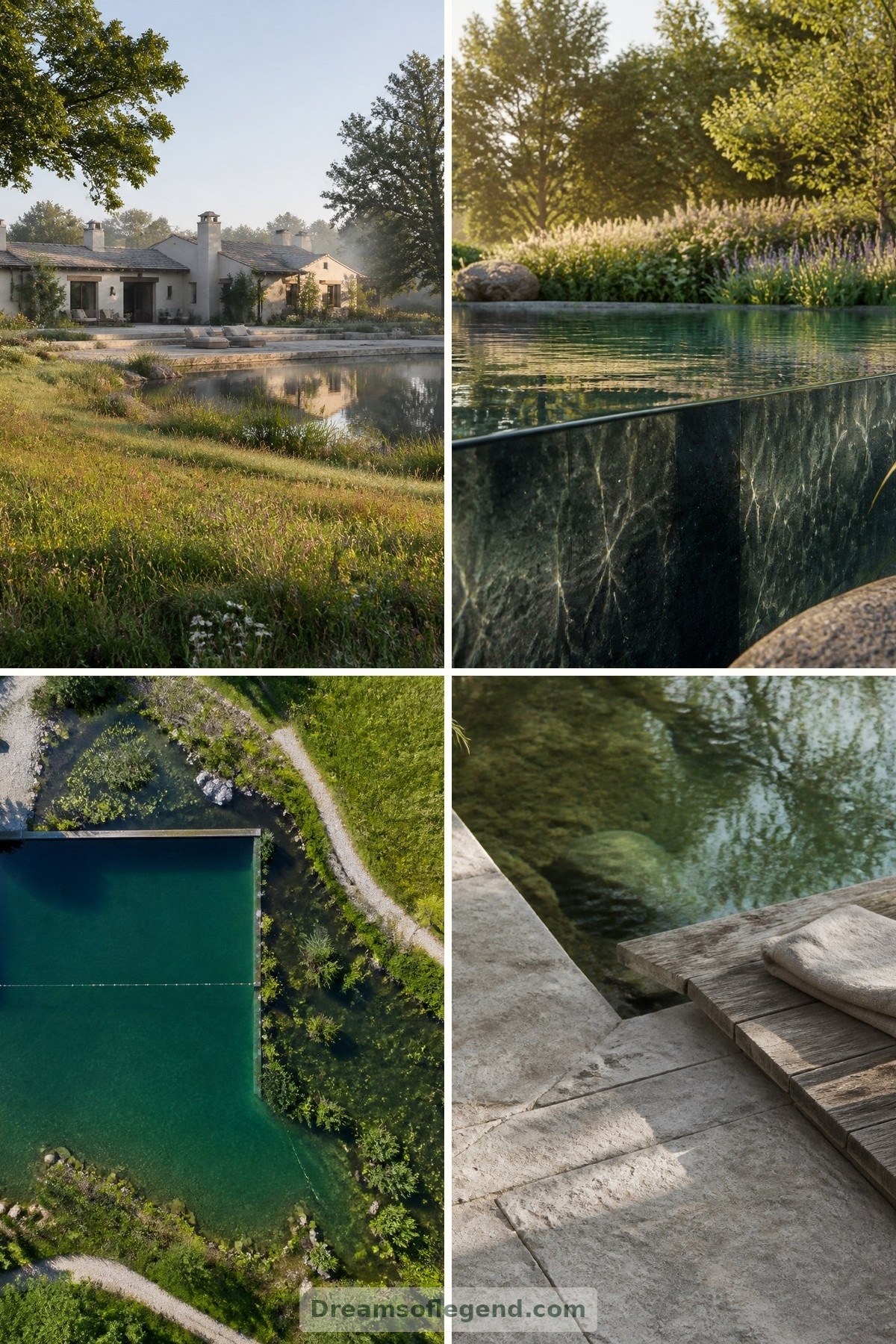
Imagine stepping outside on a warm morning, crossing a sunlit terrace and slipping into water framed by reeds rather than bright tiles. A natural swimming pond makes swimming part of garden life. The residential design explored here is an imagined concept, not a real property: a home where water, planting and everyday rituals belong together.
1. Begin with the Landscape
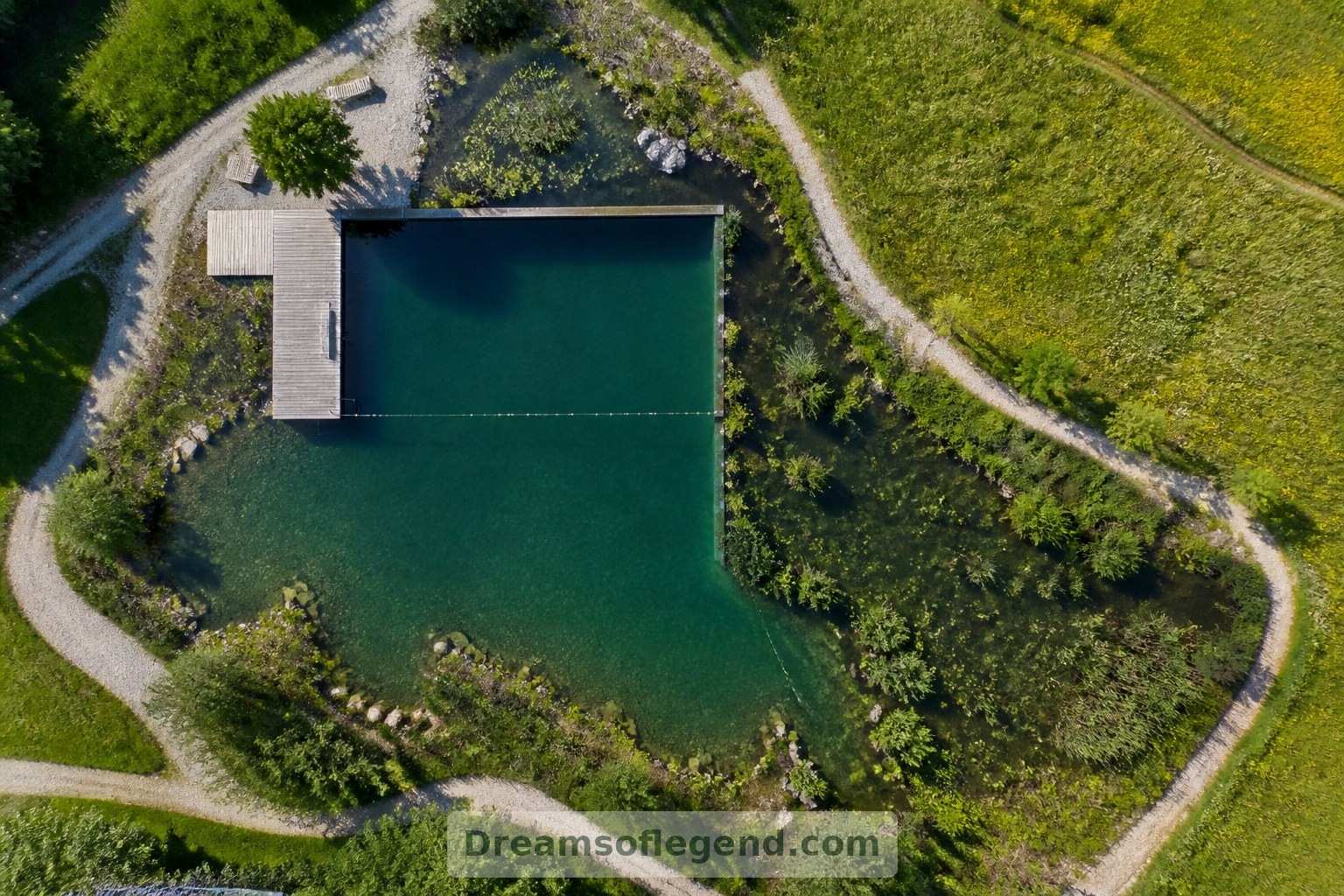
The most convincing pond feels settled into its surroundings. Its outline might follow a gentle slope, with a generous swimming area opening toward meadow planting and trees. From the house, the water becomes a reflective foreground rather than a separate recreational enclosure.
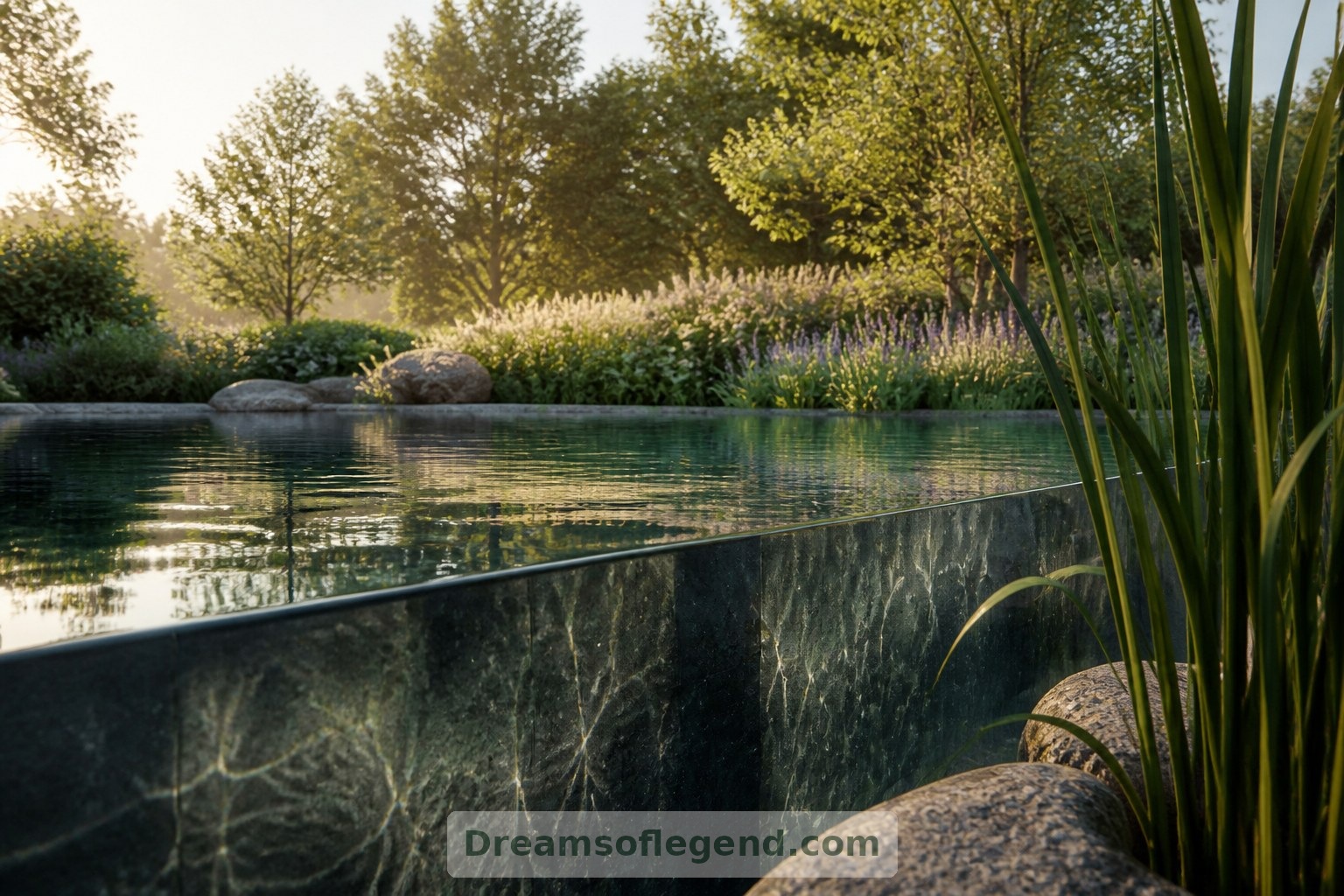
Give the swimming zone clear dimensions beneath that informal appearance. Straight underwater walls can support comfortable swimming while a softer outer shoreline connects the pond to the garden.
2. Make the Water Easy to Enter
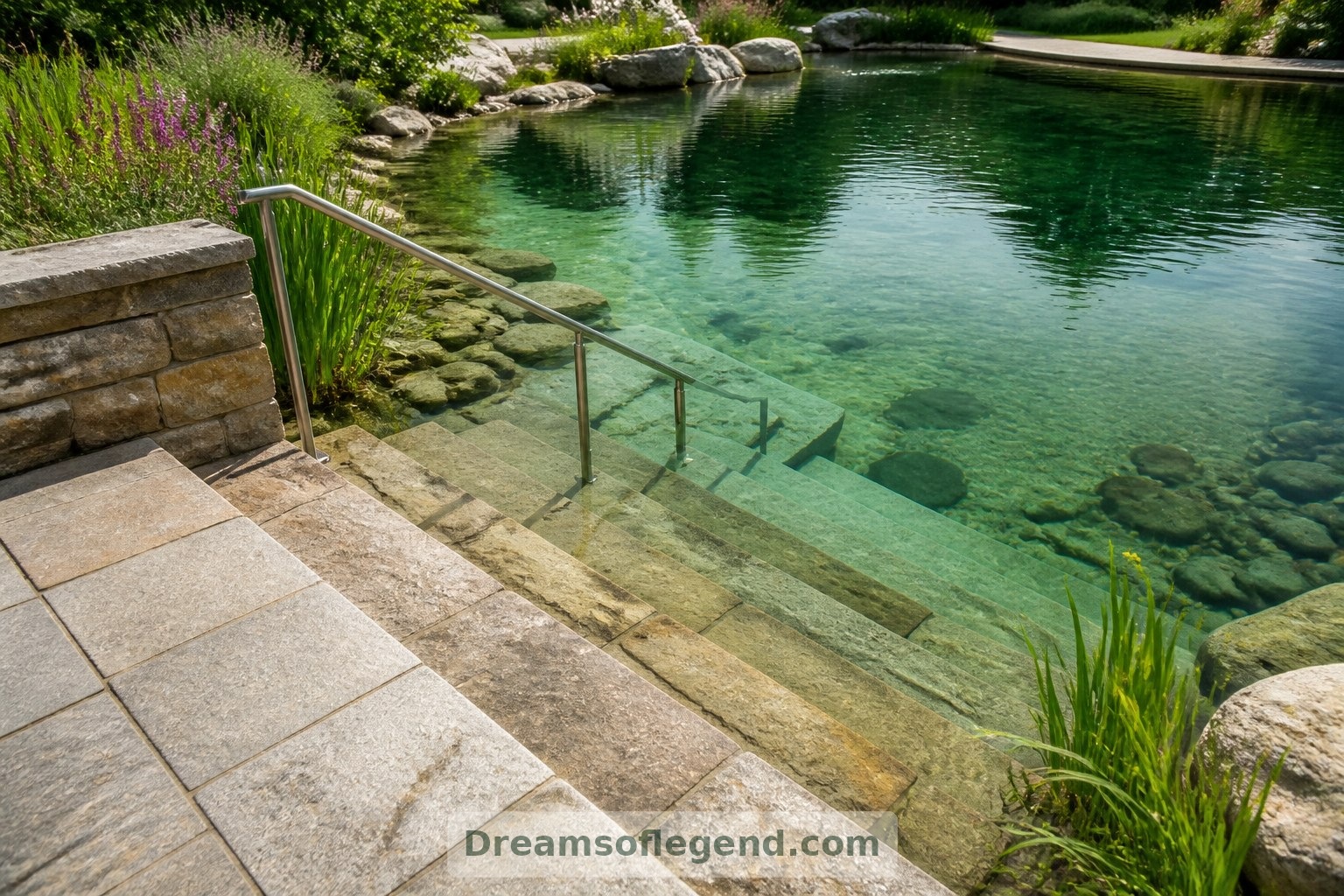
Broad stone steps offer a gradual arrival, while a timber platform provides somewhere to sit, dry off or lower your feet into the water. Choose durable materials appropriate to the climate, with slip resistance considered wherever surfaces become wet.
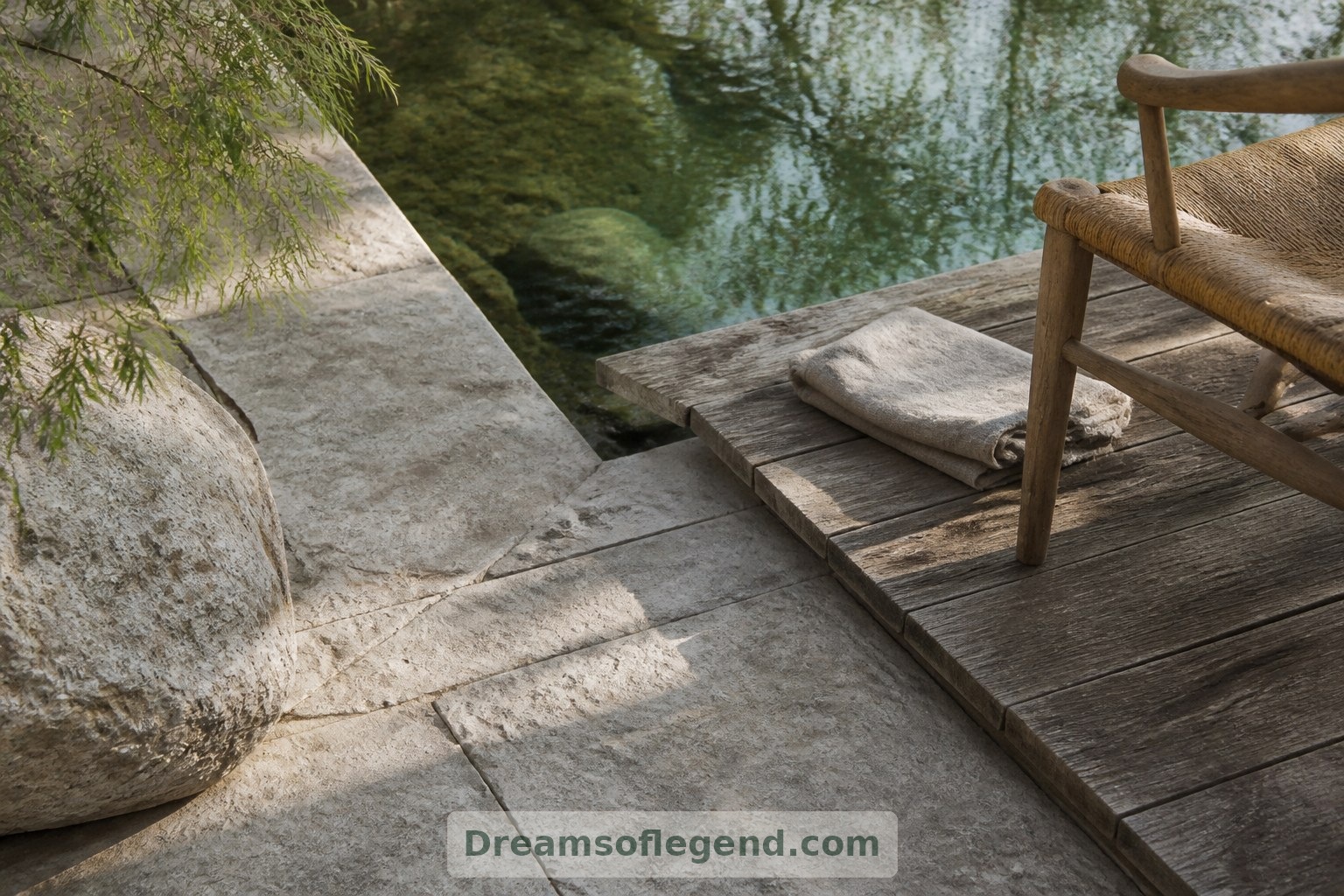
A pale gravel path can link the terrace and pond, but keep loose material away from entry points. Discreet handholds and clearly legible depth changes make the experience more welcoming.
3. Design a Living Water System
Natural swimming systems typically use biological filtration, sometimes with planted regeneration areas and sometimes with more compact engineered arrangements. Their proportions and equipment depend on climate, bathing load and the chosen system; planting alone is not a universal solution.
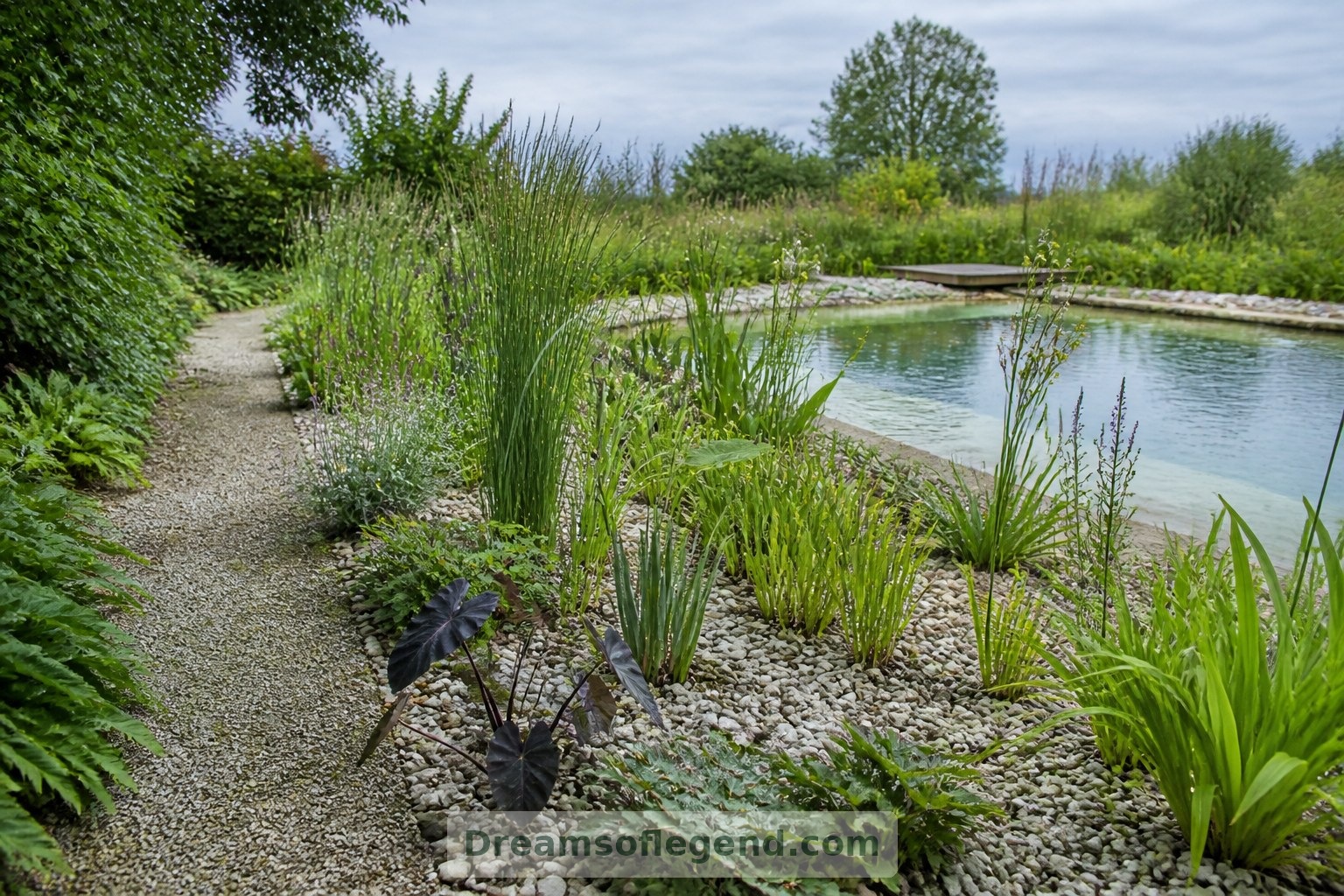
Plan specialist design, circulation, maintenance access and water-quality monitoring from the outset. Clear water is not necessarily safe water, and a swimming pond still needs responsible management.
4. Give the House a Waterside Room
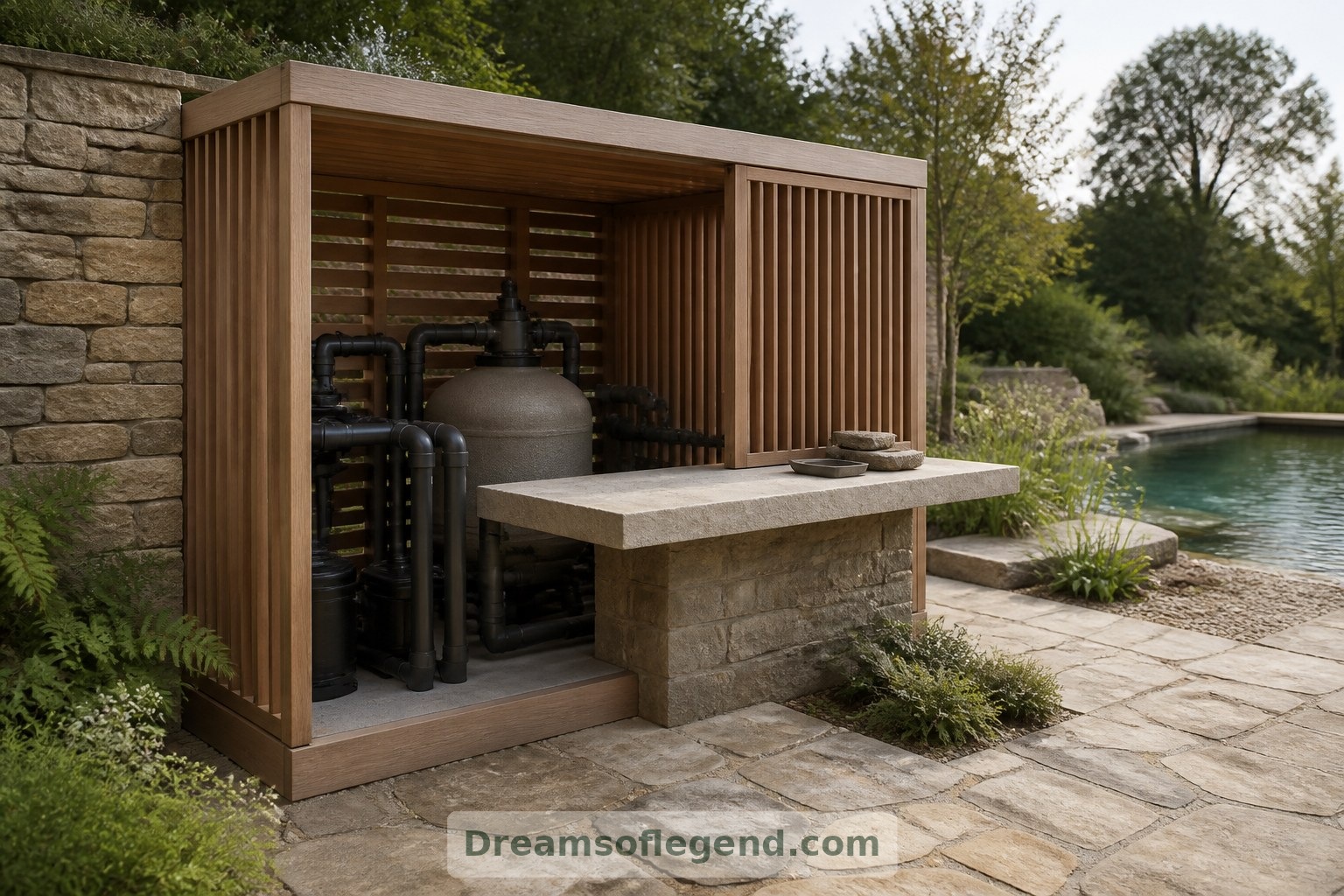
In this imagined home, a modest oak-framed pavilion holds towels, a changing bench and an outdoor shower supplied through properly planned drainage. Its sheltered roof creates a comfortable pause between house and water.
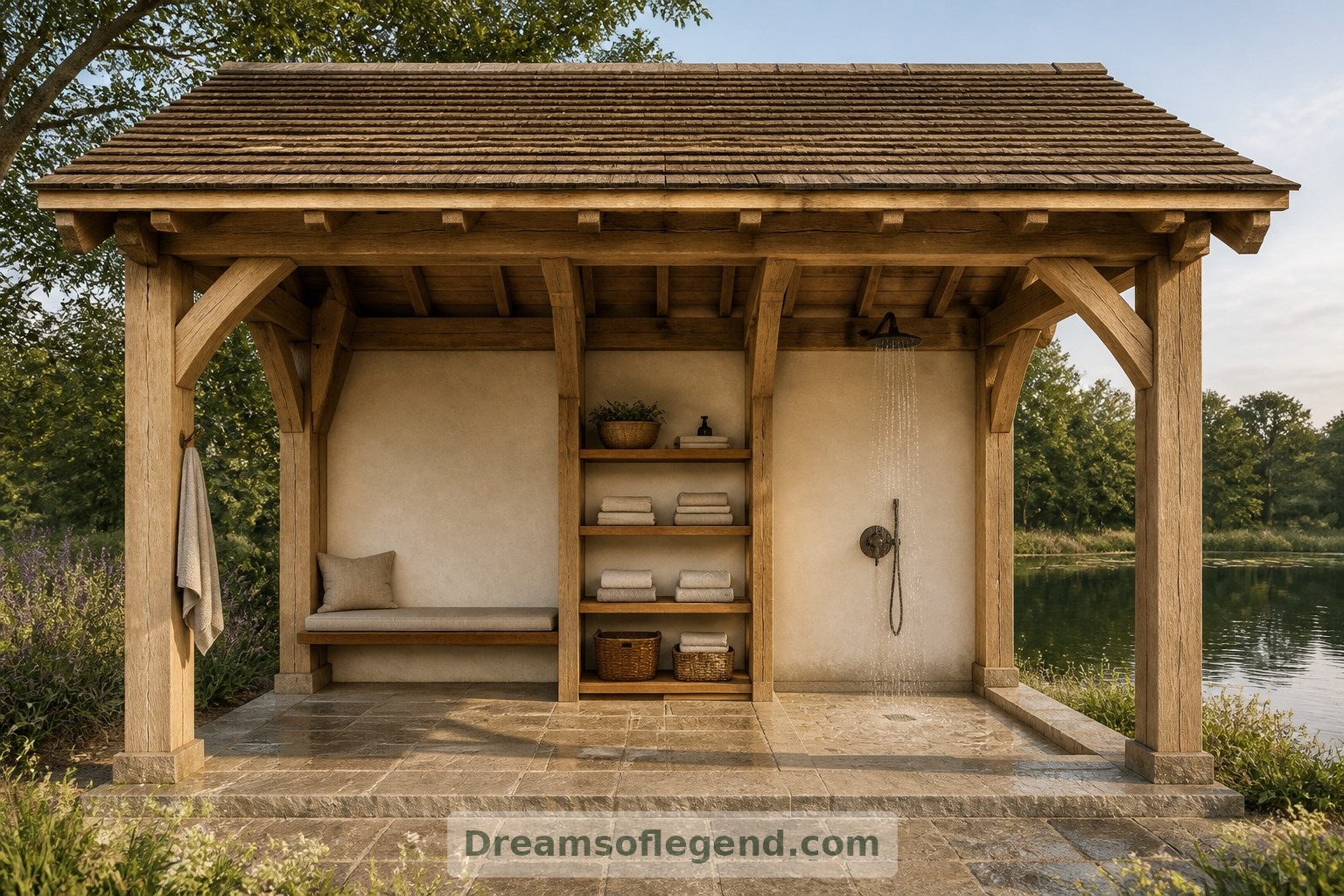
Inside the main living room, a low window seat faces the pond. Linen upholstery, limewashed walls and an uncluttered view let reflected light become part of the interior, even on days when nobody swims.
5. Keep Evening Light Gentle
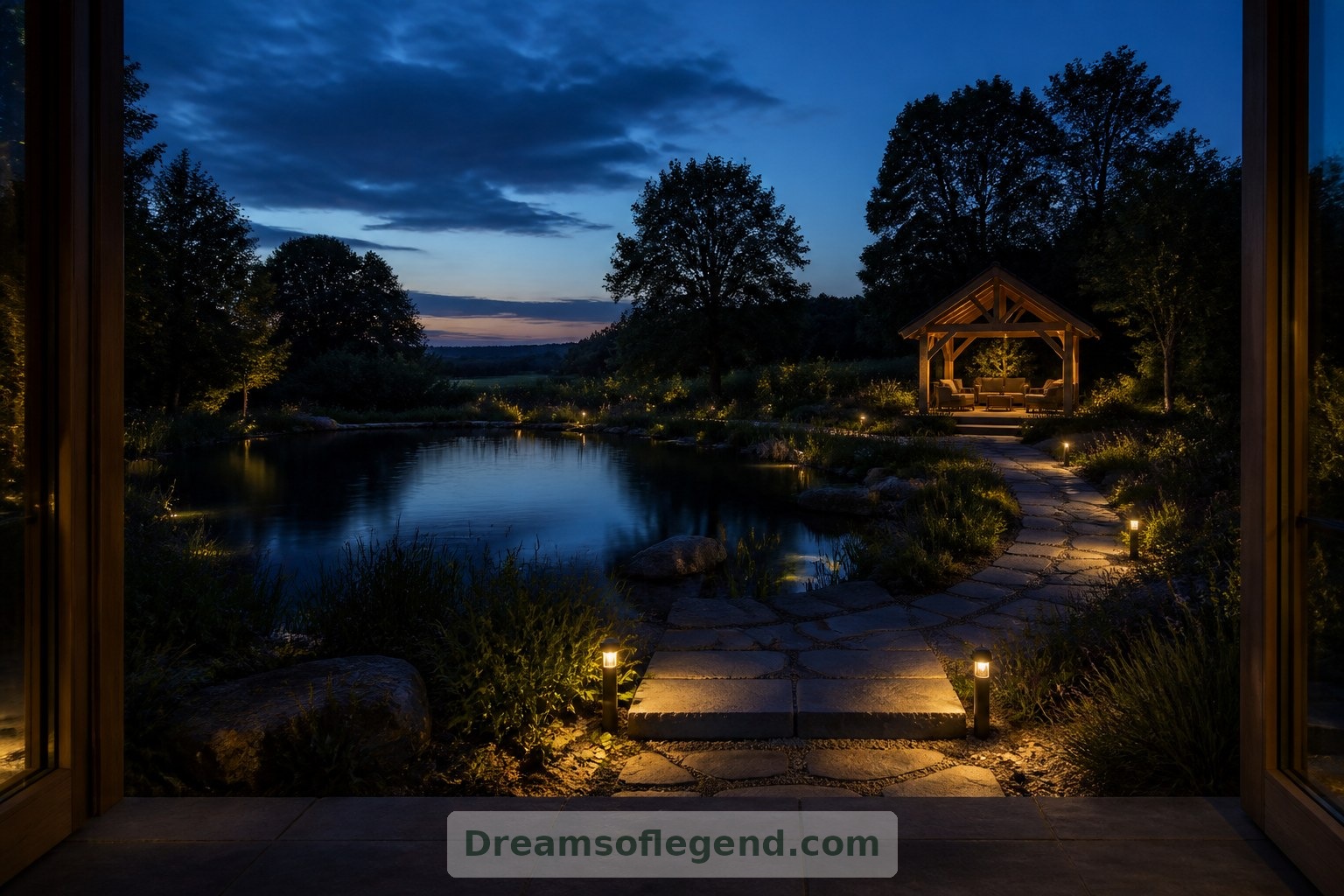
After sunset, illuminate the route rather than floodlighting the entire garden. Shielded, low-level fixtures can identify steps and thresholds while leaving much of the water dark.
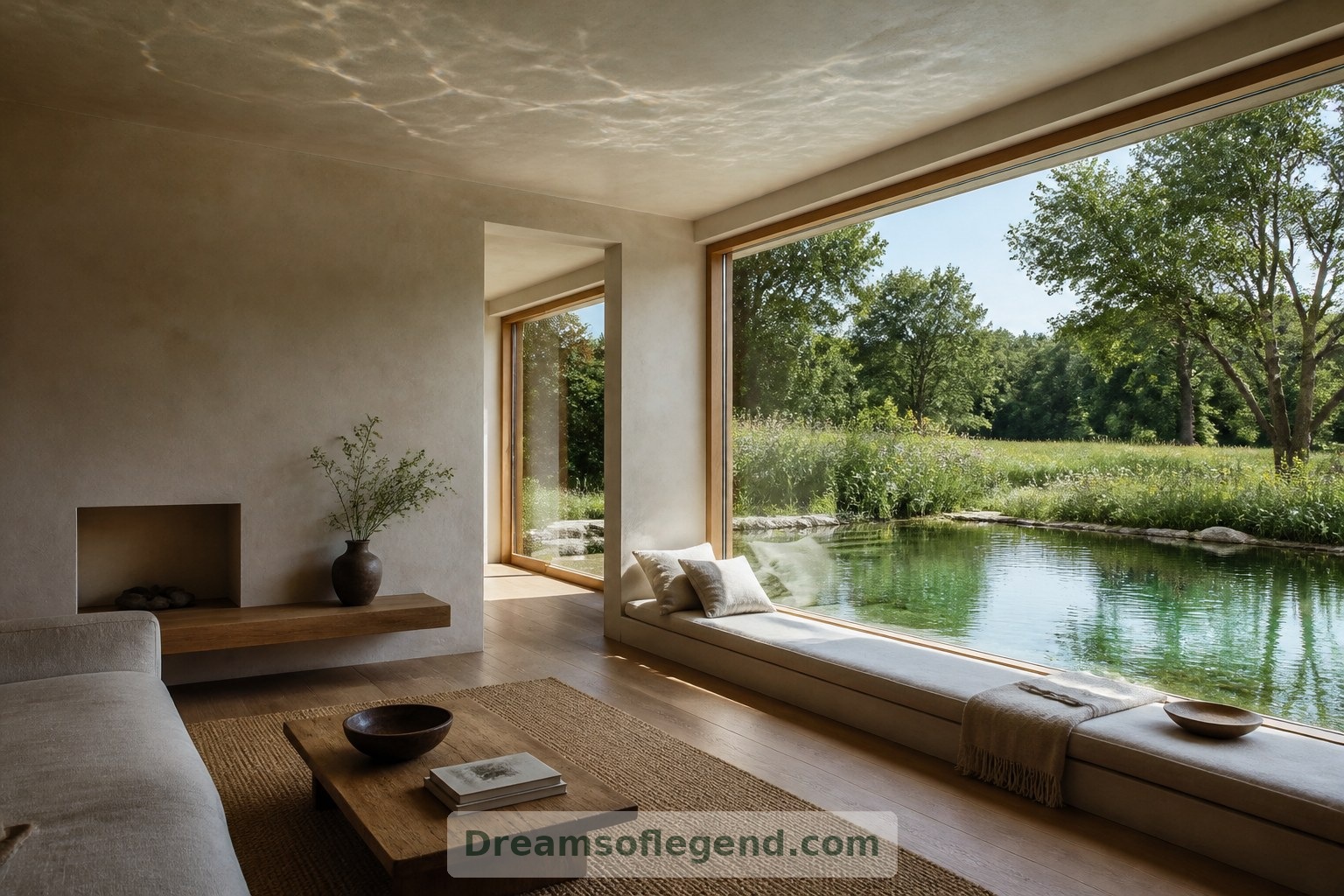
Electrical installations near water require appropriate professional design. Safety barriers, covers or other measures should also be resolved early, according to local requirements and the needs of children and other vulnerable users.
6. Welcome the Seasons
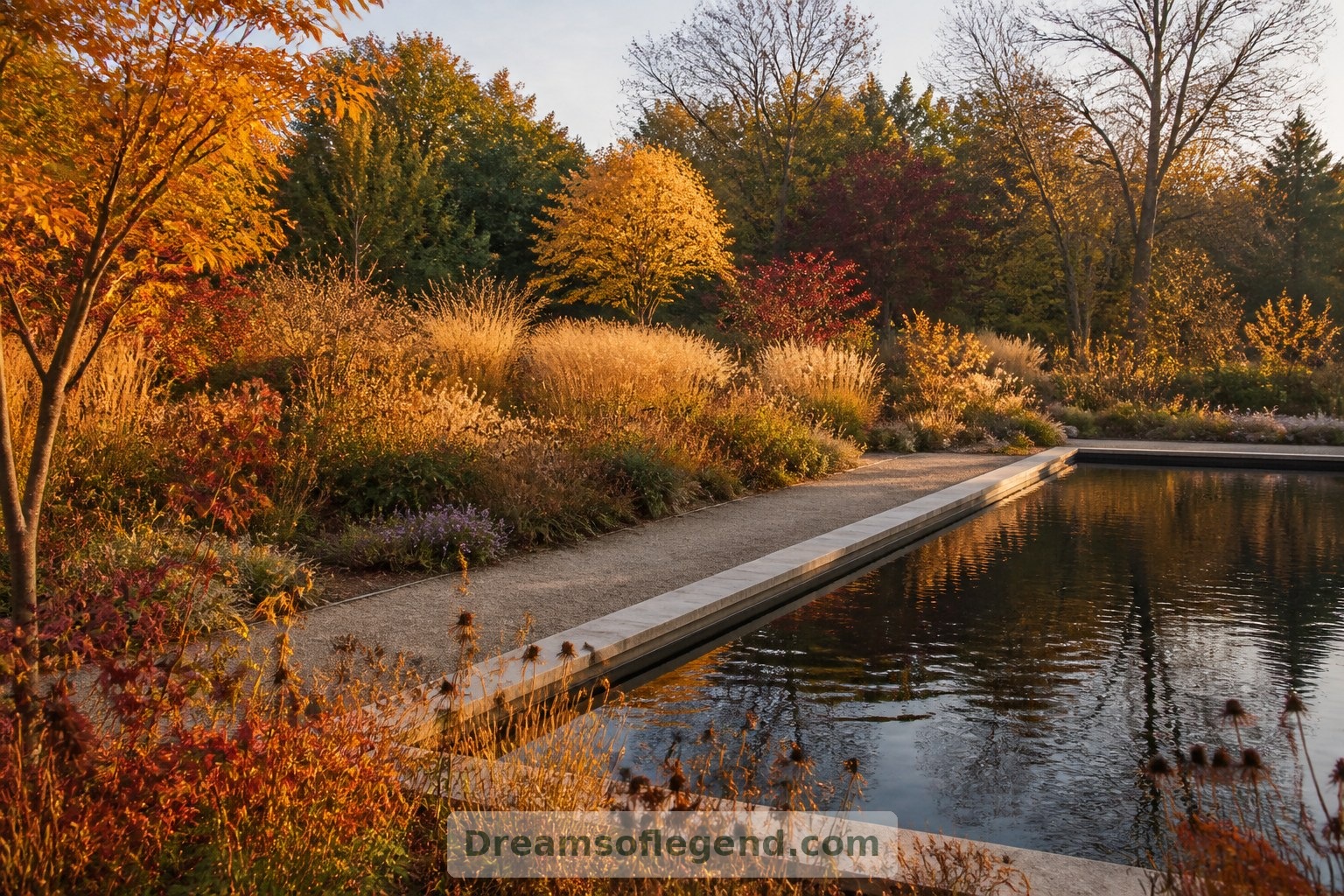
A pond offers more than summer swimming: seed heads, autumn reflections and winter silhouettes give it a year-round presence. Choose locally appropriate plants and discuss wildlife compatibility with the designer, rather than assuming every habitat feature suits a bathing area.
Leave room in the dream for practical care, including debris removal, planting management and equipment servicing.
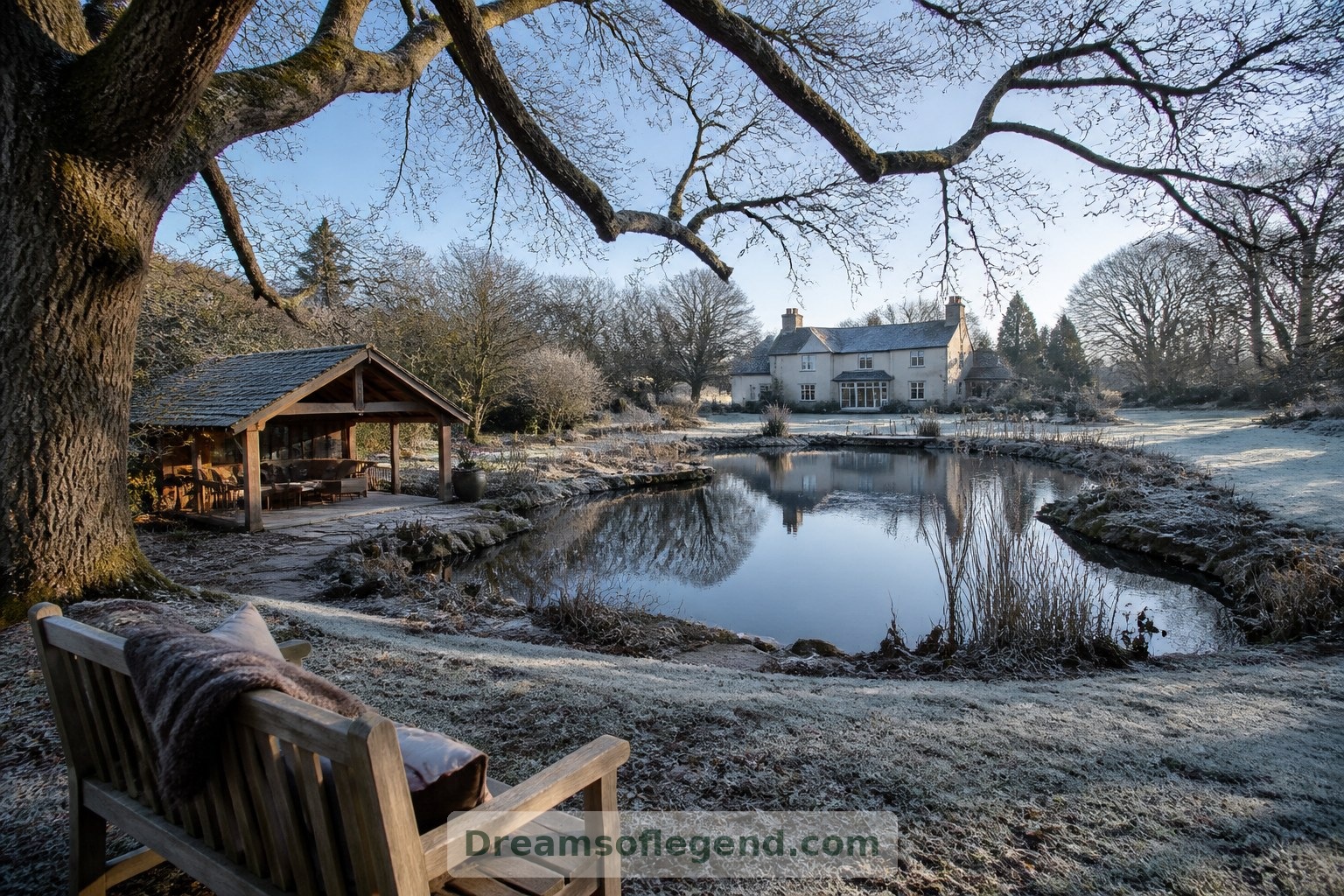
The pleasure of a natural swimming pond lies in this balance: an inviting place to swim, a carefully managed water system and a garden worth watching. Designed together, they make a summer dip feel like coming home.
How does this inspire you?
Choose one reaction. Click it again to remove it. Your choice is saved with a browser cookie.
Loading reactions…