Ice Hotels: A Visual Tour of Sculpted Suites Rebuilt Each Winter
Step inside the extraordinary world of seasonal ice hotels, where sculpted walls, glowing corridors and carefully layered beds turn winter into an architectural material.
AI-generated concept imagery. These illustrations are not documentary photographs or proof that a place exists.
Dreams of Legend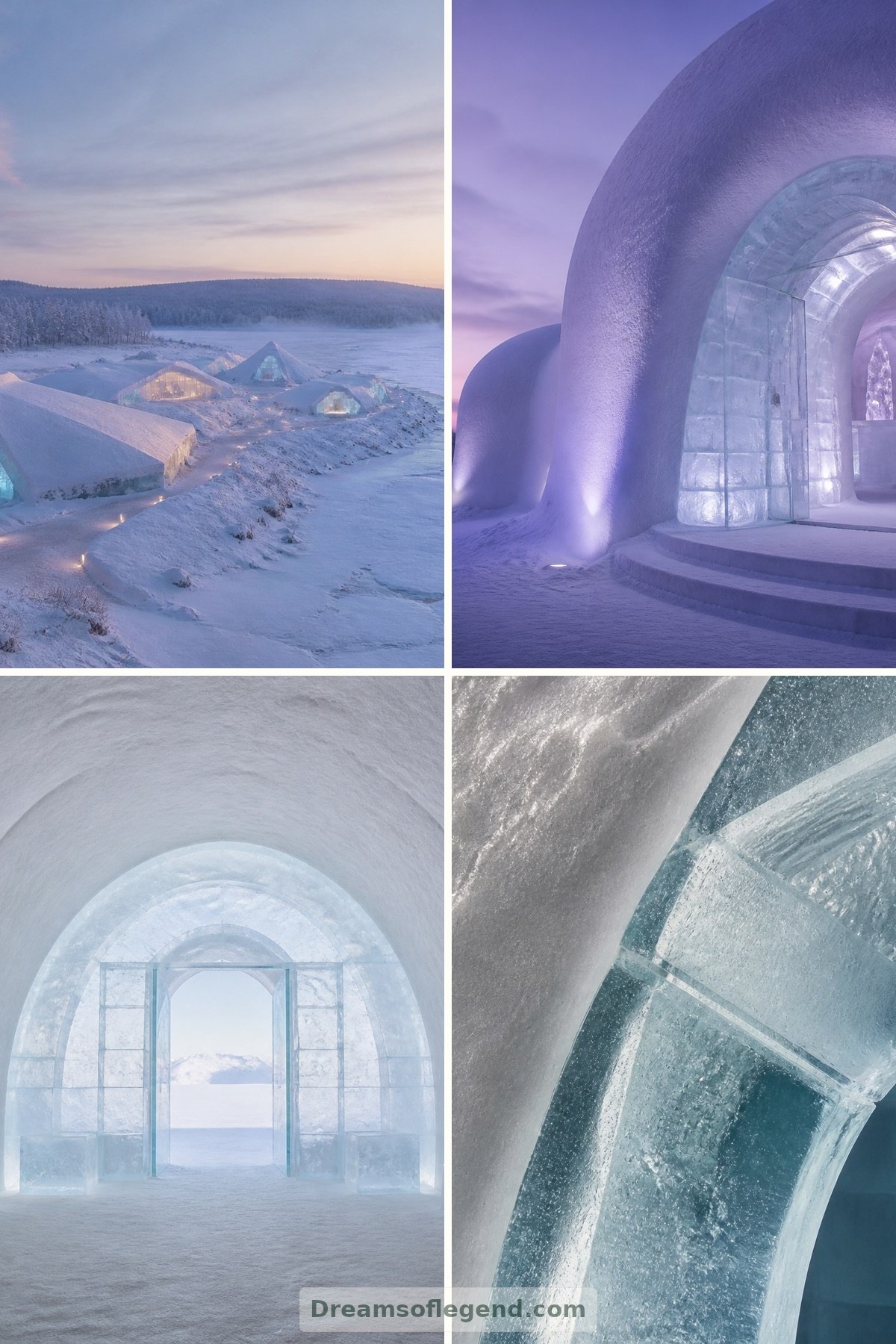
Imagine arriving at a building that belongs to winter alone. Its walls soften sound, its doorways catch pale blue light, and its rooms offer the unlikely intimacy of sleeping inside a sculpture. Seasonal ice hotels make this extraordinary idea real. For anyone drawn to dream homes, they offer a beautiful question: what makes a space welcoming when its very structure is frozen?
1. A Building Borrowed from Winter
At ICEHOTEL in Jukkasjärvi, Sweden, seasonal ice-and-snow accommodation is rebuilt for winter; the property also includes ICEHOTEL 365, a separate year-round ice experience. That distinction matters: not every frozen room disappears in spring.
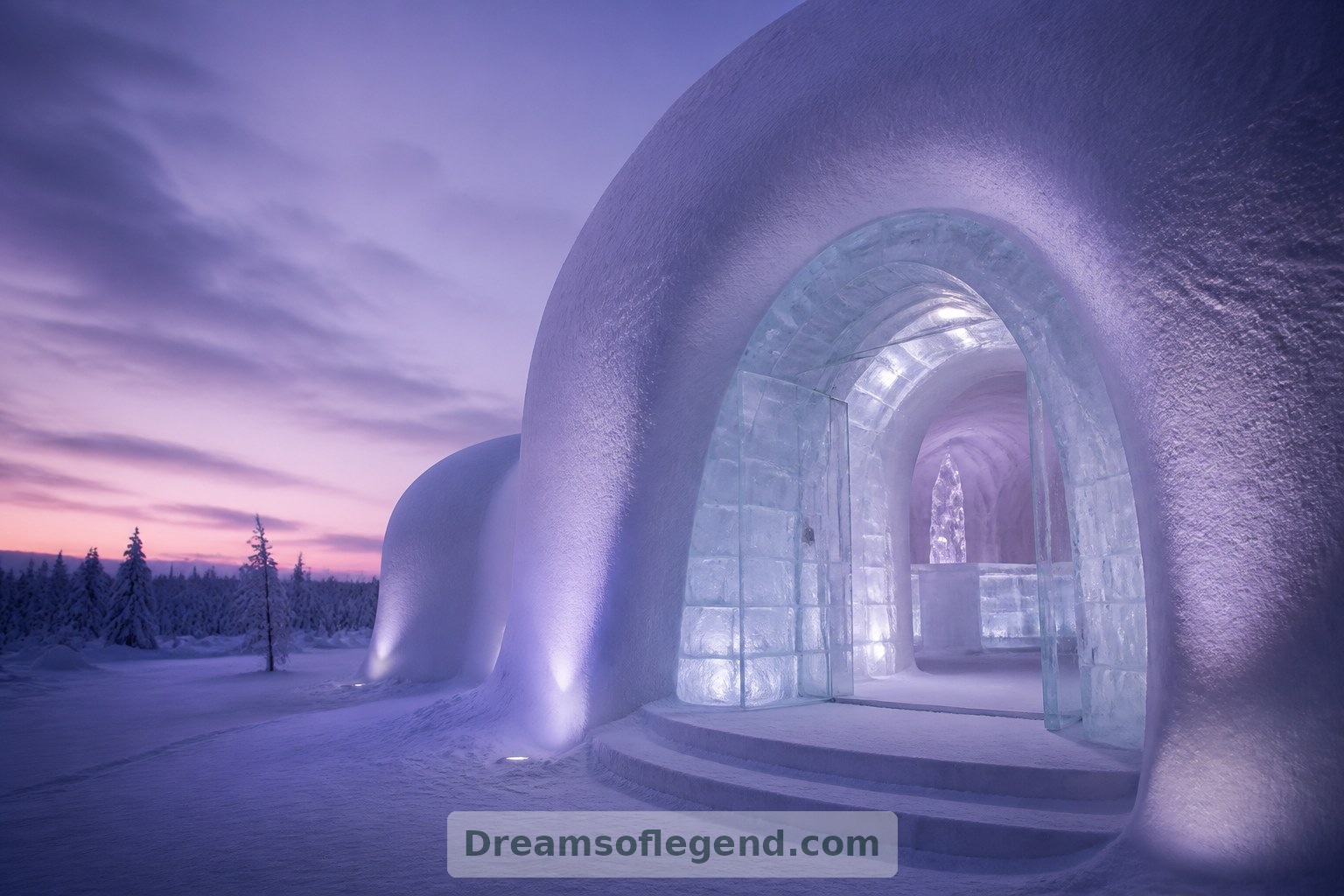
The visual tour below uses imagined architectural designs, not photographs or documented suites at that hotel. These conceptual spaces explore the possibilities of seasonal ice construction and are not presented as bookable accommodation.
2. Walls That Shape the Silence
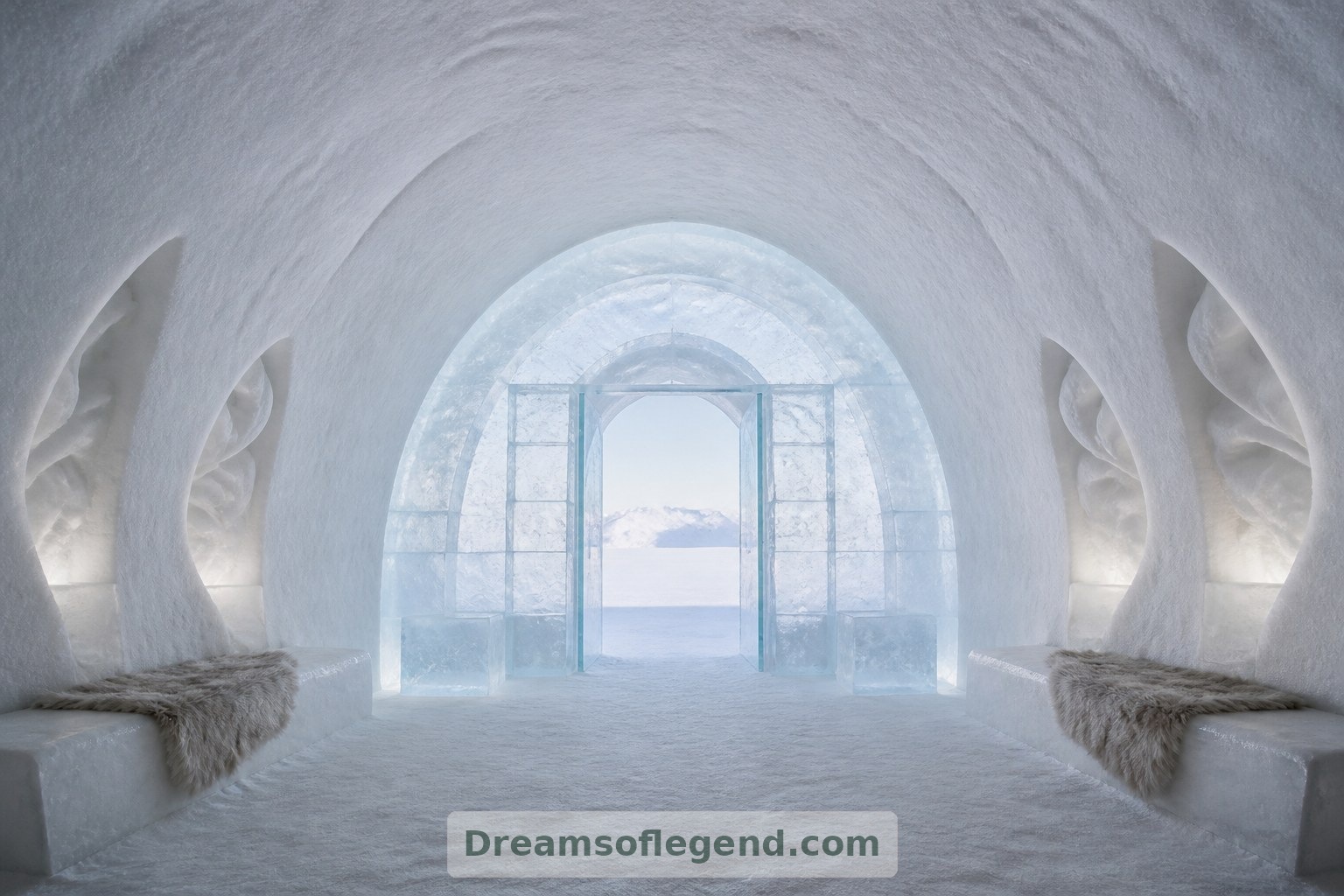
Begin with the building’s shell. Snow and ice perform different visual roles: compacted snow gives surfaces an opaque, softly textured character, while clearer ice can reveal bubbles, fractures and remarkable depth. Together, they suggest a palette closer to cloud and glass than conventional plaster and stone.
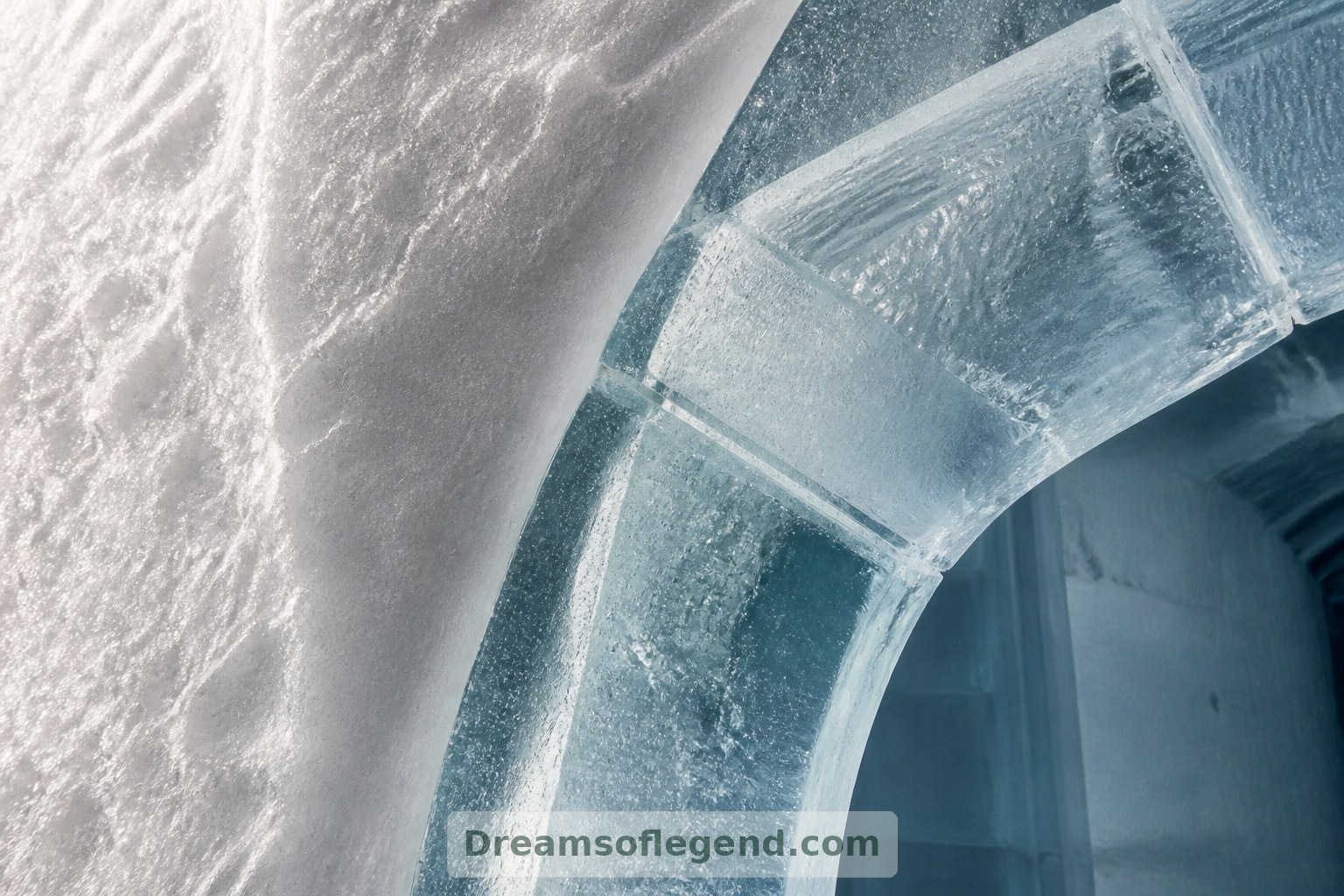
In our imagined entrance hall, a rounded ceiling and thick walls create a sheltered threshold. A close view reveals the small tool marks that turn frozen material into a handmade interior.
3. The Suite as a Single Sculpture
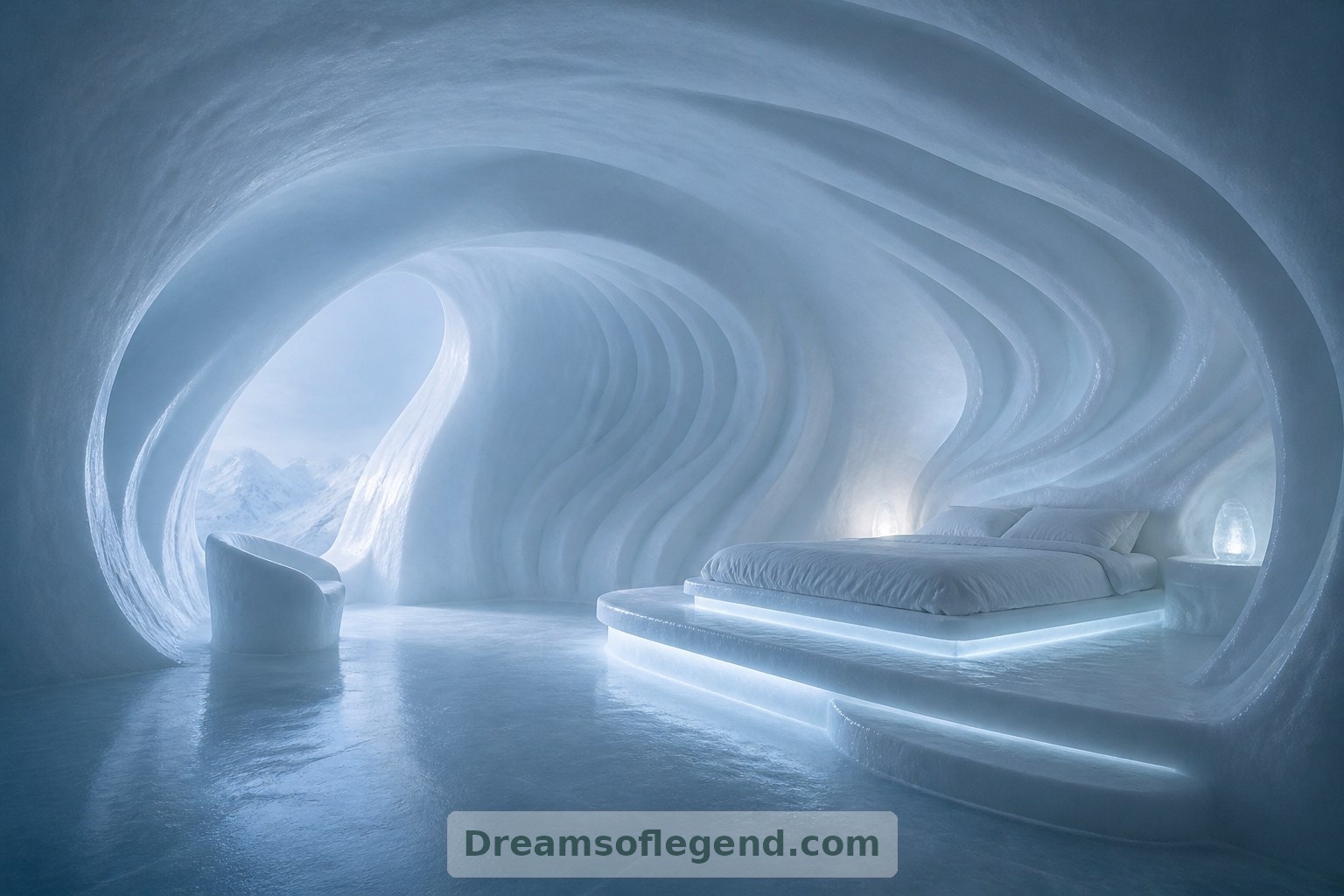
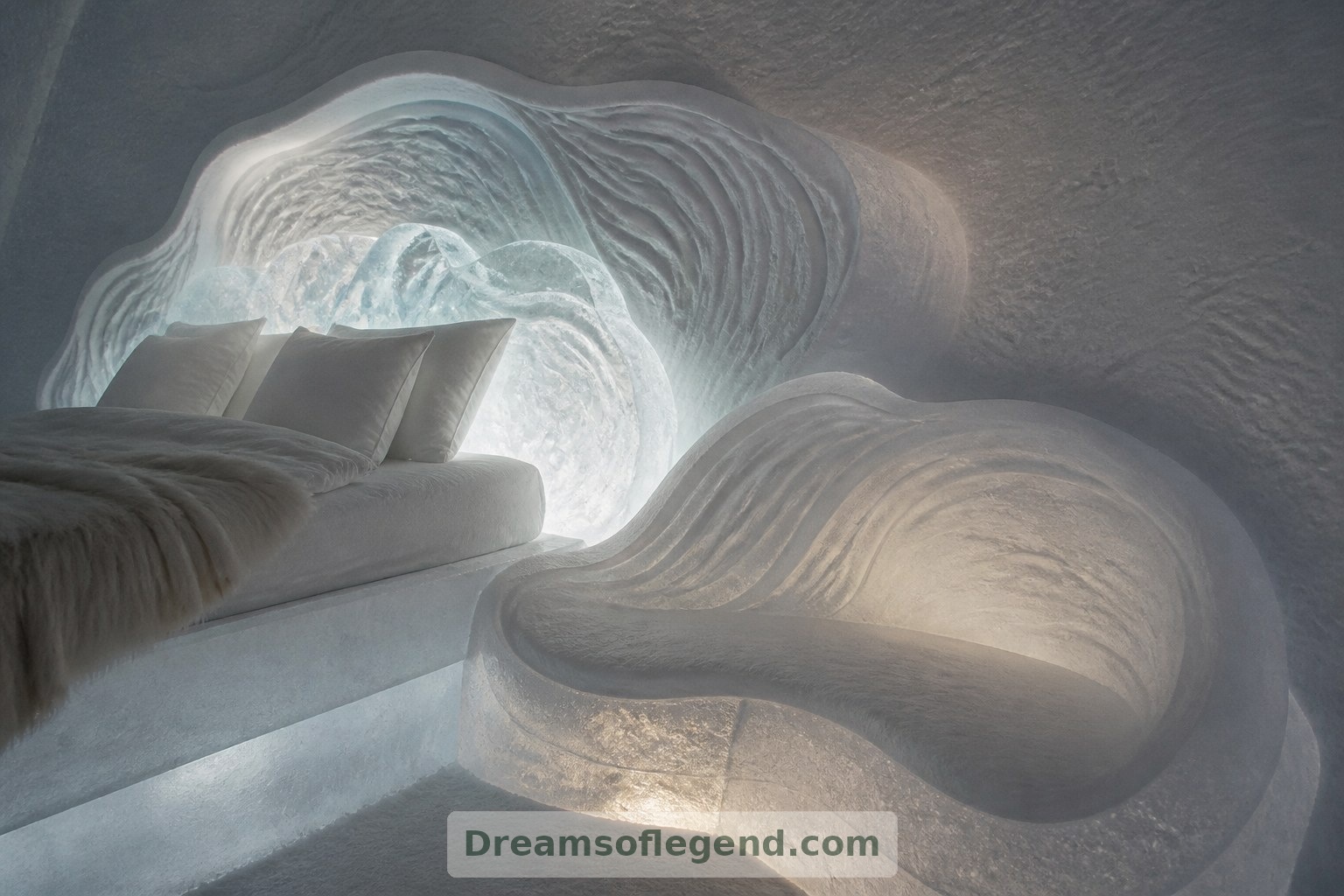
An ice suite invites a different approach to decoration. Instead of filling a room with separate objects, an imagined designer might carve the headboard, wall relief and seating forms into one continuous composition.
Here, sweeping ridges frame the sleeping platform, leaving the centre open. The effect is dramatic without feeling crowded. It is a useful lesson for ordinary homes, too: one strong architectural gesture can do more than a roomful of accessories.
4. A Bed Built Around Warmth
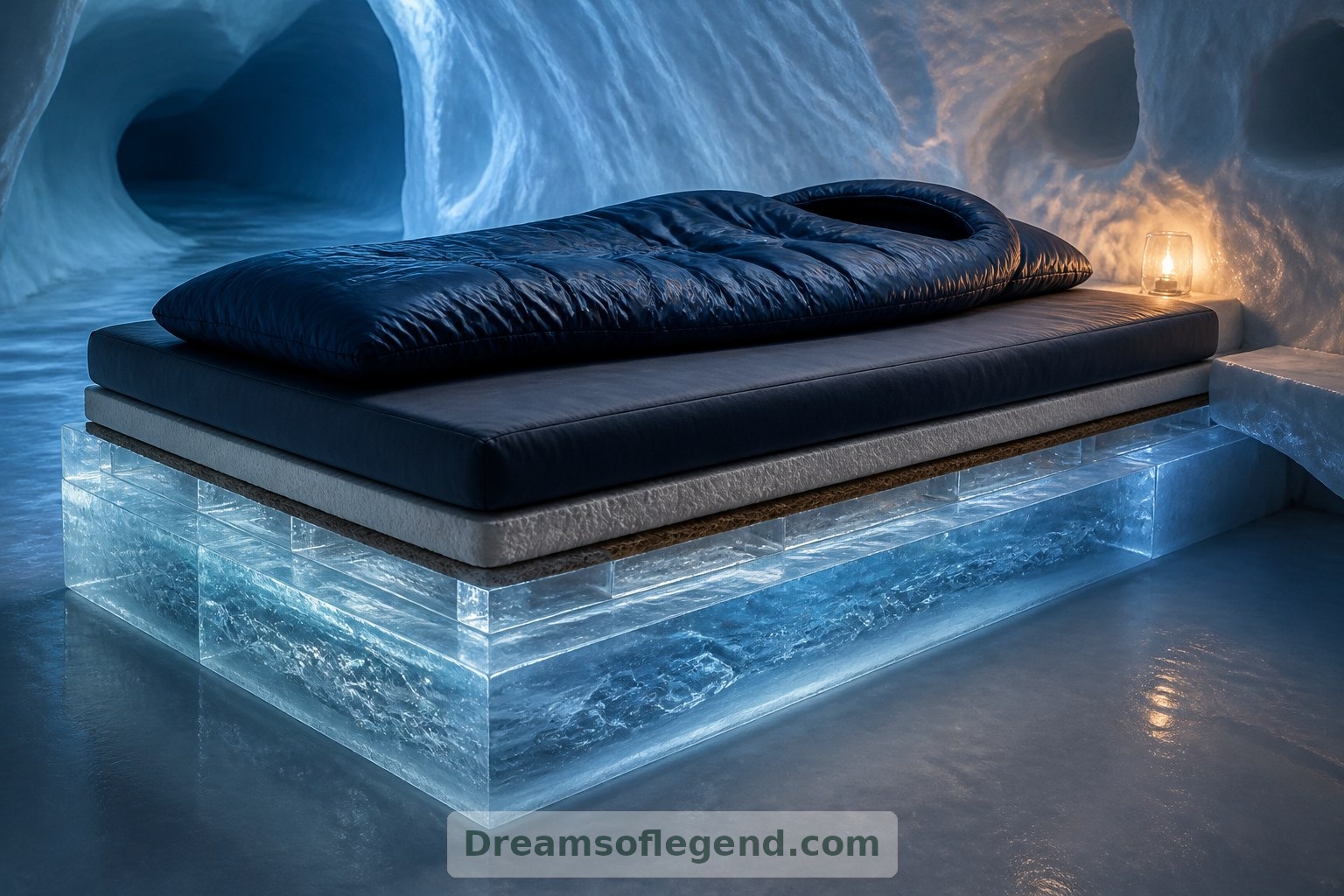
The romance needs a practical counterpoint. In real cold-room accommodation, guests generally sleep on mattresses with insulating layers and appropriate sleeping bags, rather than directly against ice. Exact arrangements and guidance vary by property.
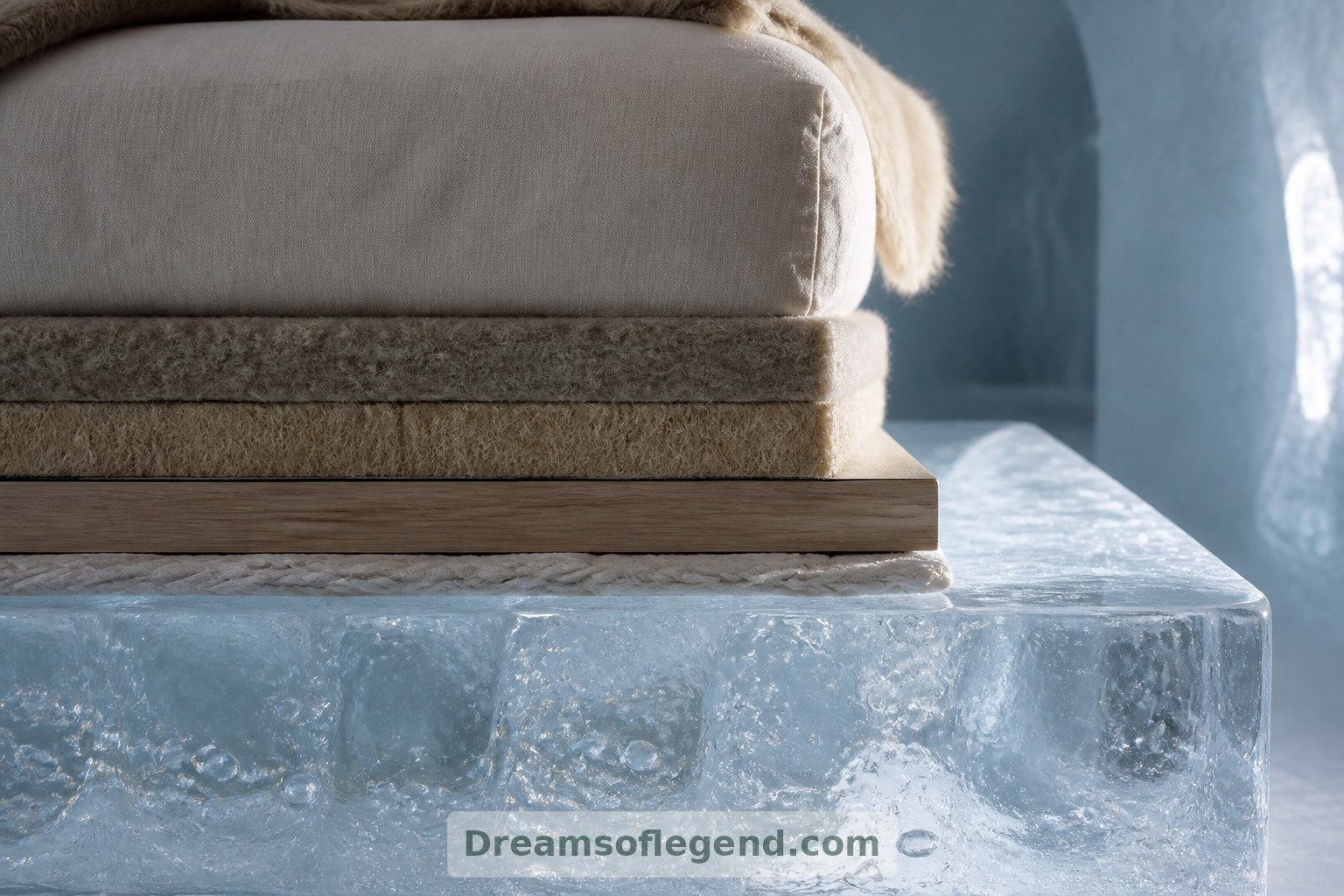
Our conceptual bed makes those layers visible: a substantial sleeping surface rests above a translucent base, with soft bedding providing a deliberate contrast. Warmth belongs to the sleeping system, not to an assumption that the frozen room is heated.
5. Light Becomes the Decoration
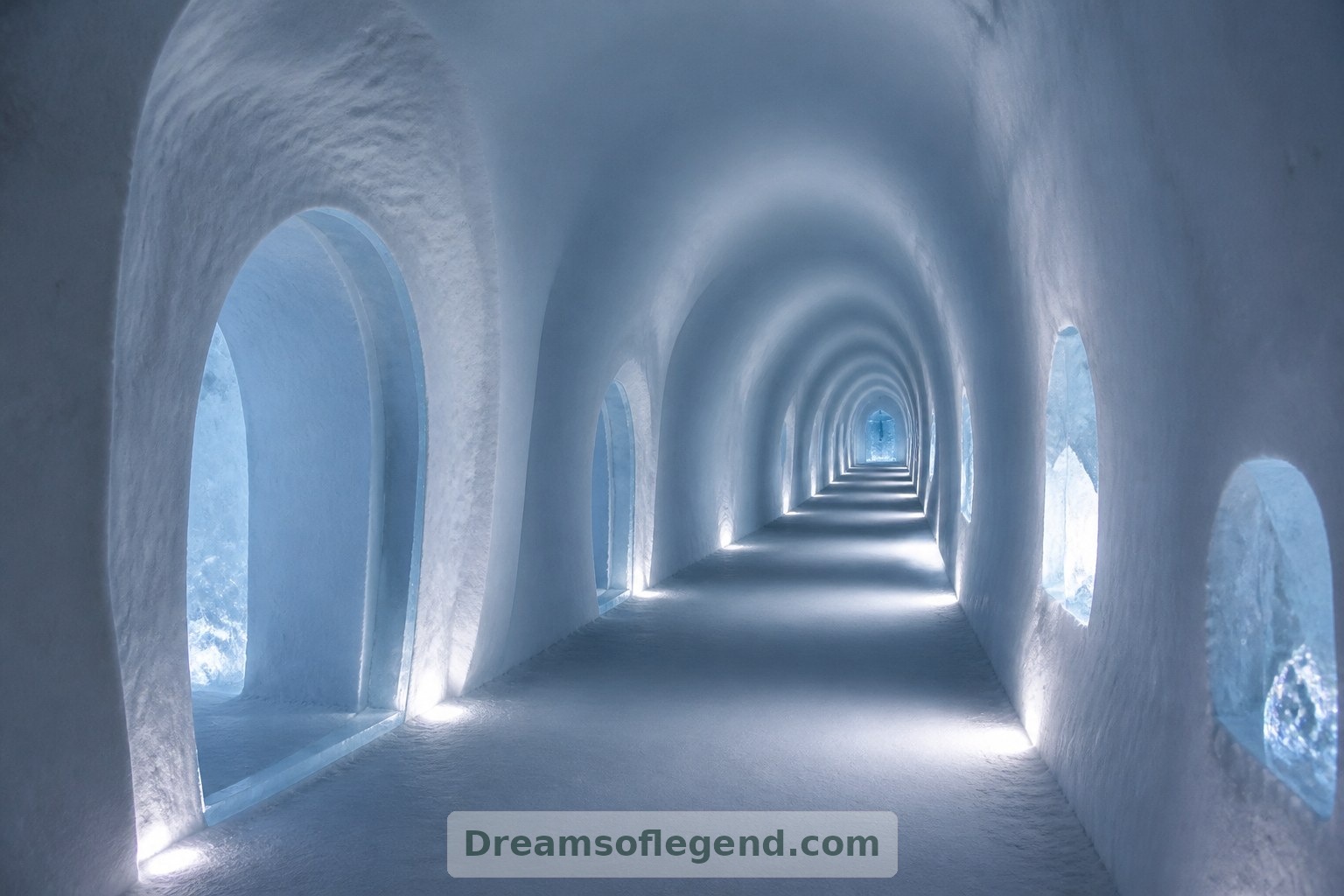
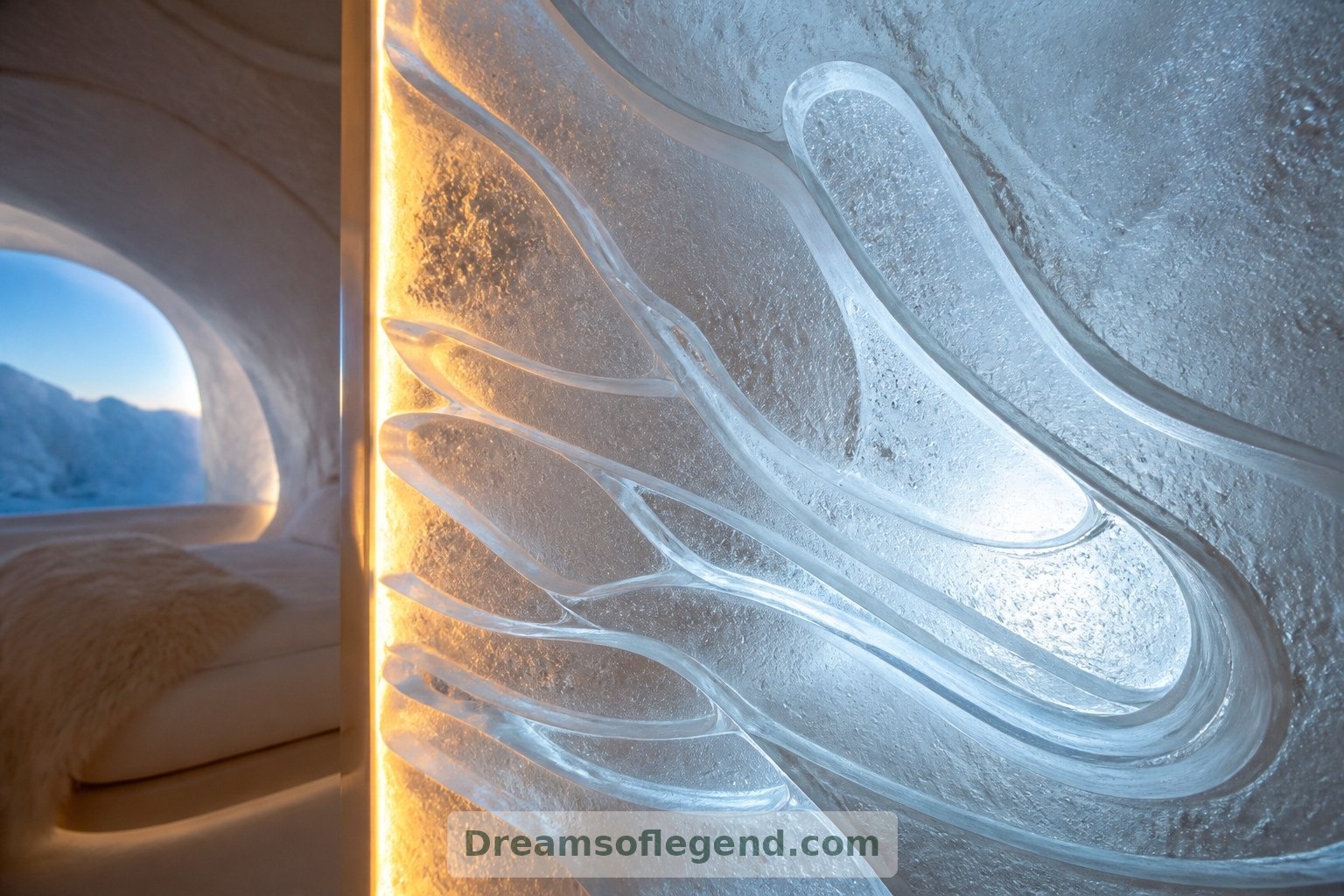
Light changes everything. Grazing illumination draws out carved grooves; a concealed source can make an ice panel appear luminous from within. Blue-white tones emphasise depth, while a restrained amber accent introduces visual warmth without pretending to raise the temperature.
In the imagined corridor, the lighting stays low and directional. Shadows remain part of the design, giving each doorway a quiet sense of arrival.
6. The Beauty of Letting Go
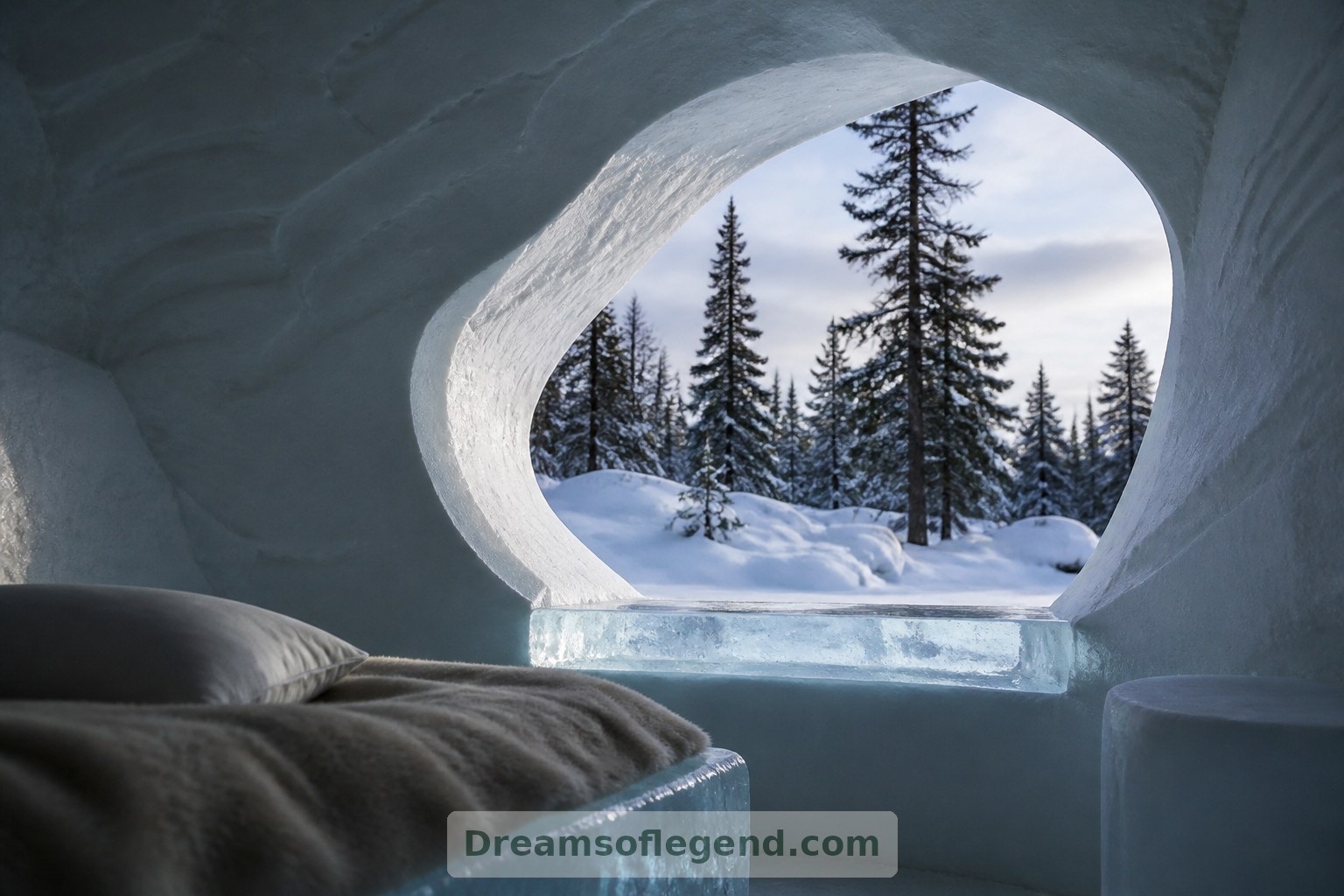
Seasonal construction offers an unusual luxury: impermanence. Designs can change with each winter rather than becoming permanent fixtures. Our final imagined views move from a sculpted window opening to an exterior beginning to soften in spring, celebrating architecture that never promises to last forever.
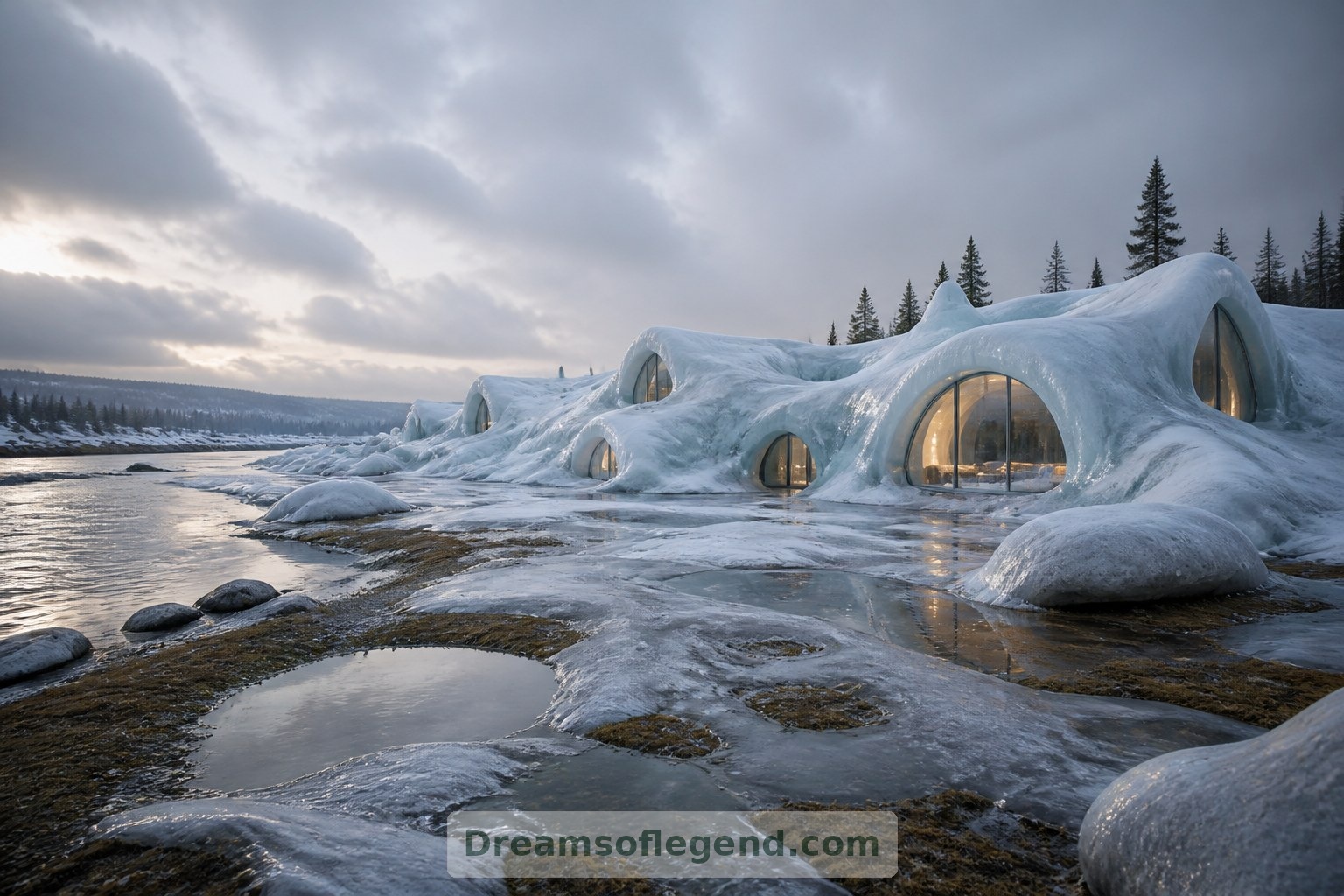
Ice hotels make shelter feel newly surprising. Their appeal lies in the meeting of precise craft and an unruly season: hard surfaces, soft sleeping layers, luminous walls and temporary rooms. Even from home, there is something lovely to borrow—the idea that a memorable interior needs atmosphere, not permanence.
How does this inspire you?
Choose one reaction. Click it again to remove it. Your choice is saved with a browser cookie.
Loading reactions…