Rain Gardens as Outdoor Retreats: Beautiful Landscapes That Welcome Stormwater
Turn rainfall into a quiet garden ritual with planted hollows, sculptural stone channels and welcoming places to sit. Discover how a thoughtfully designed rain garden can bring beauty, habitat and a deeper connection to the weather.
AI-generated concept imagery. These illustrations are not documentary photographs or proof that a place exists.
Dreams of Legend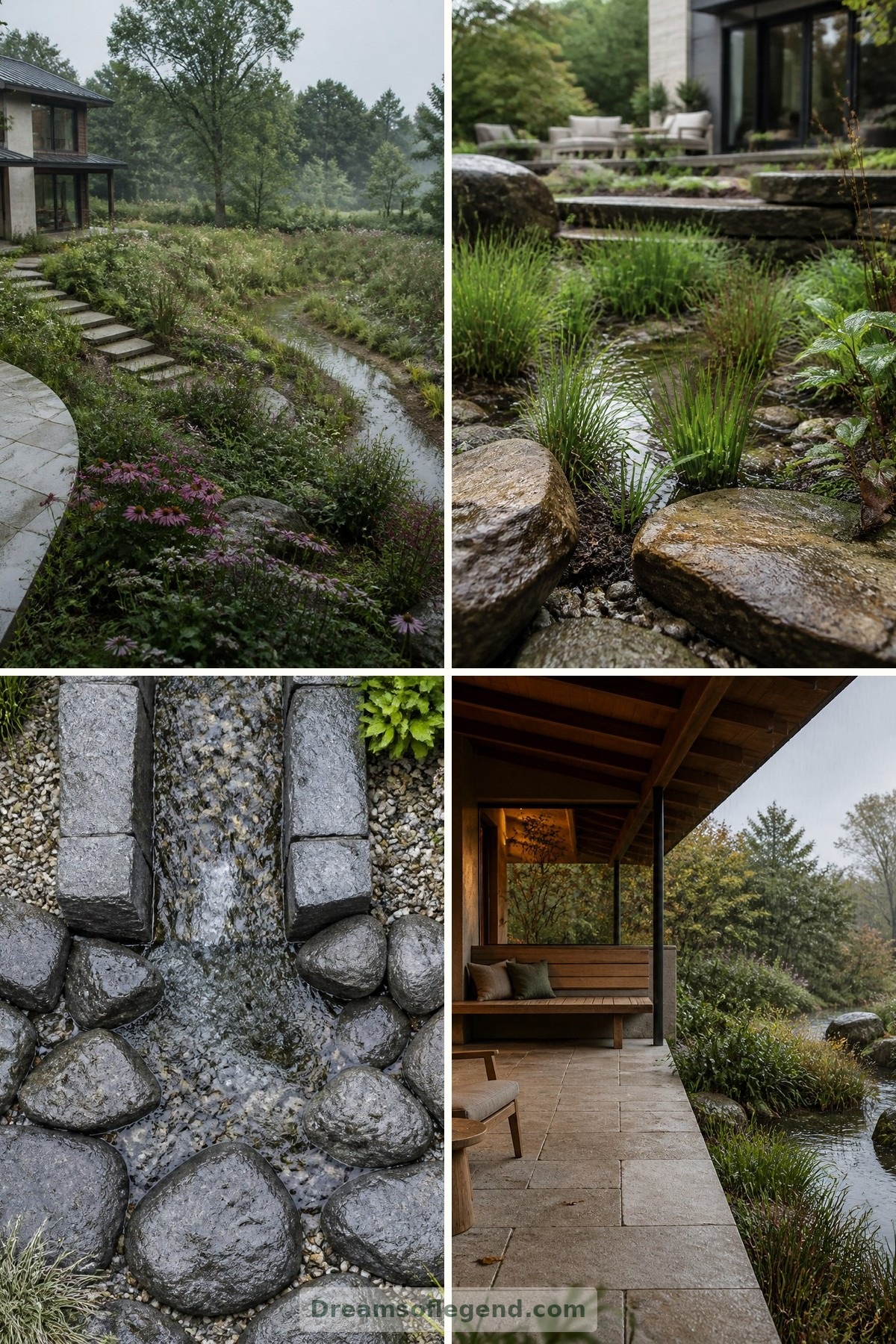
A dream garden need not turn its back on rainy weather. It can welcome the patter on leaves, the glint of wet stone and the brief gathering of water among grasses. In the imagined residential landscape explored here—not a real destination—a rain garden becomes both useful infrastructure and an outdoor retreat, bringing the changing sky into everyday life.
1. Shape a Garden That Receives
A rain garden is a shallow planted depression that receives runoff and allows it to soak into suitable soil. Unlike a permanent pond, it is designed to drain between storms. Picture a softly curved hollow beyond the terrace, its edges feathered with planting rather than hidden behind a rigid border. Even when dry, its contours should feel intentional.

2. Make the Water’s Journey Visible
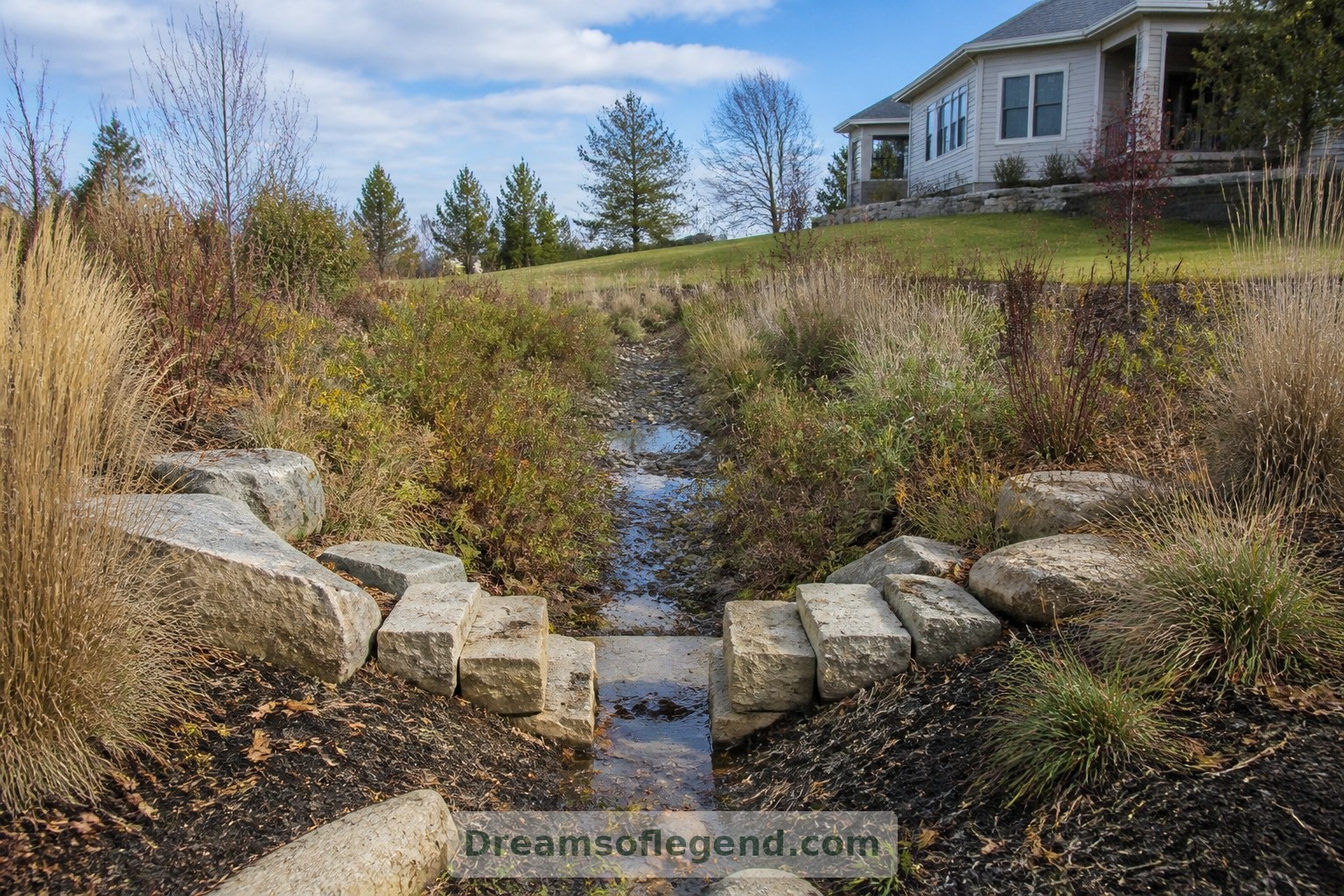
Water can arrive through an open stone channel, turning an ordinary downspout connection into a small landscape event. Broad, securely set stones at the inlet help protect soil from erosion. Beside them, a gravel margin creates a visual pause between paving and planting. Keep the route legible: watching rain travel through the garden is part of its pleasure.
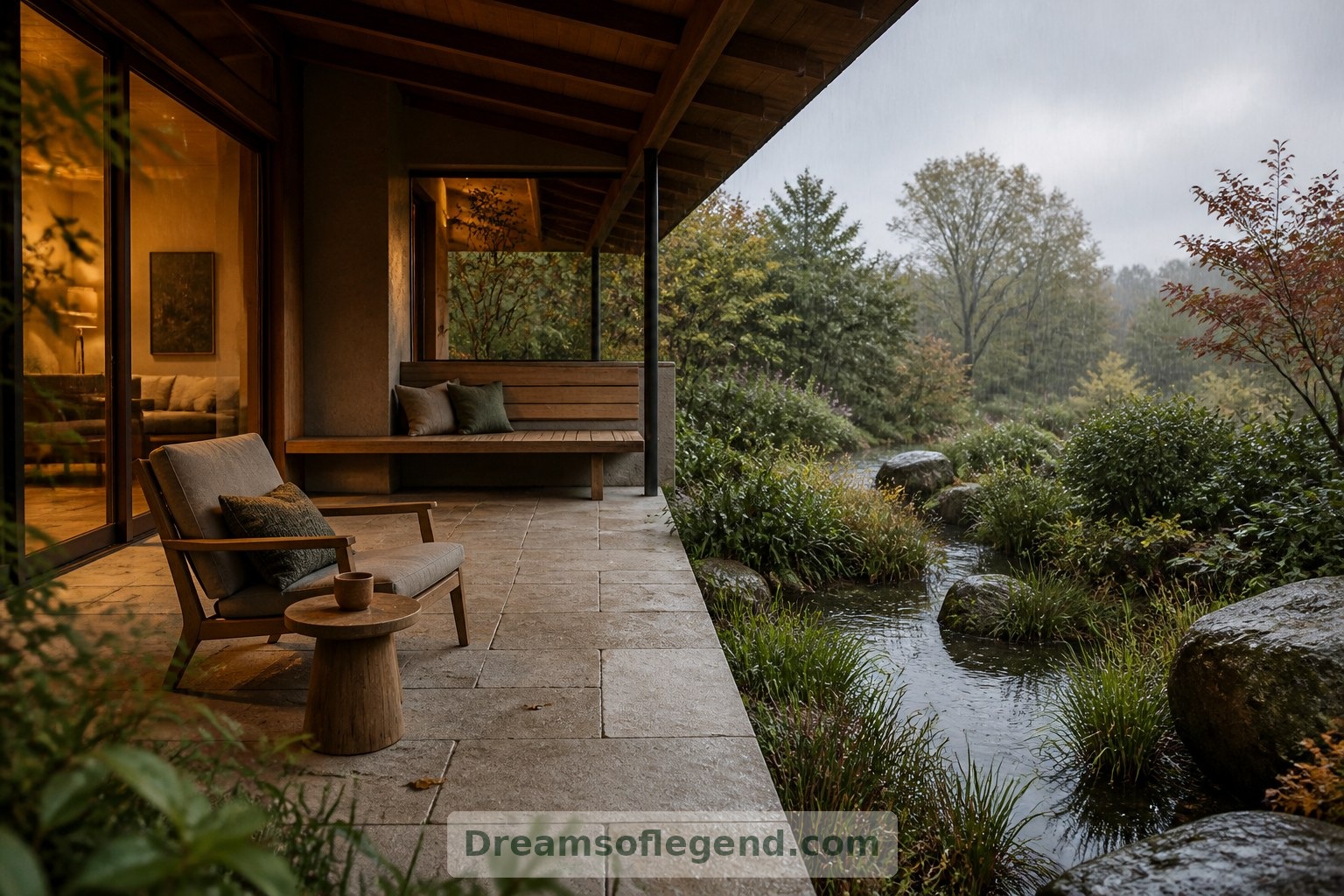
3. Give the Retreat a Dry Landing
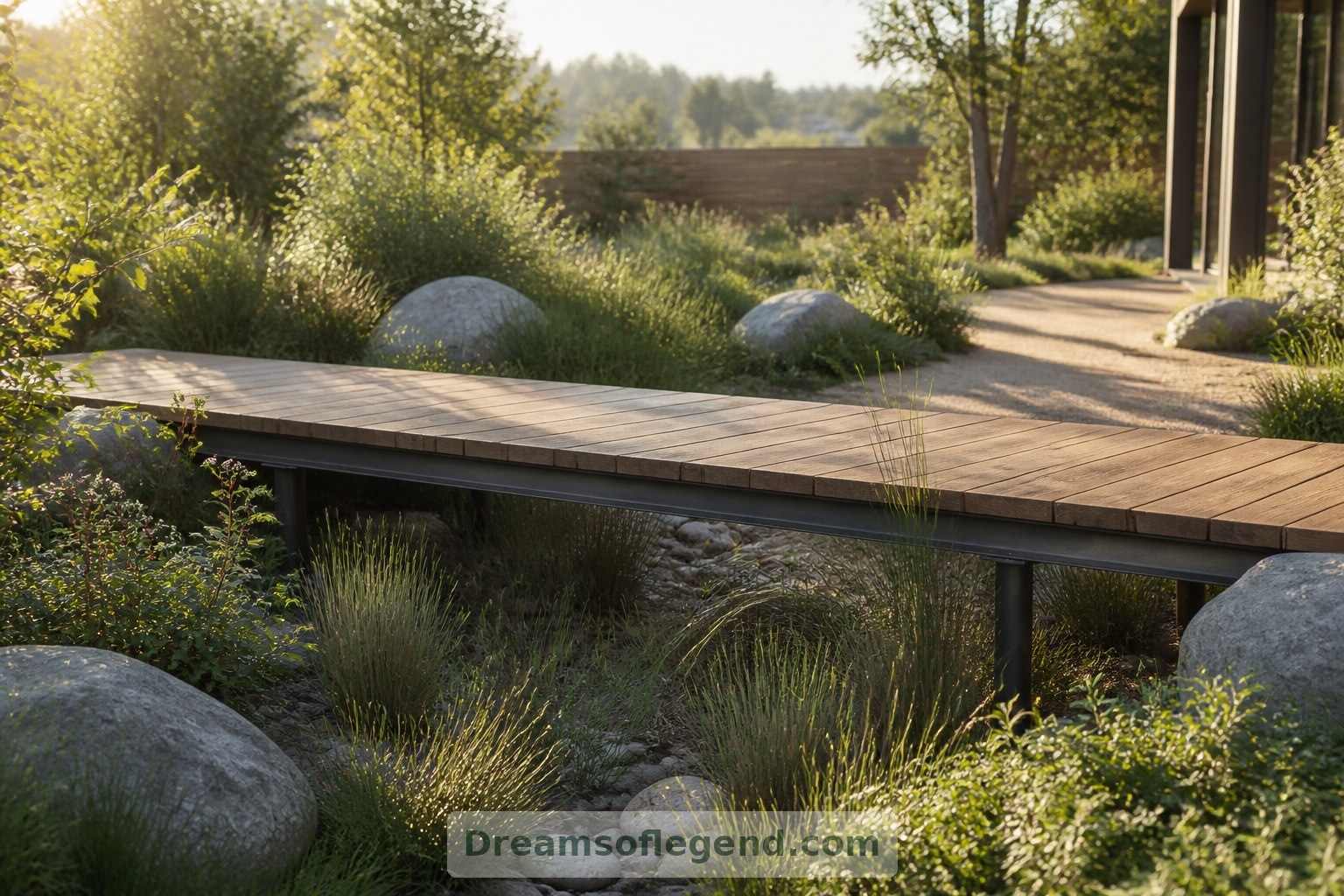
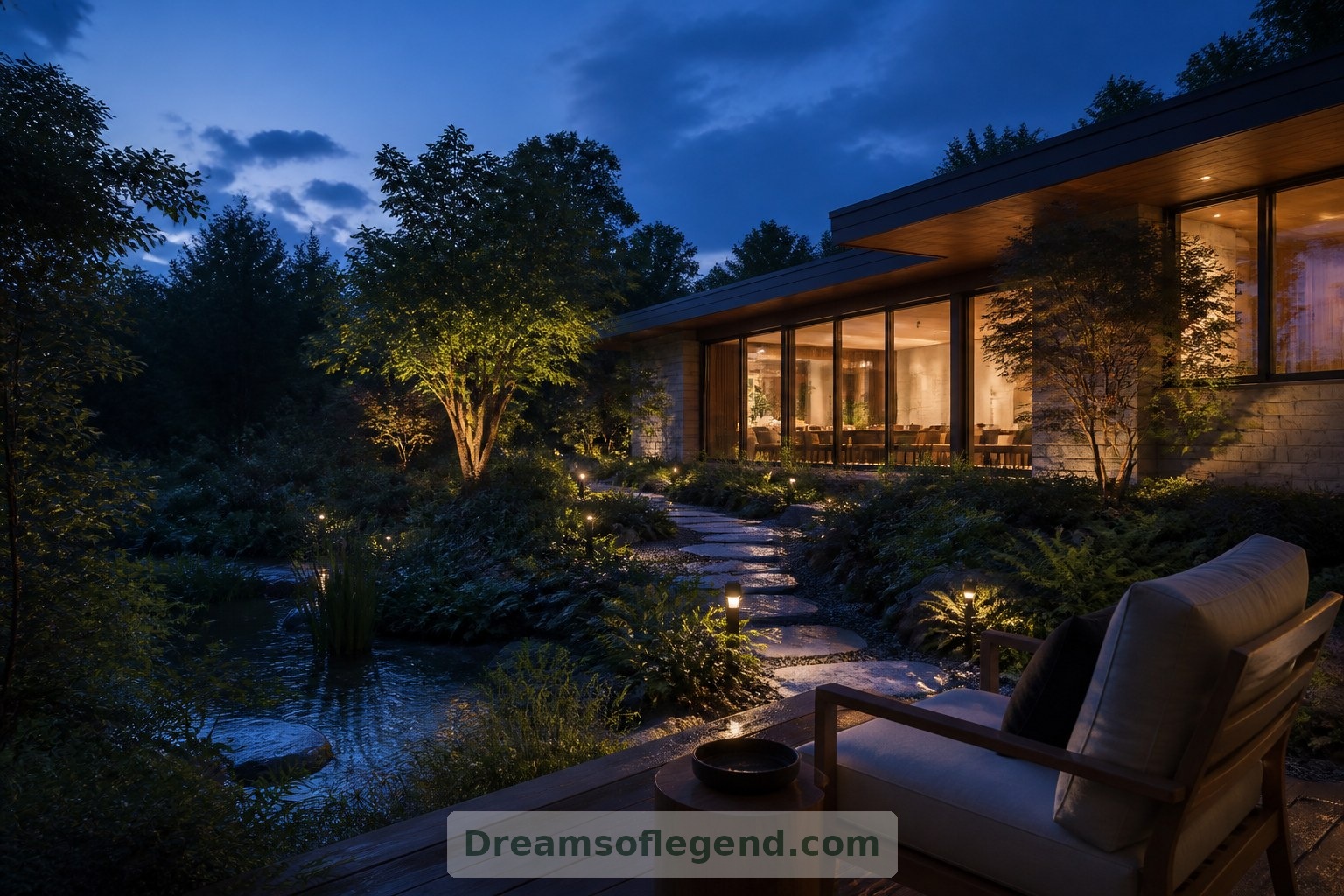
Set a sitting terrace above the garden’s temporary water level, with drainage directed away from the house. A timber bench, a generous chair and a small table are enough. From this dry perch, the planted hollow becomes a living foreground. Where access requires crossing, a carefully detailed footbridge can preserve the depression while offering a new viewpoint.
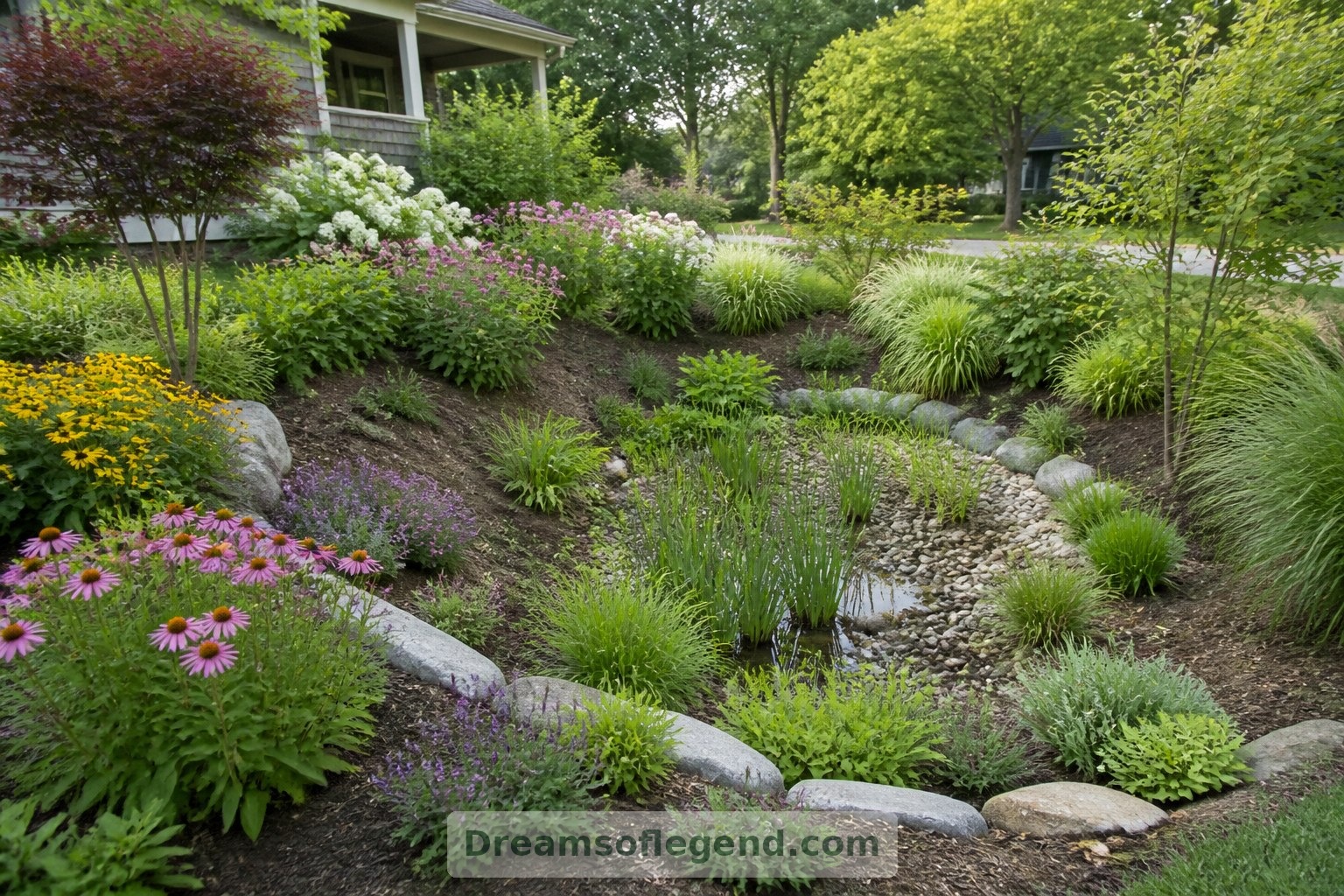
4. Plant for Changing Conditions
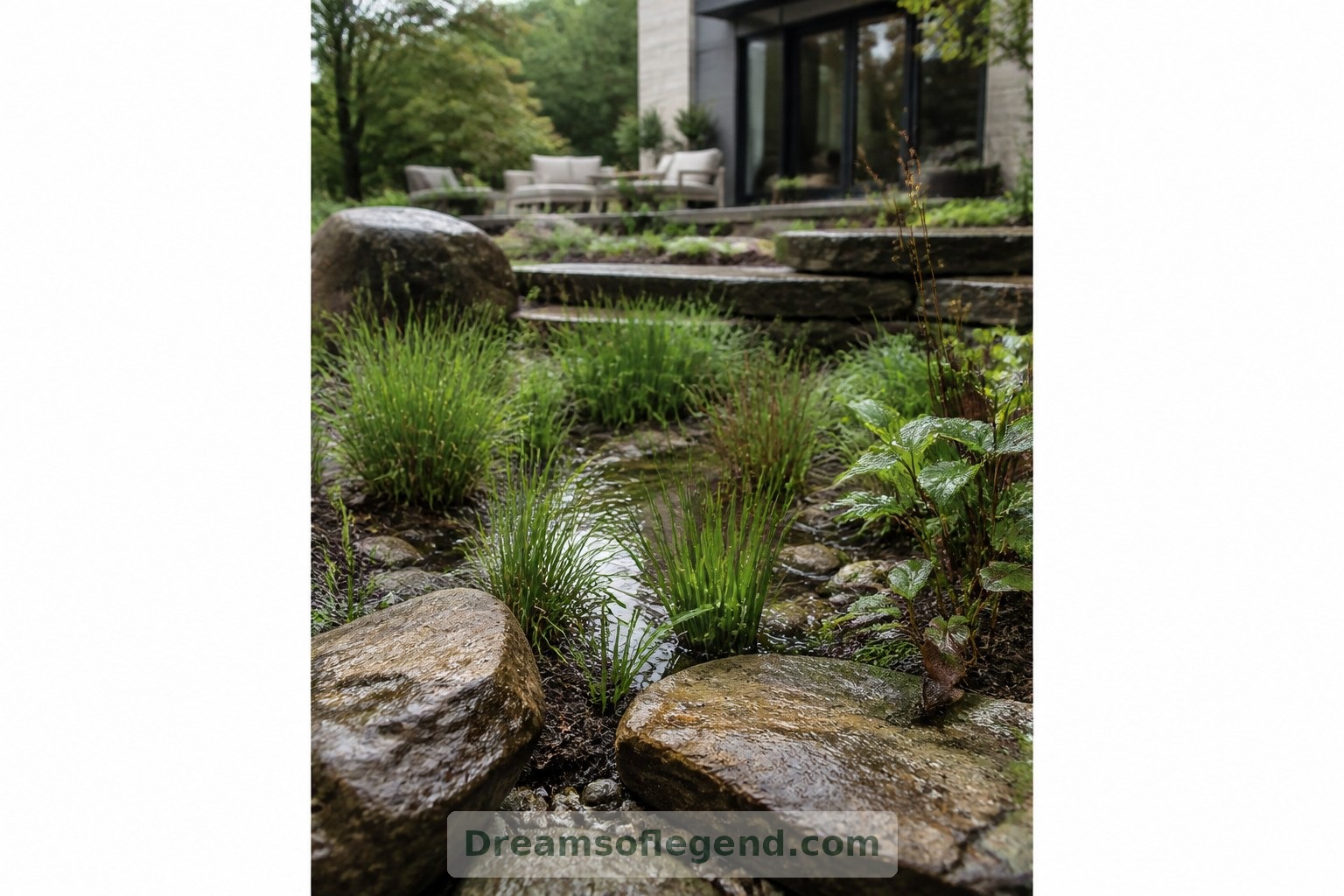
Choose locally appropriate plants for alternating wet and dry conditions, matching species to each moisture zone. The lowest ground needs different tolerances from the upper rim. Combine sedges or suitable grasses with flowering perennials and a few structural shrubs, allowing foliage to carry the composition between blooms. Leave clear sightlines from seating so the garden feels embracing rather than enclosed.
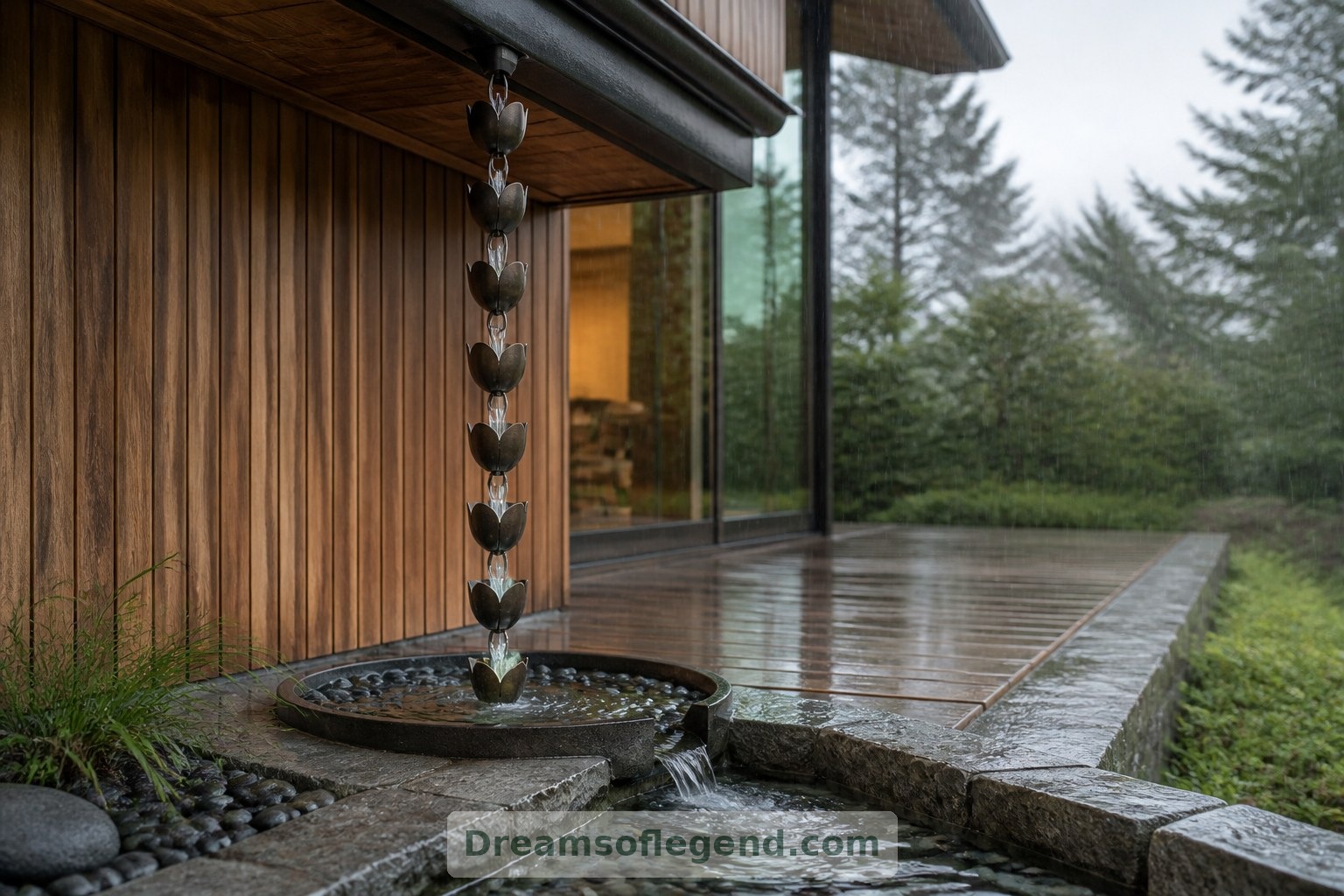
5. Pair Beautiful Details with Sound Planning
A rain chain can make roof runoff visible, but its splash zone and connection need careful design. Before construction, assess soil infiltration, groundwater, buried utilities and safe separation from foundations. Size the garden for its contributing runoff area and provide an overflow route away from buildings and neighboring property. Local guidance or a qualified landscape professional should determine drainage targets and suitability.
6. Design for the Quiet Days, Too
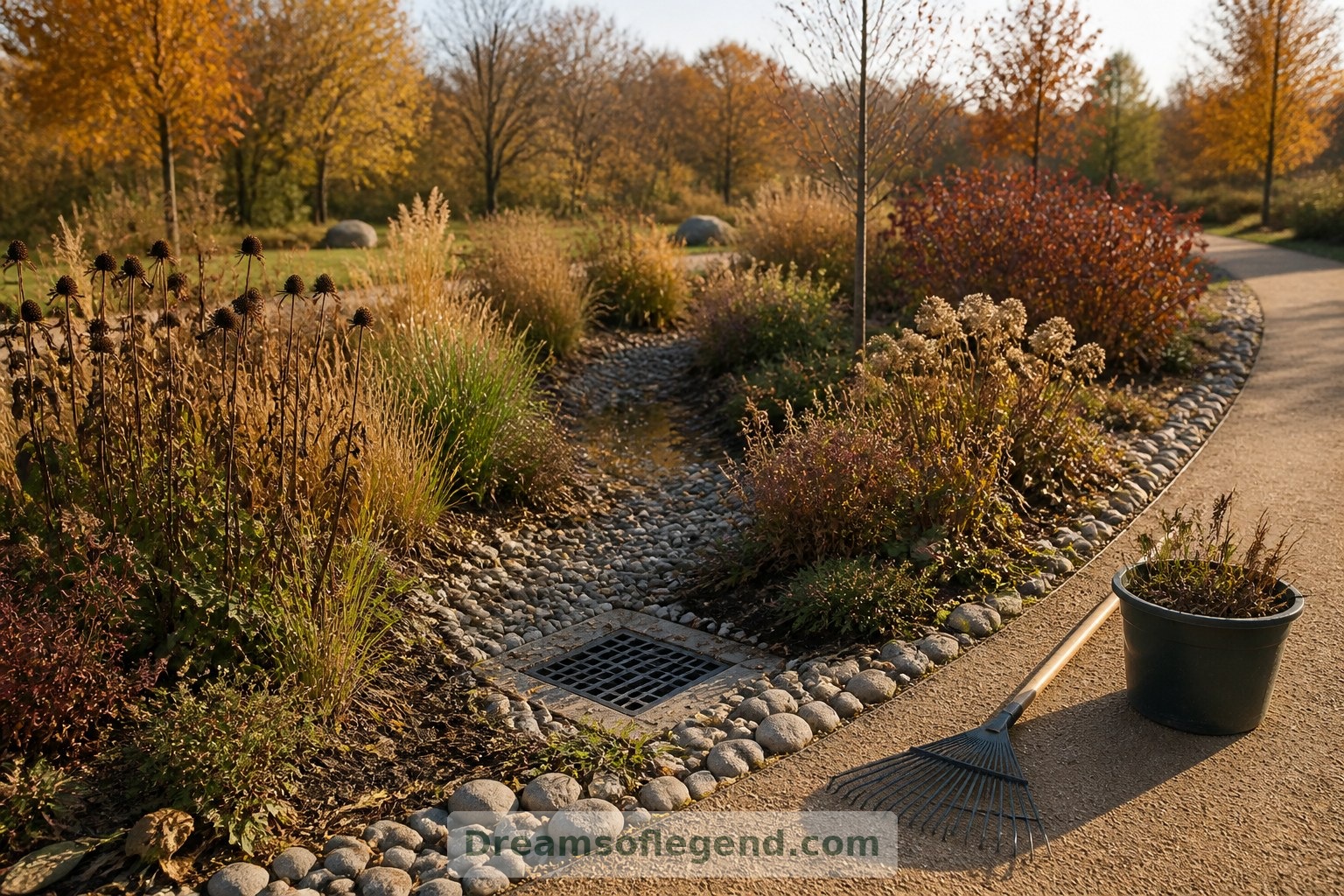
The most inviting rain garden remains beautiful without rain. Seed heads, textured bark and a restrained stone palette give it winter presence. Keep inlets clear, remove accumulated sediment and weeds, and refresh mulch where appropriate without blocking water flow. Use shielded, low-level lighting along the dry route, letting the planting recede into shadow rather than illuminating every leaf.
Extraordinary outdoor living does not always require a larger terrace or a grander view. Sometimes it begins with a shallow hollow and somewhere comfortable to sit. Thoughtfully planned, a rain garden makes room for weather—and gives a home another way to feel connected to its landscape.
How does this inspire you?
Choose one reaction. Click it again to remove it. Your choice is saved with a browser cookie.
Loading reactions…