Cave Hotels: Extraordinary Suites Within Ancient Rock
Step into the quiet beauty of cave-inspired living, where sculpted stone, soft textiles and carefully borrowed daylight turn extraordinary interiors into welcoming retreats.
AI-generated concept imagery. These illustrations are not documentary photographs or proof that a place exists.
Dreams of Legend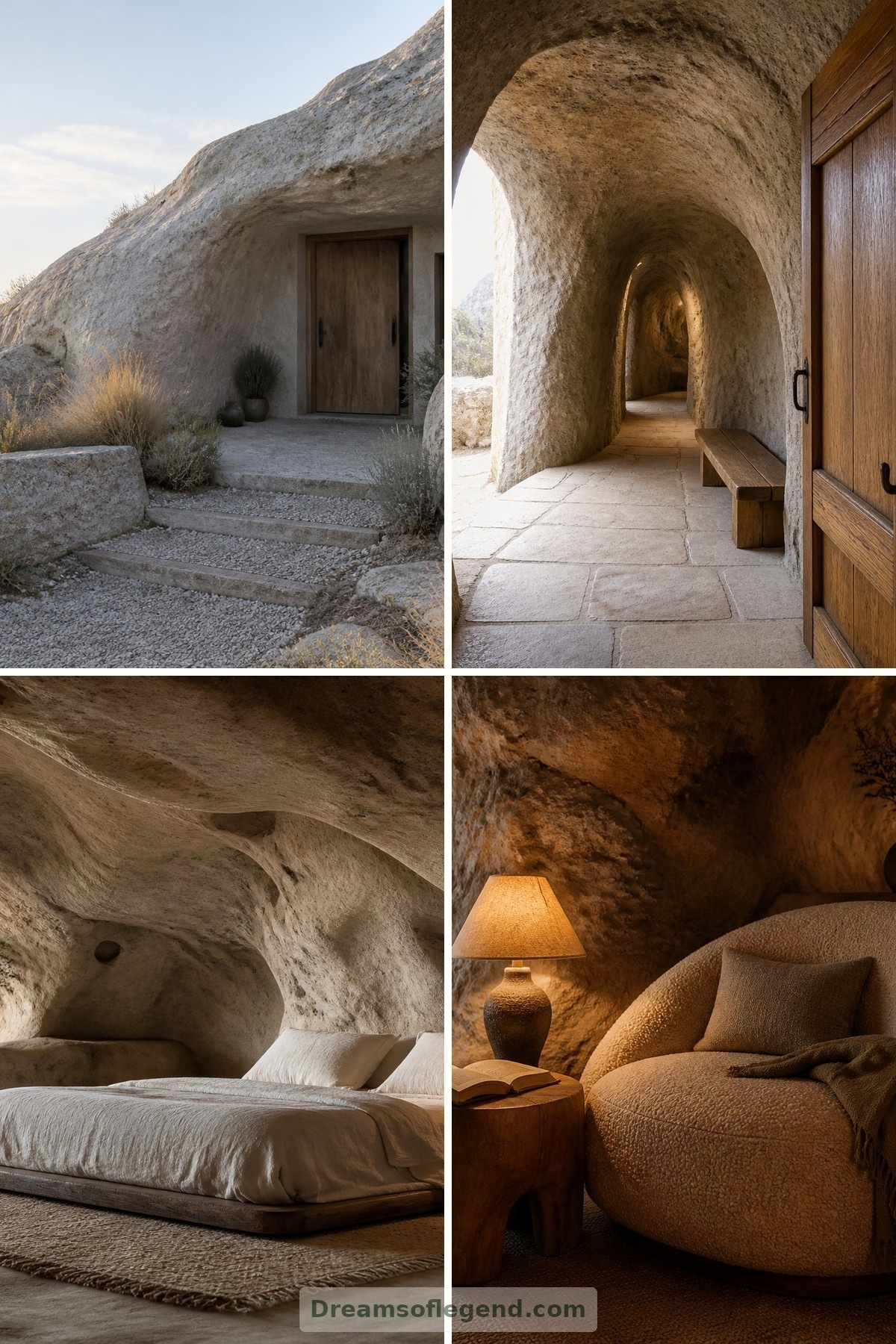
There is something deeply comforting about a room held within rock. Outside, the landscape stretches away; inside, thick walls and irregular ceilings create a sense of enclosure that conventional rooms rarely offer. Cave hotels invite us to reconsider luxury as atmosphere rather than excess. For anyone dreaming of an extraordinary home, their appeal begins with texture, quiet corners and a close relationship with the earth.
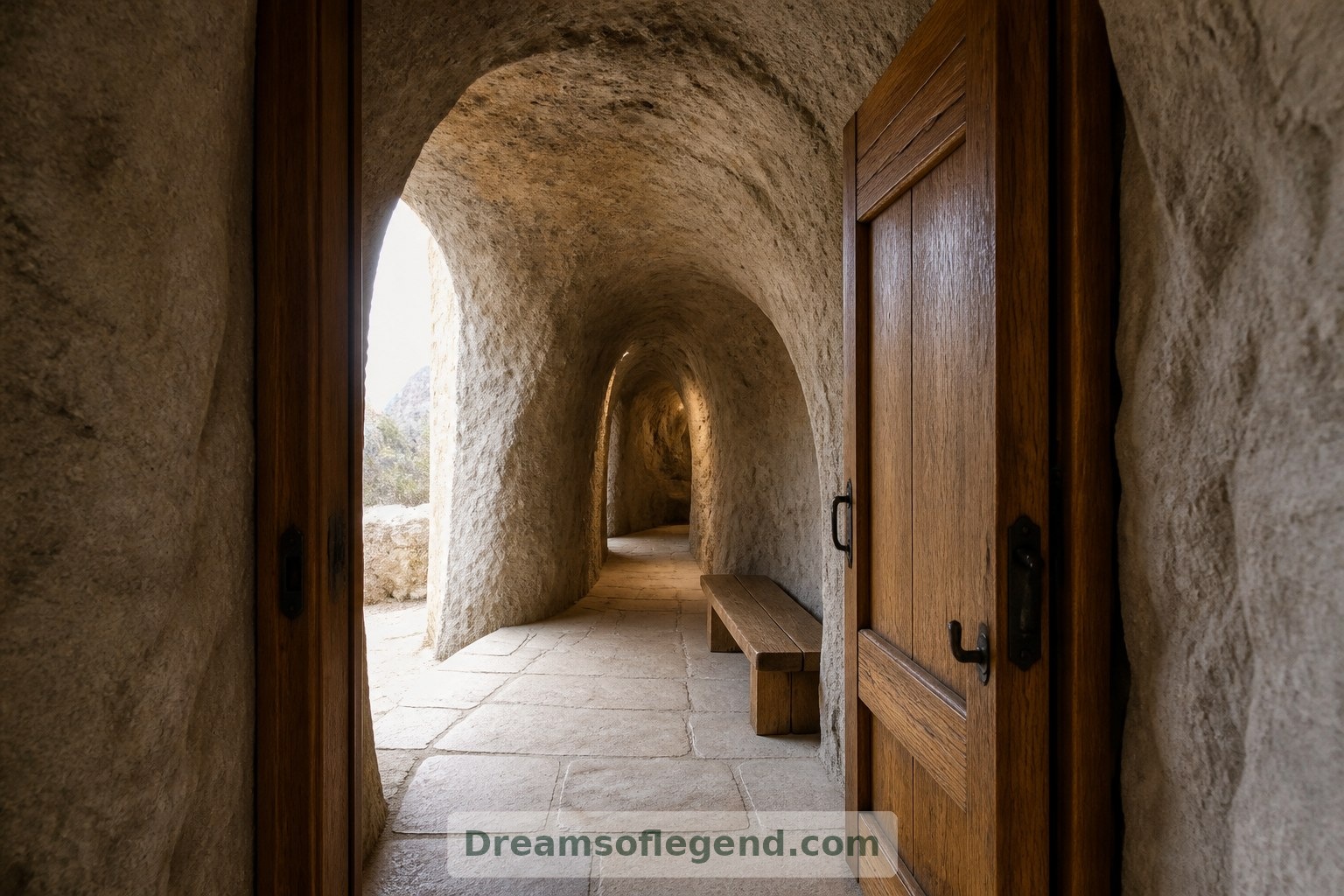
1. Begin with the Landscape
Cappadocia in Türkiye and Matera in Italy offer real examples of rock-cut places adapted for hospitality. Their histories and geology differ, so they should not be treated as interchangeable styles. The design scenes explored here are imagined rather than descriptions of particular hotels: a way to consider how cave-inspired spaces might feel, without suggesting that these rooms exist or can be booked.
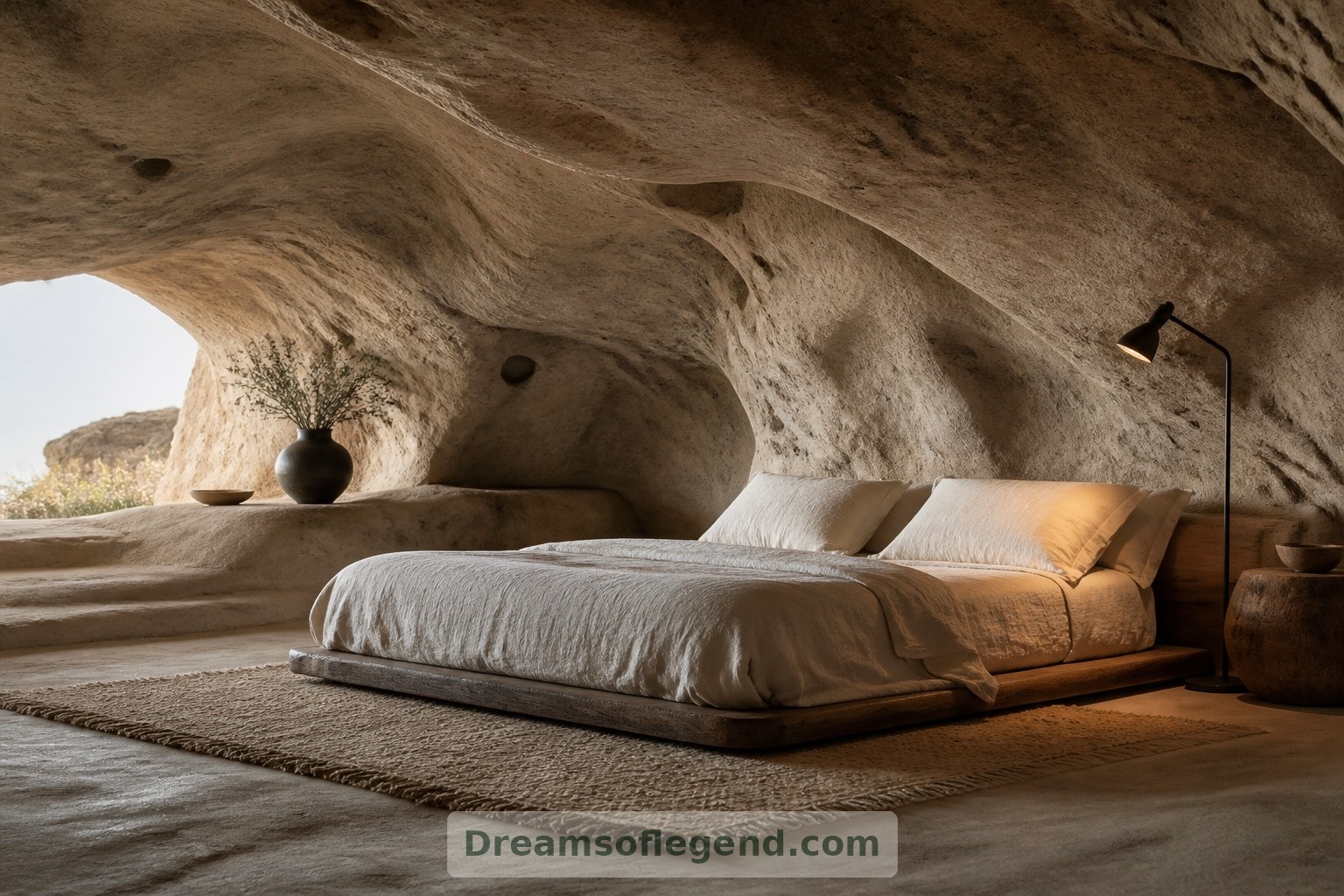
2. Let the Bedroom Feel Sheltered
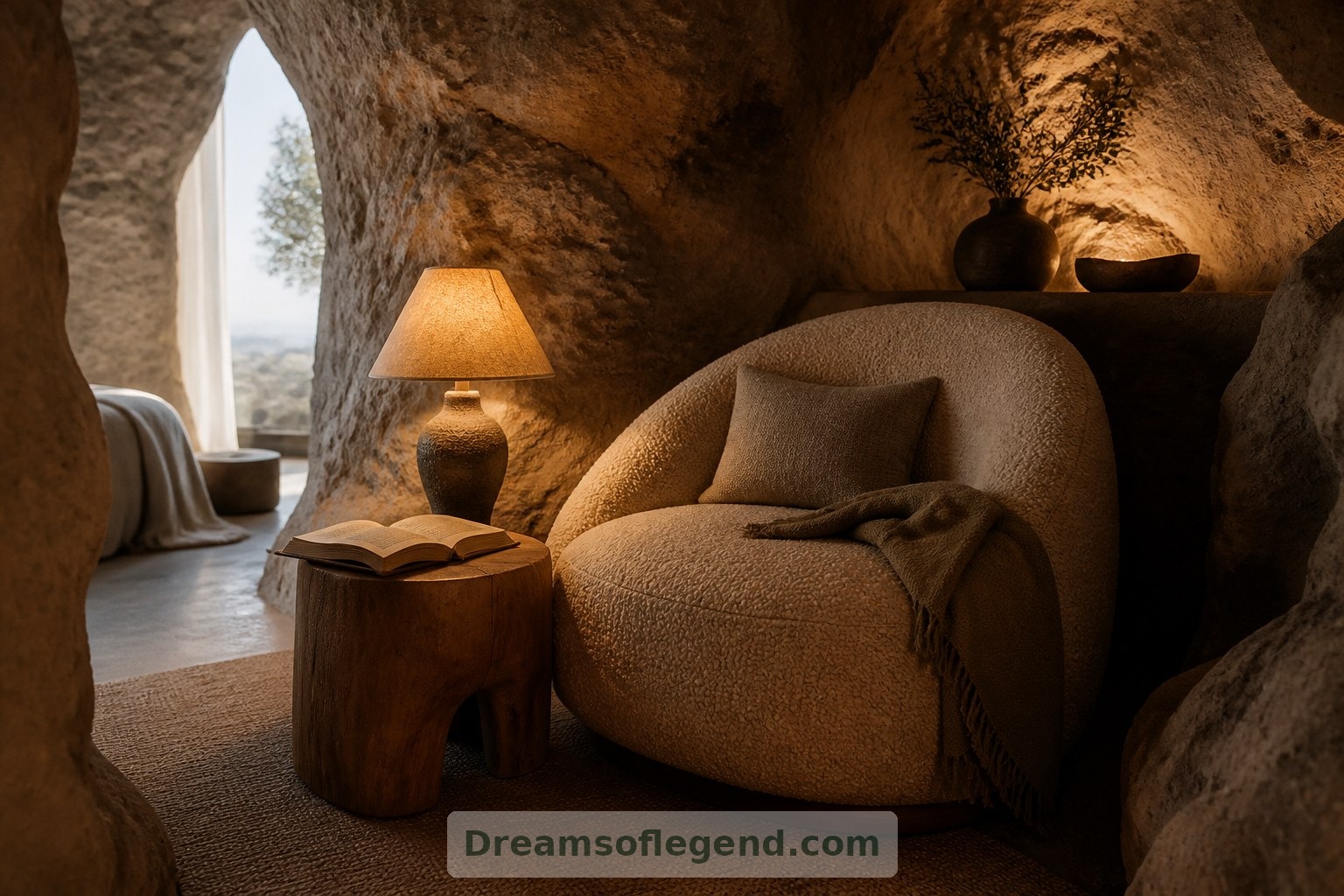
In an imagined sleeping suite, a low timber bed lets the curved ceiling remain the main event. Linen bedding, a wool rug and a freestanding reading lamp soften the mineral backdrop without disguising it. A nearby sitting nook offers another scale of comfort: somewhere to curl up with a book, with rounded upholstery set against the stone’s rough, uneven grain.
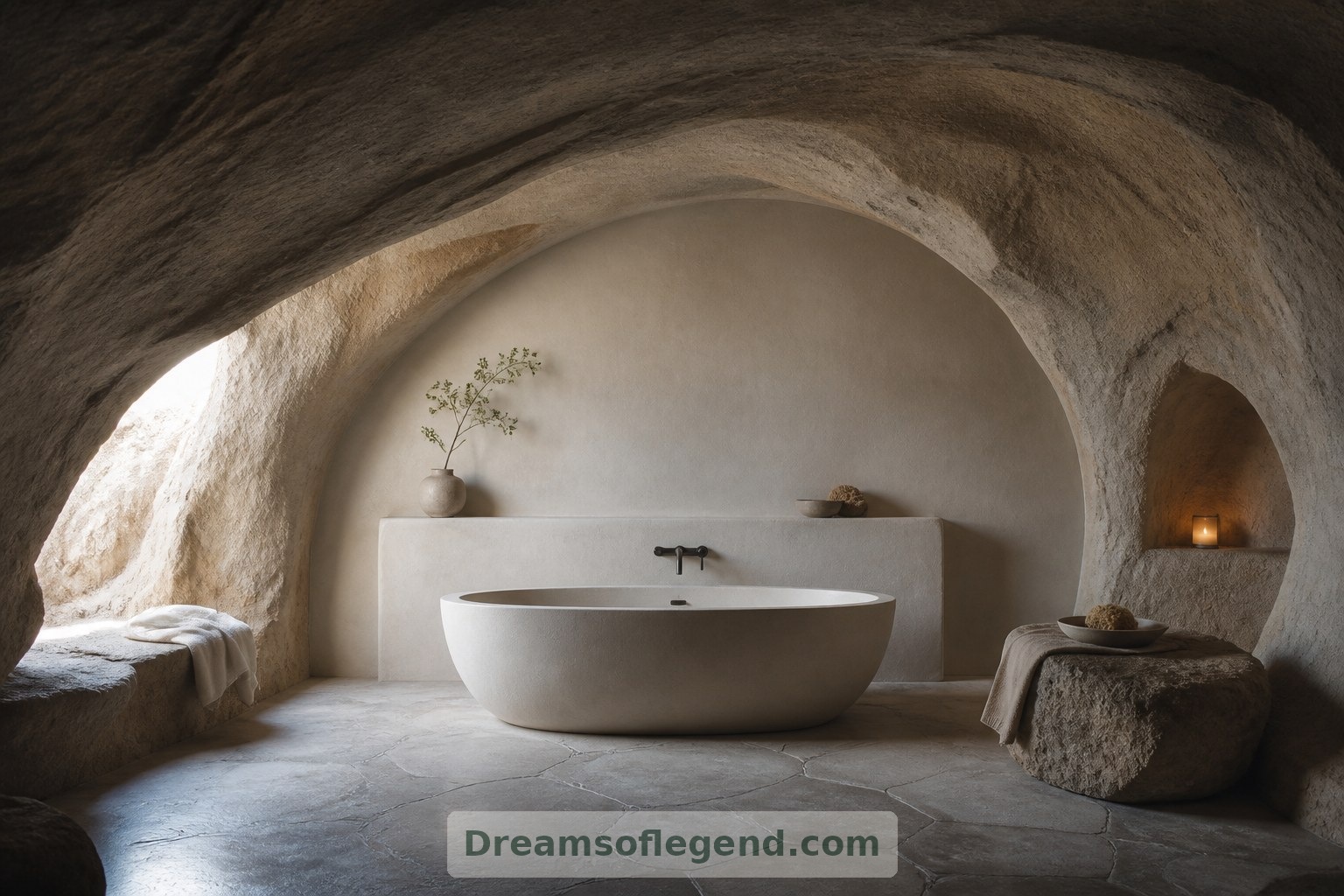
3. Give Water Its Own Quiet Space
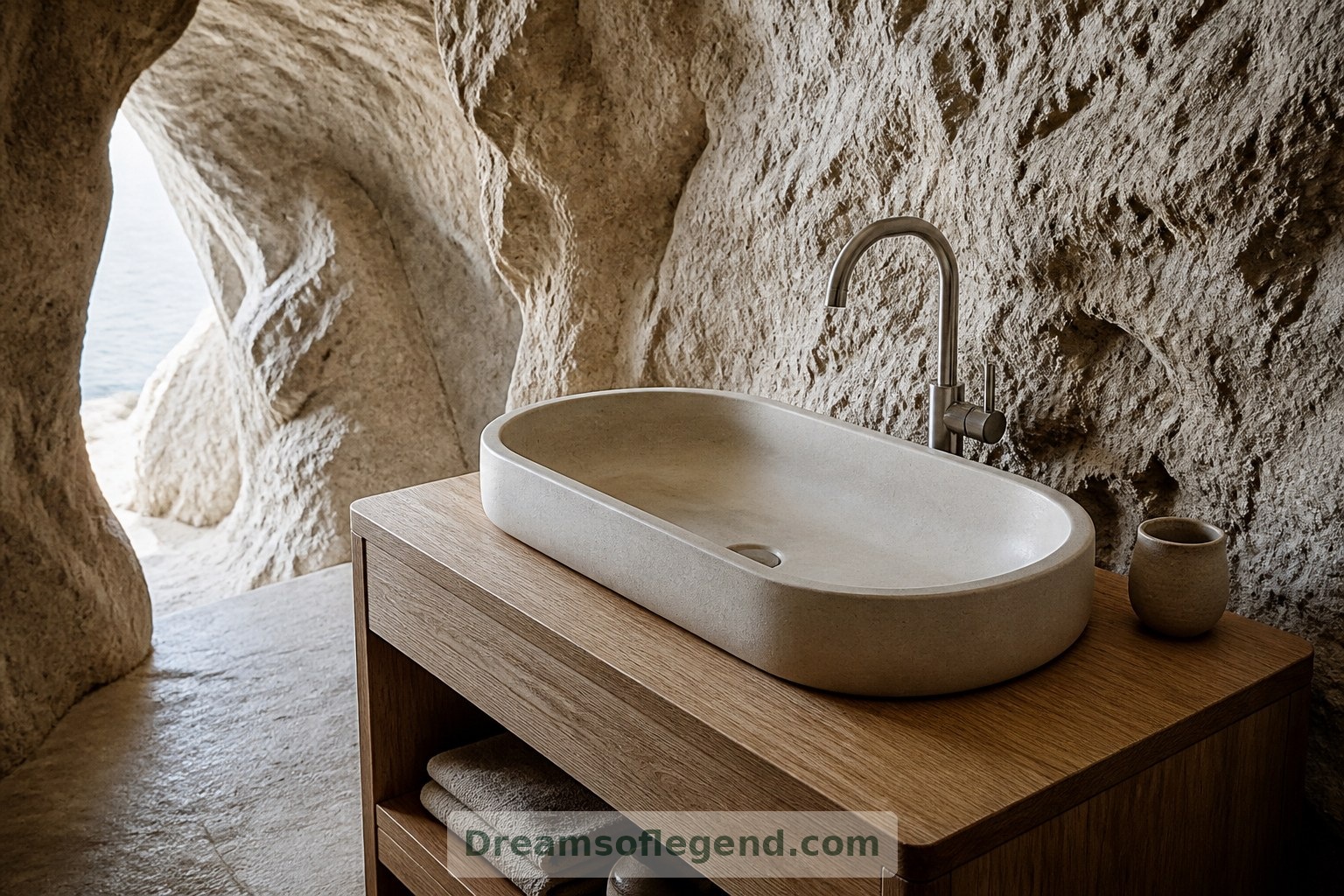
A cave-inspired bathroom need not become a theatrical grotto. Picture a simple freestanding bath beneath a shallow curve, with pale plaster distinguishing new work from exposed rock. At a separate washstand, a honed stone basin and restrained metal fittings bring the focus closer. In any real conversion, drainage, ventilation, waterproofing and access for maintenance would need careful professional assessment.
4. Make Everyday Rituals Beautiful
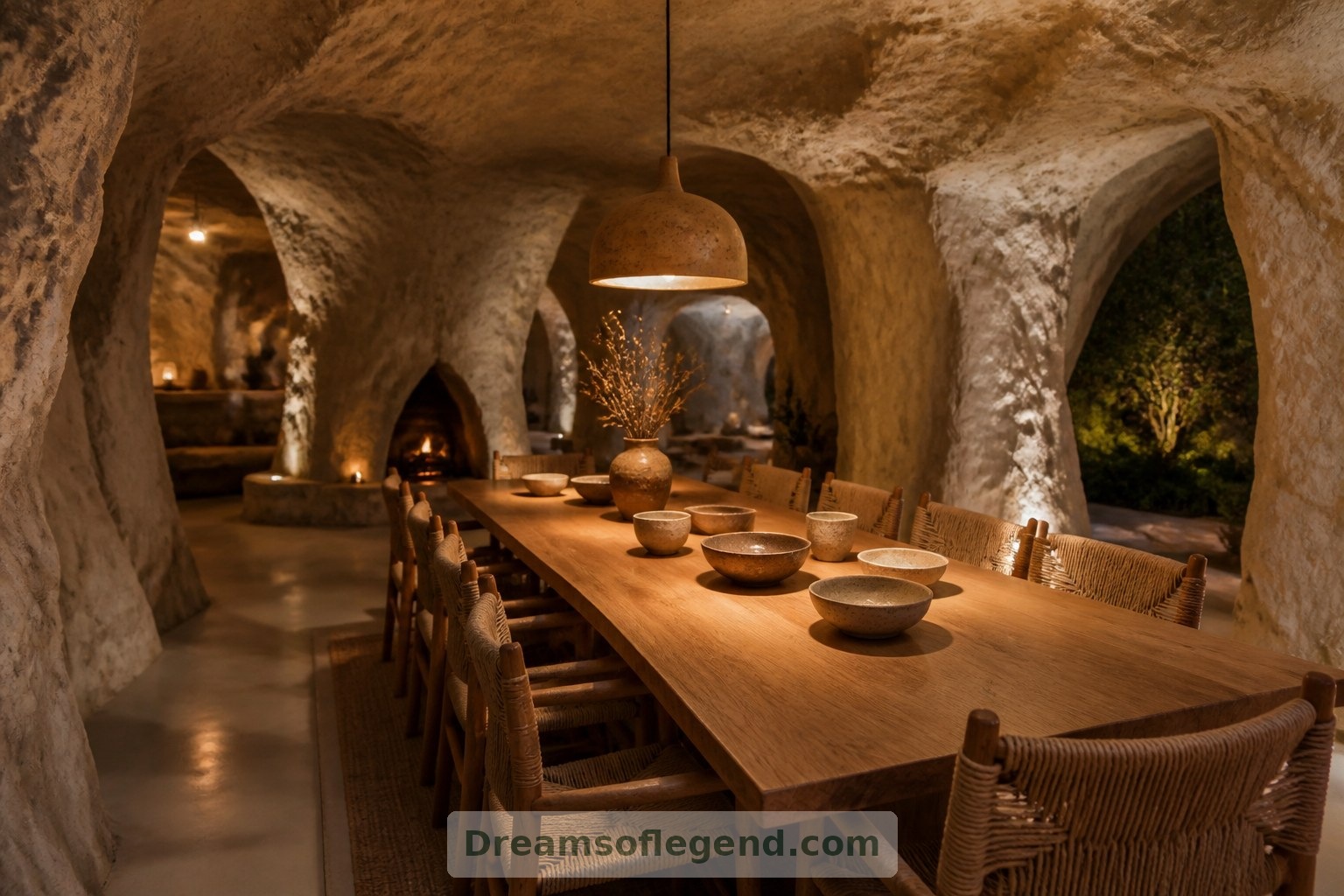
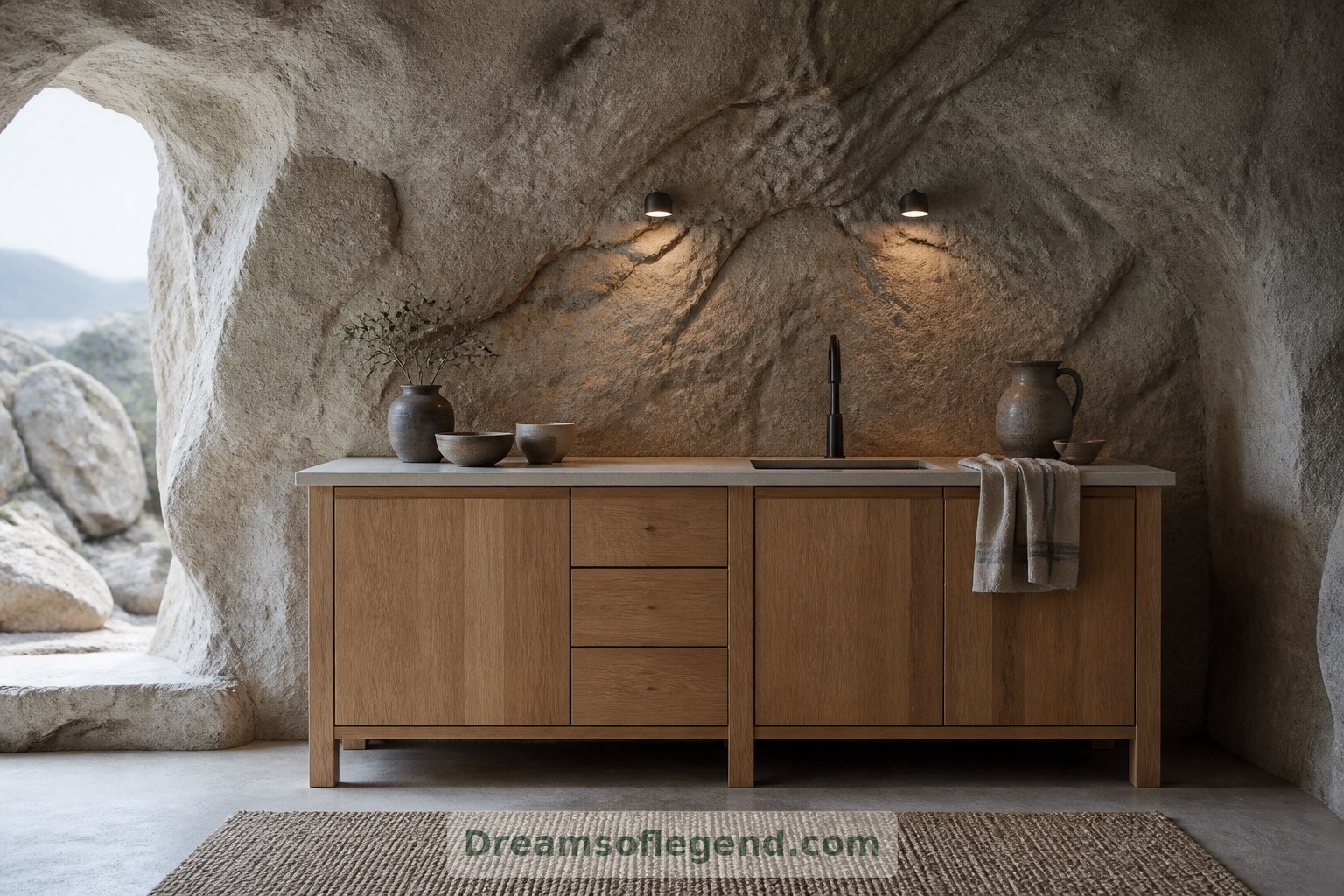
The most persuasive extraordinary interiors still make room for ordinary pleasures. An imagined dining chamber might hold a long oak table, woven seats and a pendant that illuminates faces rather than flooding every surface. A compact kitchen could use freestanding cabinetry to keep its outline legible against irregular walls. Ceramics and folded tea towels make these spaces feel inhabited, not staged.
5. Find a Gentle Connection Outdoors
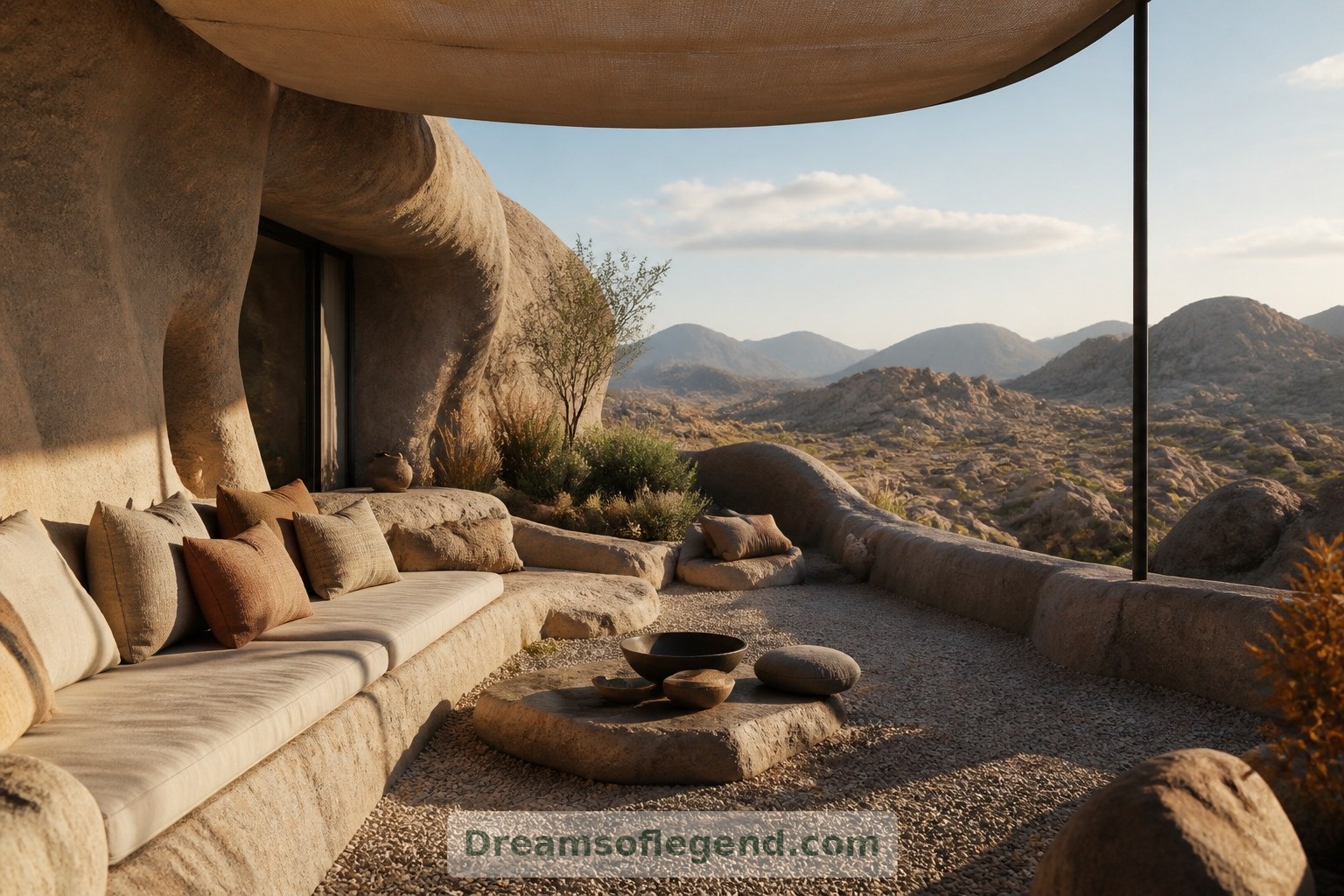
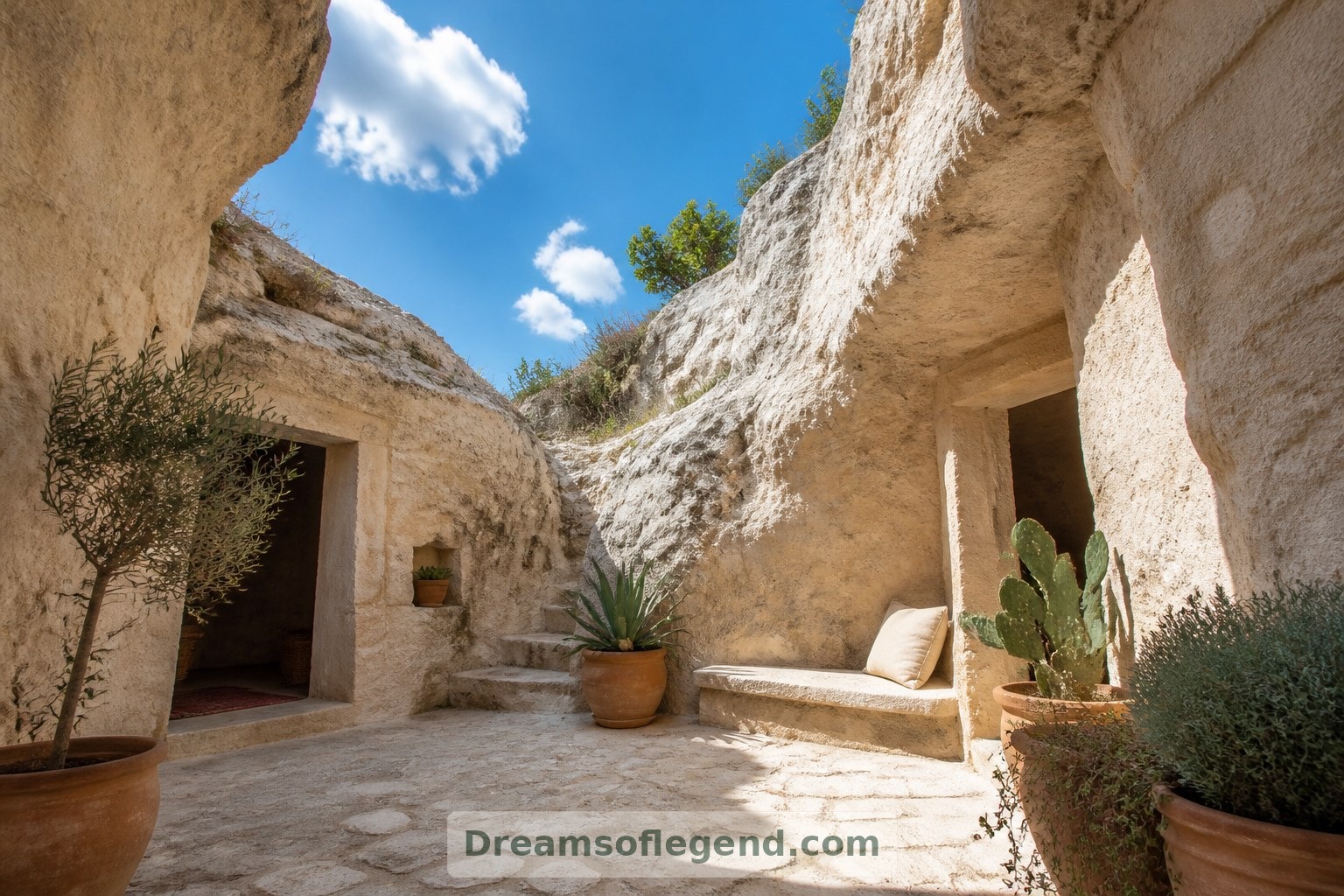
After the intimacy of enclosed rooms, an open-air pause feels especially generous. Imagine a modest terrace with a shaded bench, where the view—not an elaborate arrangement of furniture—provides the drama. Elsewhere, a small courtyard could frame a patch of sky. Planting would depend on local conditions; in this imagined setting, a few drought-tolerant plants suit the dry, rocky landscape.
6. Design Carefully Around the Rock
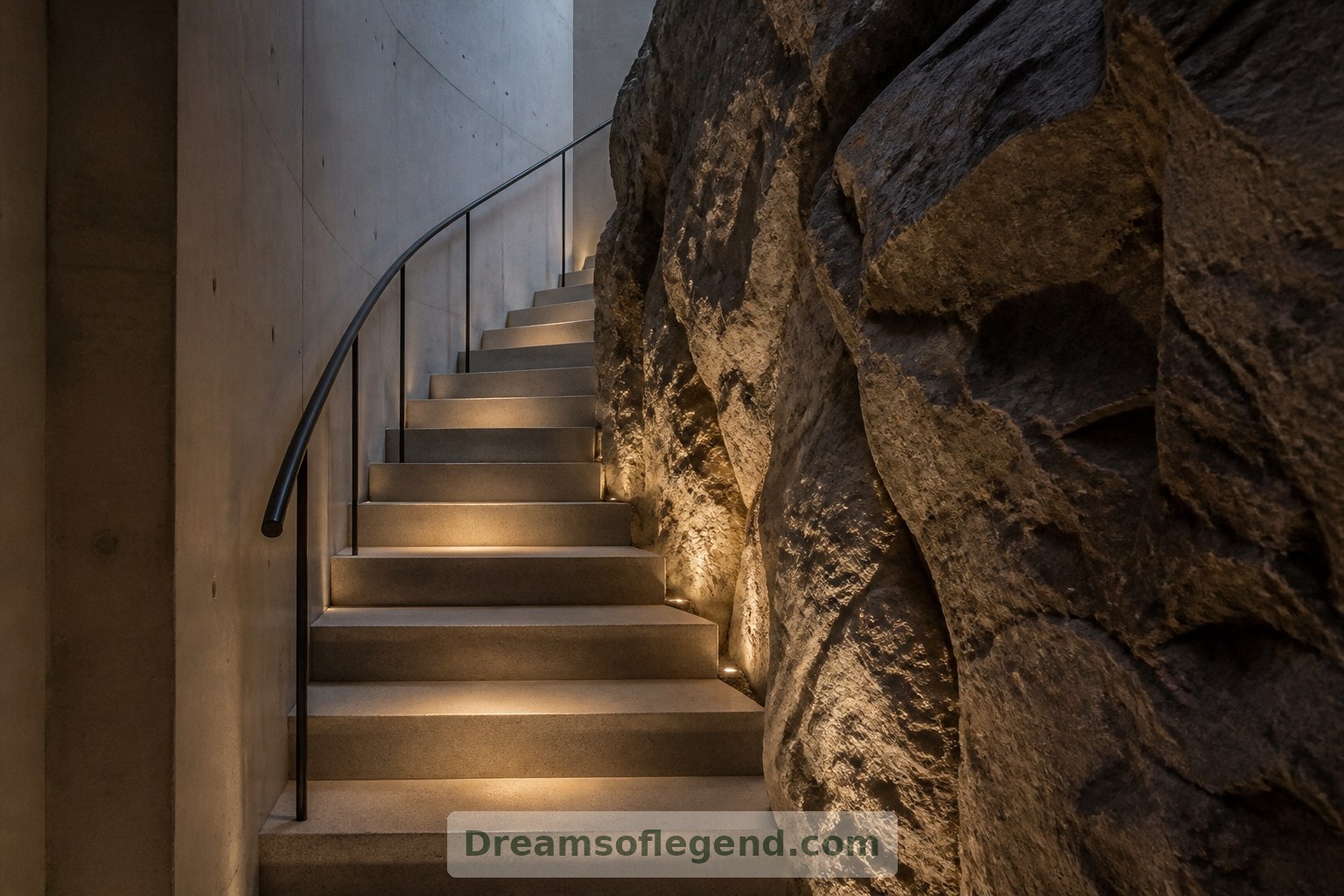
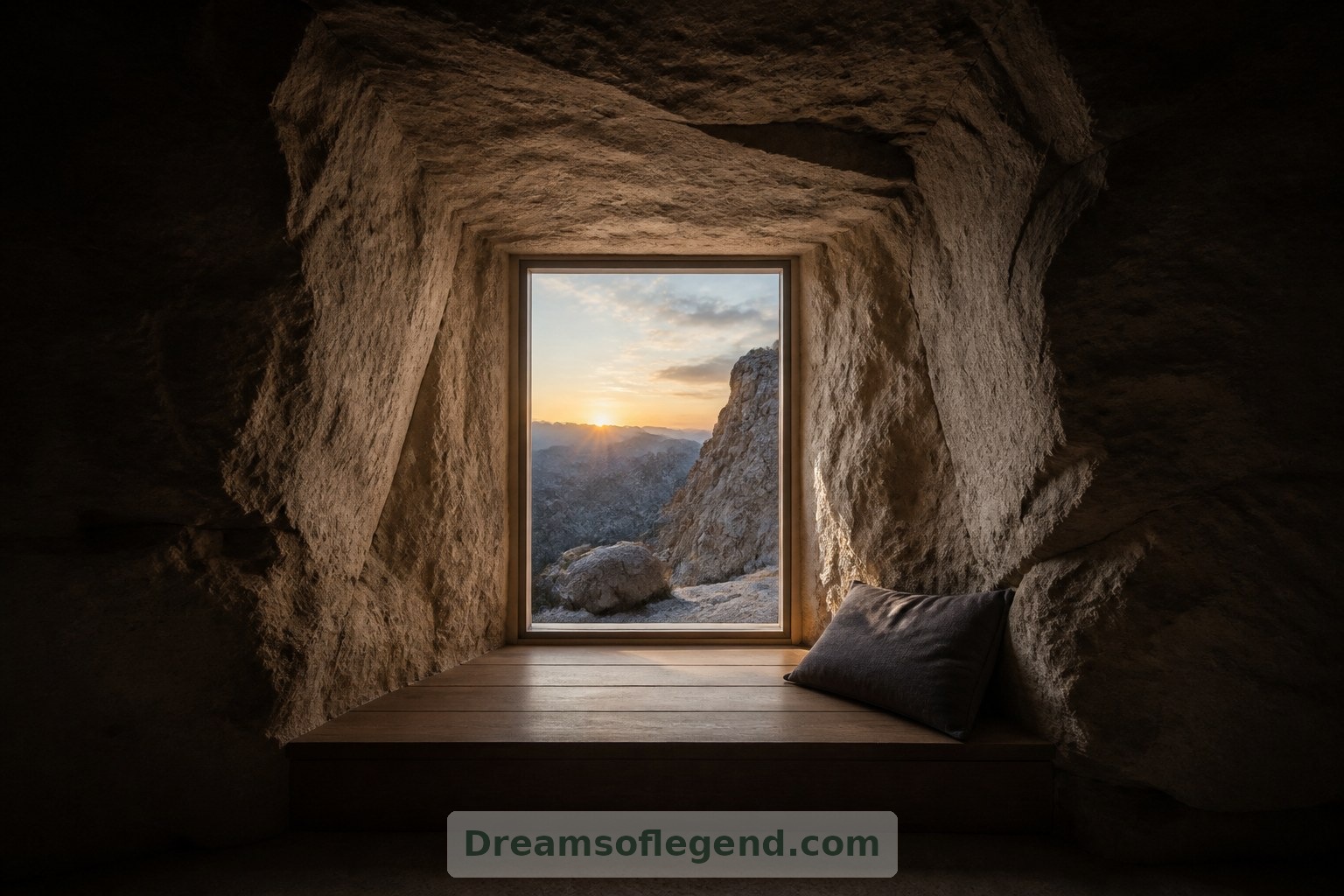
A stair following an uneven wall or a deep window reveal can make movement through these interiors memorable. Yet atmosphere is only one part of making a space habitable. Structural stability, safe escape routes, moisture, air quality and accessibility all require attention. Existing rock is not a blank canvas, and responsible adaptation begins by understanding what should remain untouched.
The dream of cave living is ultimately a dream of belonging somewhere distinctive. Whether encountered in a real, carefully adapted building or explored through an imagined interior, its lasting lesson is simple: comfort can come from working thoughtfully with a place, rather than smoothing away its character.
How does this inspire you?
Choose one reaction. Click it again to remove it. Your choice is saved with a browser cookie.
Loading reactions…