Converted Monastery Hotels: Quiet Stays Among Cloisters and Historic Stone
Behind thick walls and shaded arcades, converted monasteries offer a quieter vision of hotel life—and thoughtful lessons for creating a home with texture, restraint and room to breathe.
AI-generated concept imagery. These illustrations are not documentary photographs or proof that a place exists.
Dreams of Legend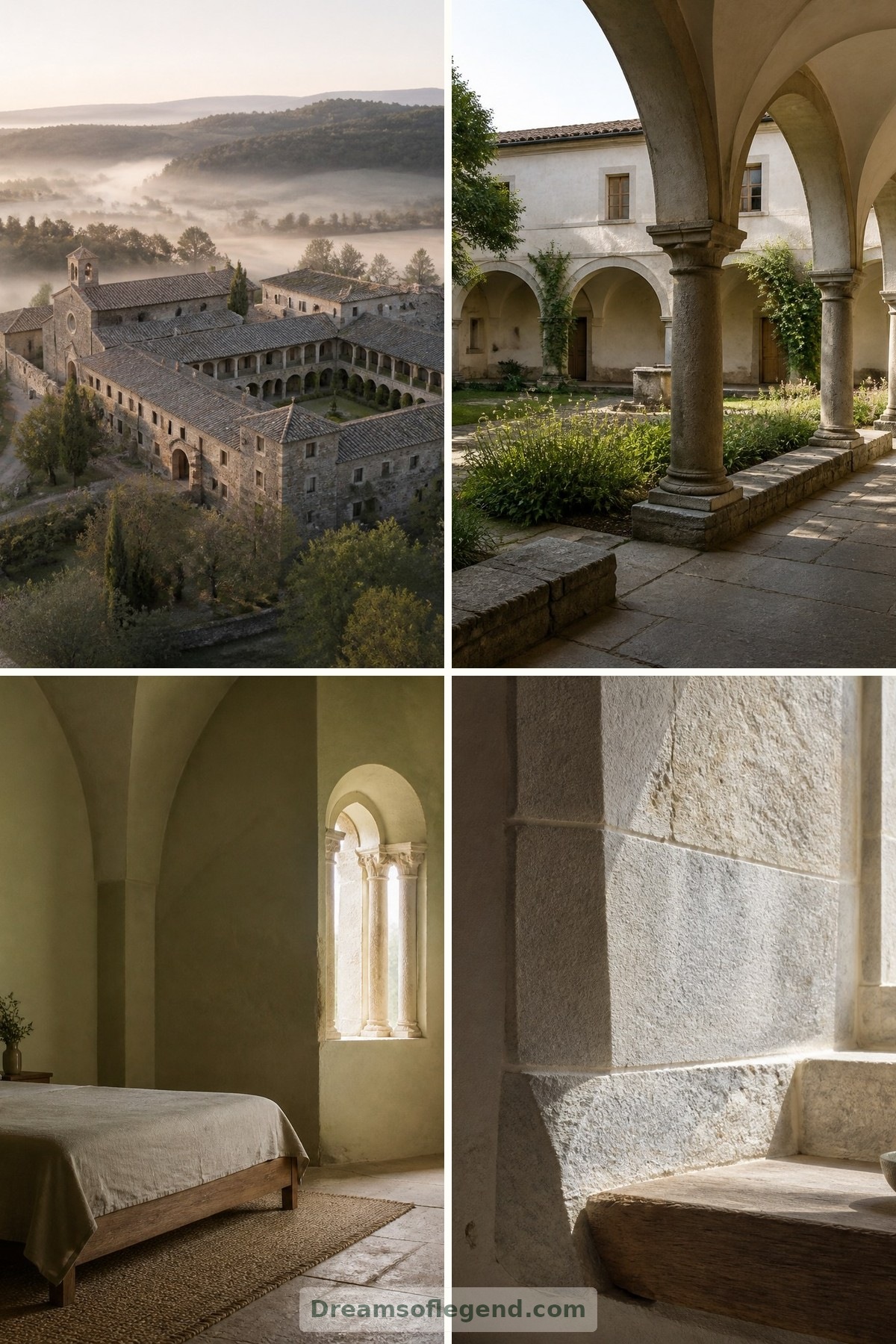
Some extraordinary stays begin with very little: a stone passage, a sheltered courtyard, daylight crossing a worn floor. Converted monastery hotels invite us to notice these essentials again. Their appeal is not simply age or grandeur, but the relationship between enclosure and openness. For anyone dreaming of a calmer home, they offer a compelling starting point.
1. A Different Rhythm of Hospitality
Real examples include Parador de Santo Estevo in Galicia, Spain, and Monastero Santa Rosa in Conca dei Marini, Italy. Both occupy former monastic buildings, although their settings and architectural identities differ. They belong to a wider story of historic religious buildings finding new uses through hospitality.
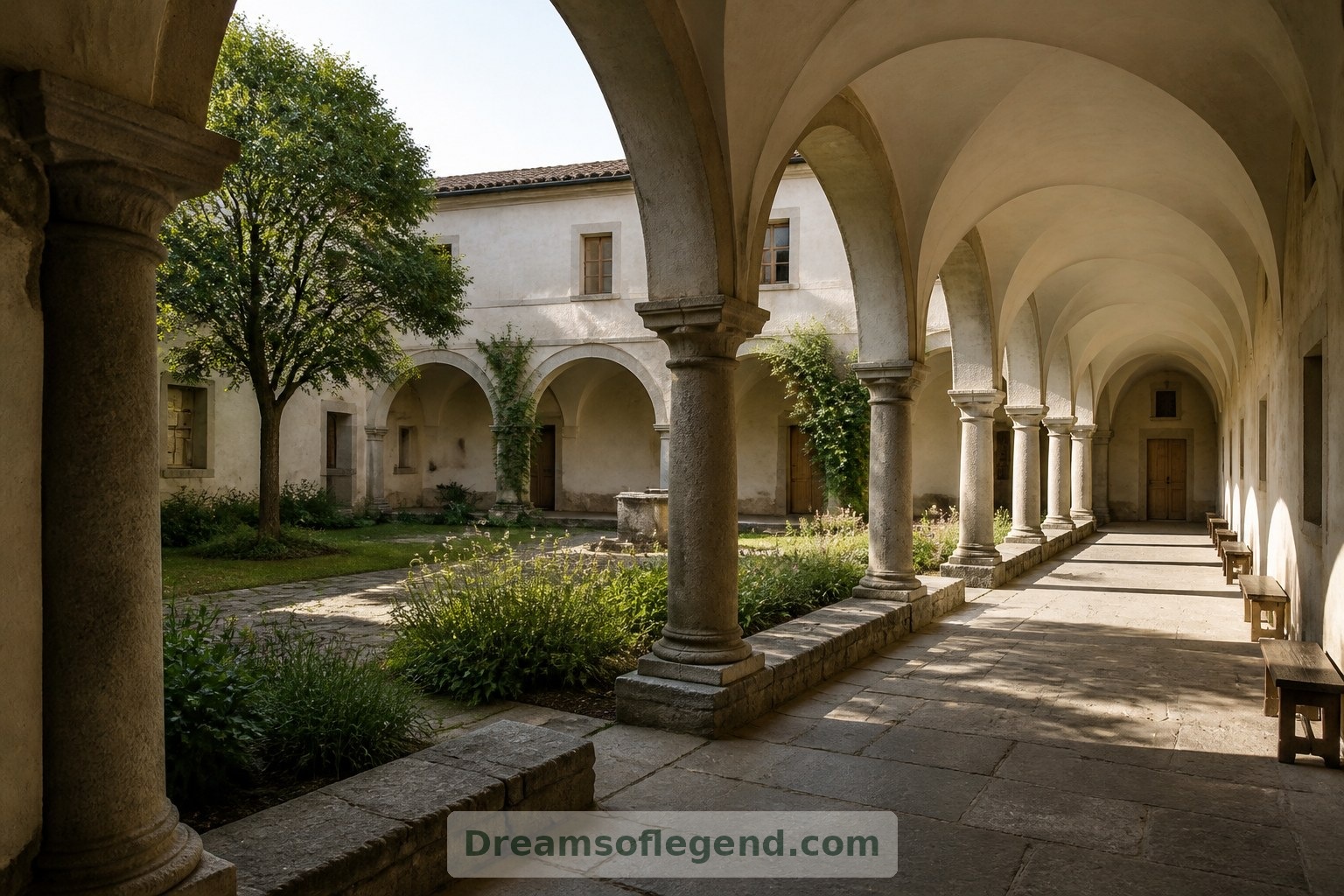
The design ideas below explore that broader appeal. All accompanying images are imagined architectural visualizations, not photographs or representations of these named hotels.
2. Rooms That Leave Space to Breathe
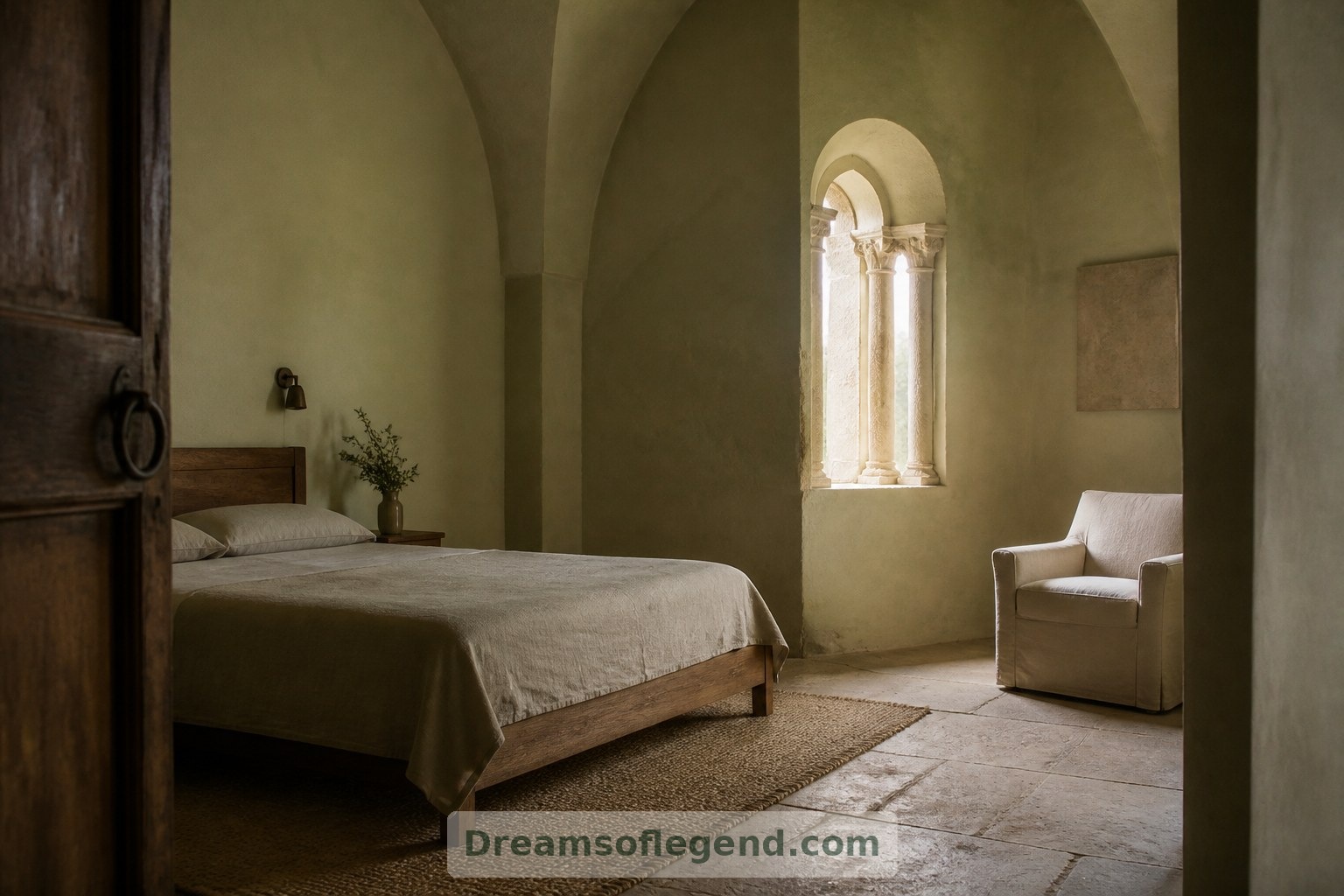
The most appealing room need not compete with its old walls. Imagine lime-toned plaster, a simple timber bed and linen curtains that soften daylight without concealing the depth of a window opening. A woven rug adds warmth while leaving much of the floor visible.
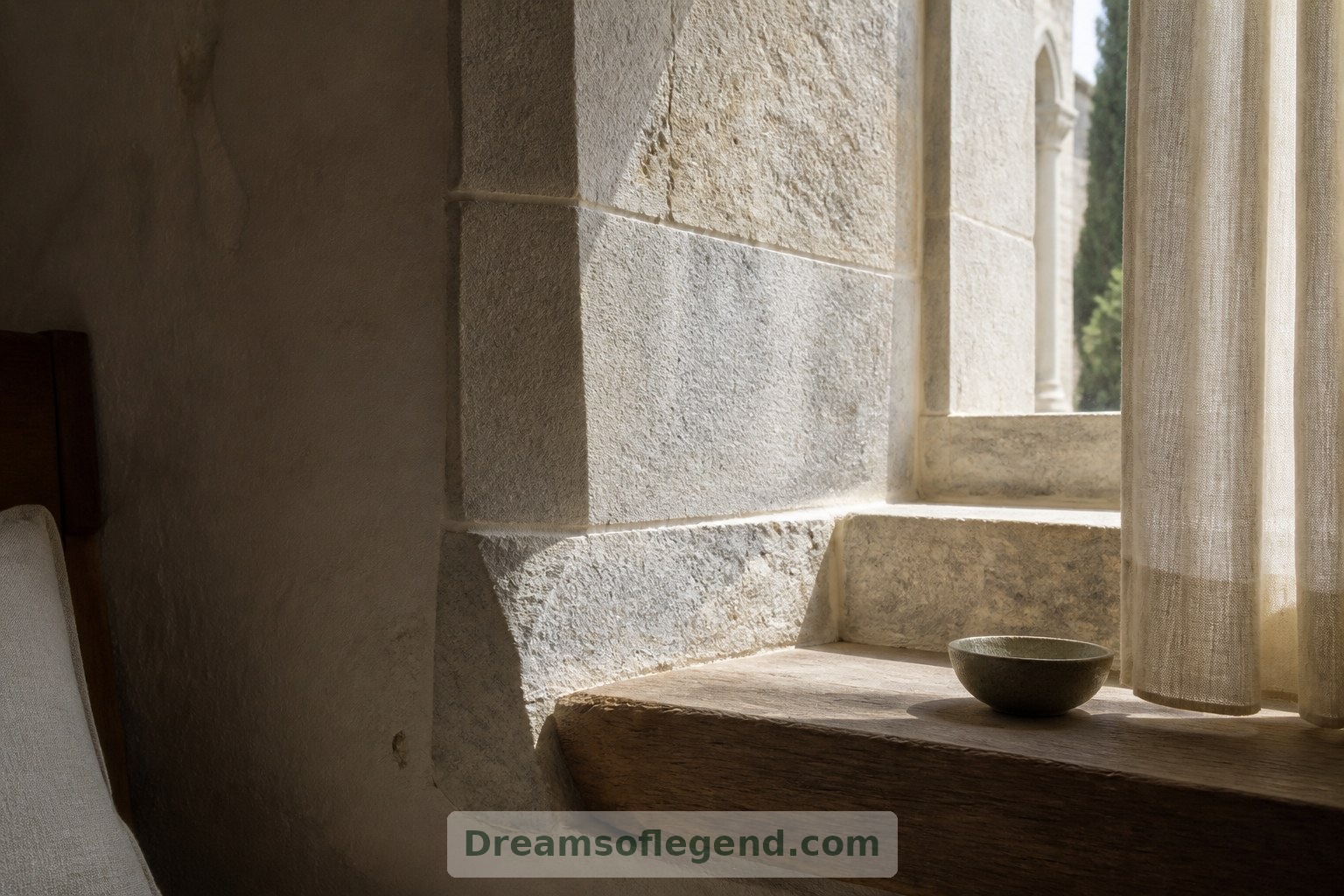
At home, the lesson is restraint rather than imitation. One substantial chair and a well-placed reading light can feel more generous than a room crowded with furniture.
3. Let the Building Set the Pace
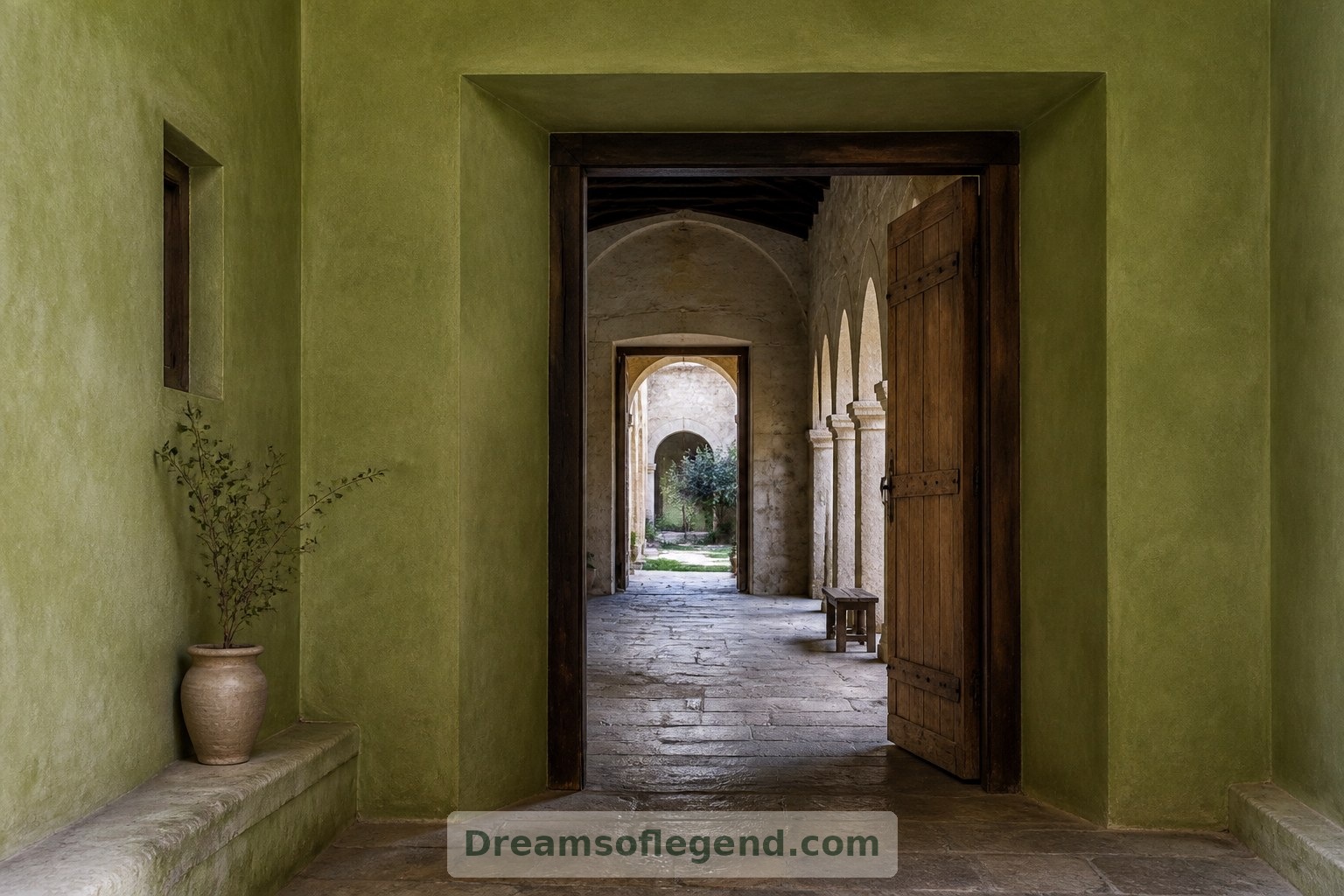
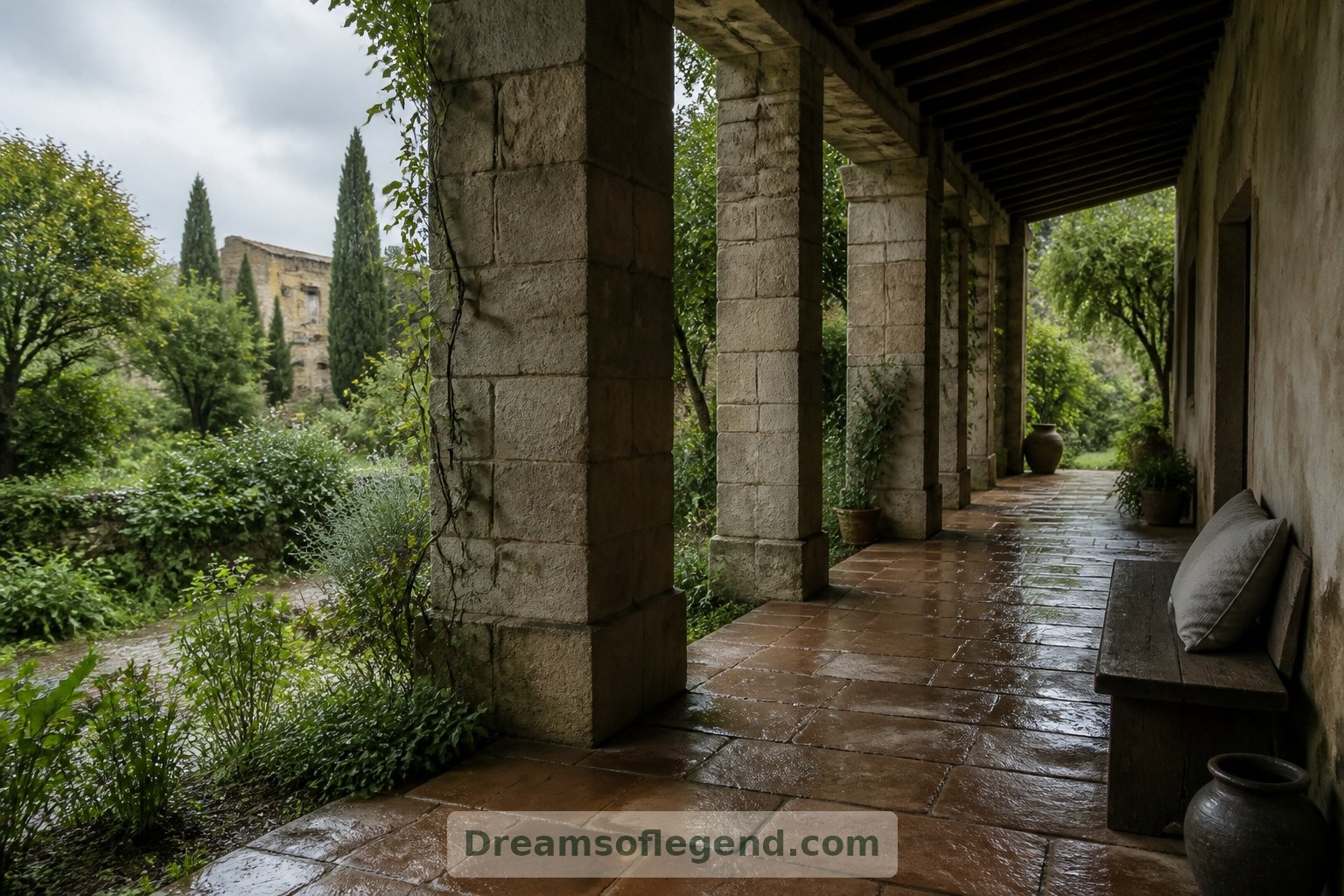
Cloisters, passages and staircases make movement part of the experience. A shaded arcade offers a gradual transition between an interior and the weather outside; a deep threshold makes arrival feel deliberate.
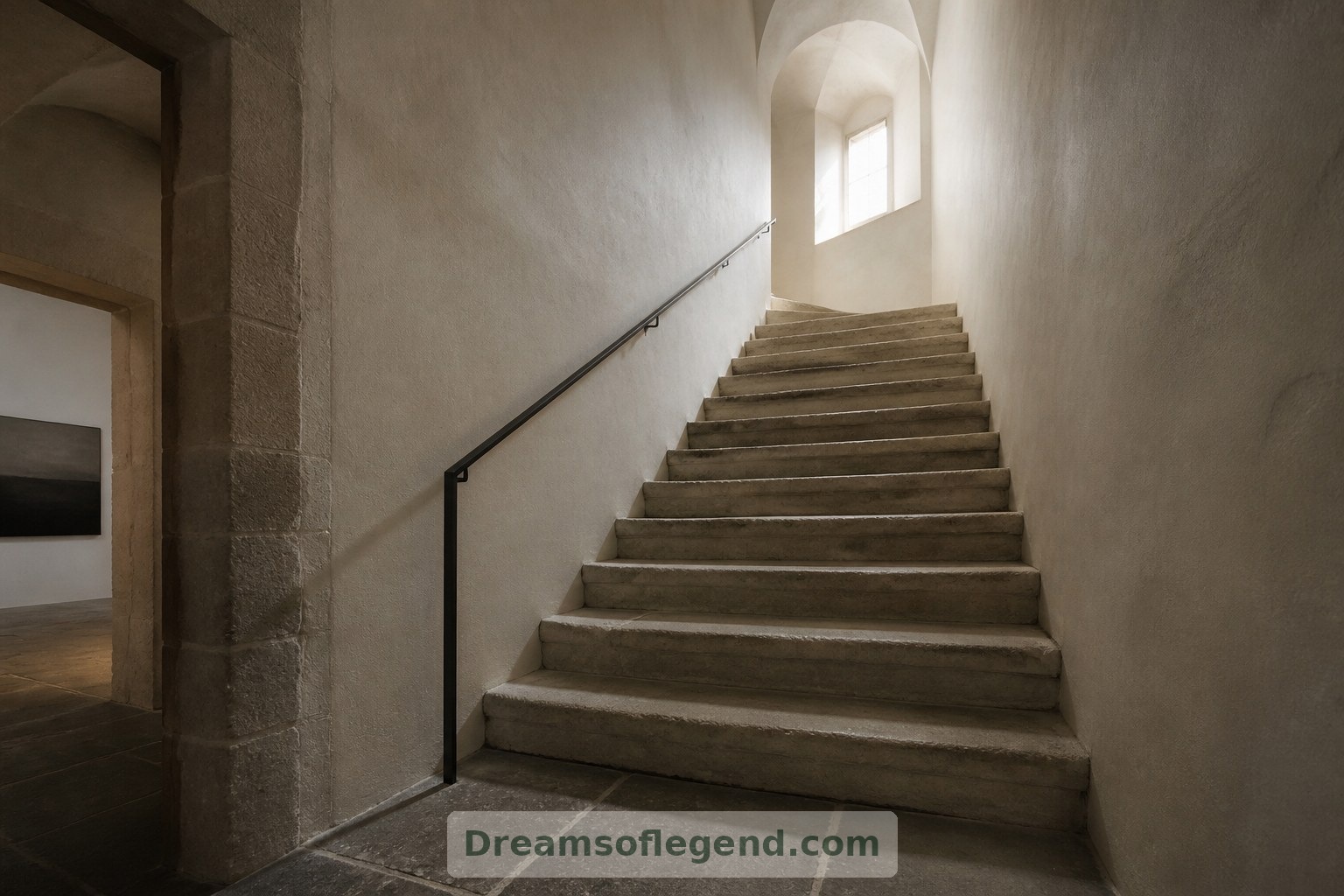
In a sensitive conversion, these spaces deserve attention beyond their usefulness as circulation. Lighting can reveal a stair tread or doorway without turning every textured surface into a theatrical backdrop. Historic character is often strongest when it is allowed to remain ordinary.
4. Shared Rooms with Domestic Warmth
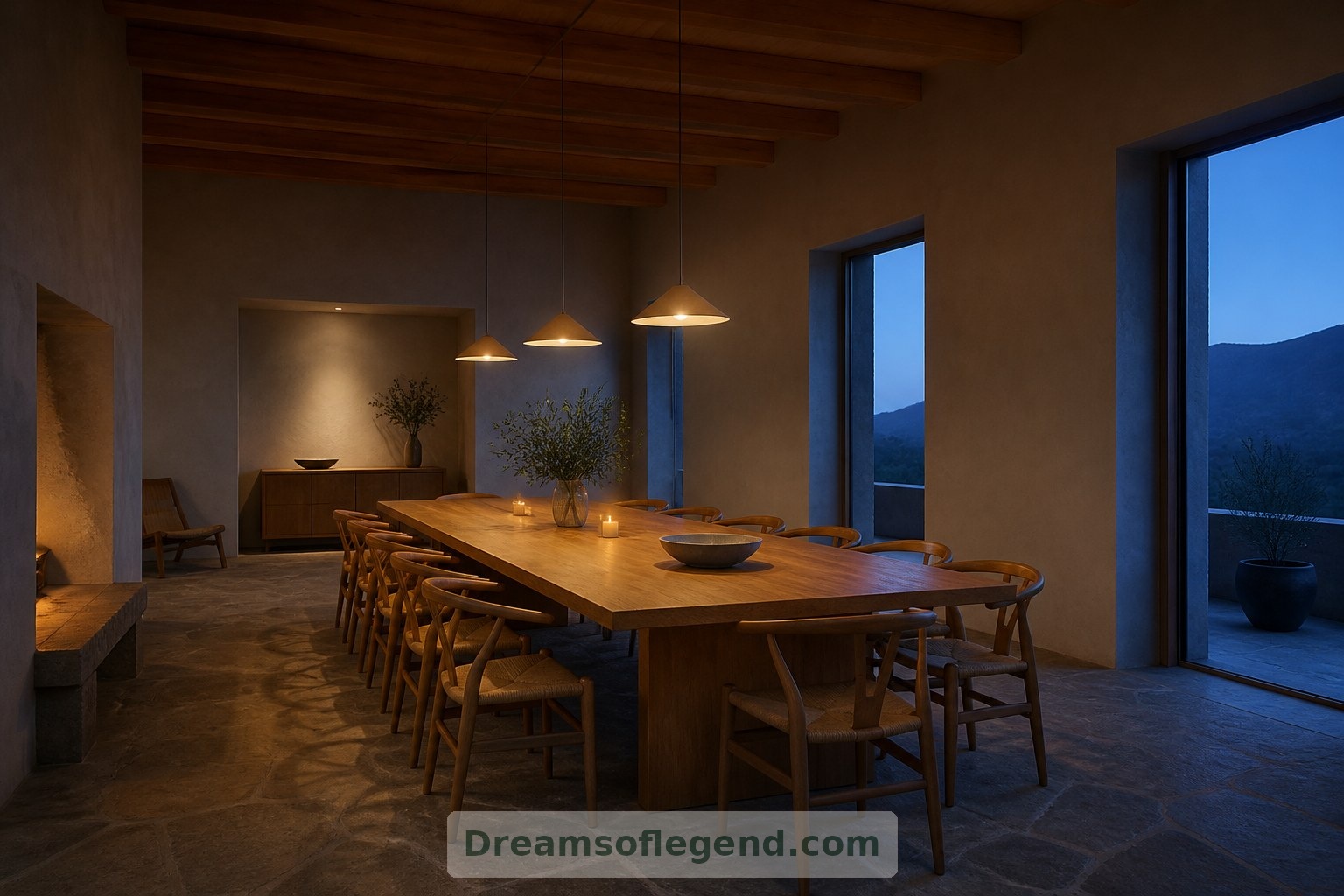
A former communal building suggests a welcoming approach to gathering. For an imagined dining room, picture a long oak table, comfortable chairs and pools of warm light rather than elaborate decoration.
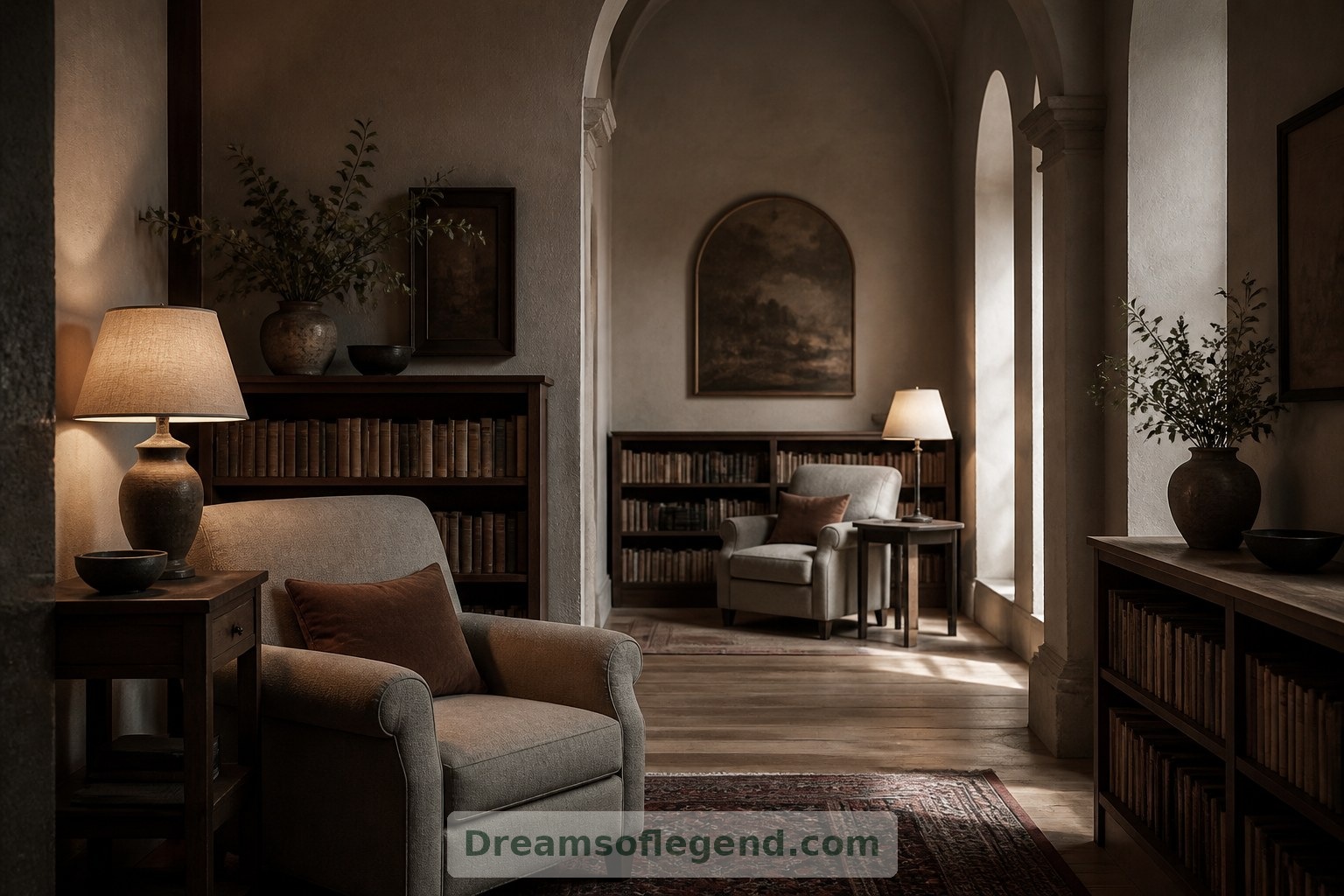
A smaller reading room offers a counterpoint: books within reach, upholstery in muted colours and seating arranged for either conversation or solitude. These are useful ideas for dream homes, too—shared spaces work best when they accommodate different moods.
5. The Garden as Another Room
An enclosed garden can make even a modest outdoor space feel expansive. Its boundaries frame the sky, while gravel, planting and a shaded bench provide distinct textures and places to pause.
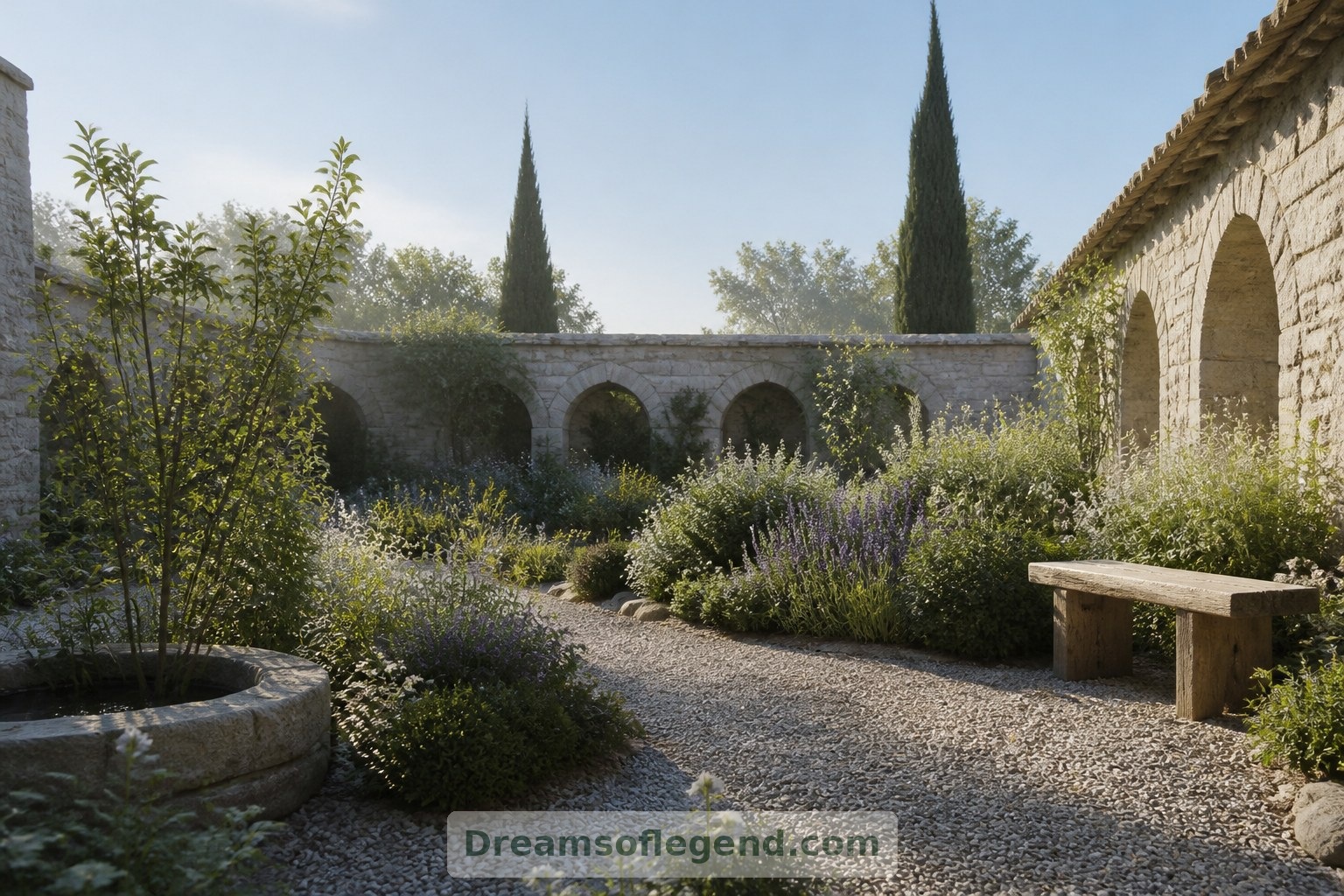
For a contemporary interpretation, choose planting suited to the local climate rather than borrowing a picturesque palette indiscriminately. A covered walkway or sheltered terrace can extend the pleasure of the garden beyond perfect weather.
6. Comfort Without Erasing Character
Romance should not obscure practical questions. When researching a real stay, check the property's current information about access, room layouts, heating and cooling; historic buildings vary considerably.
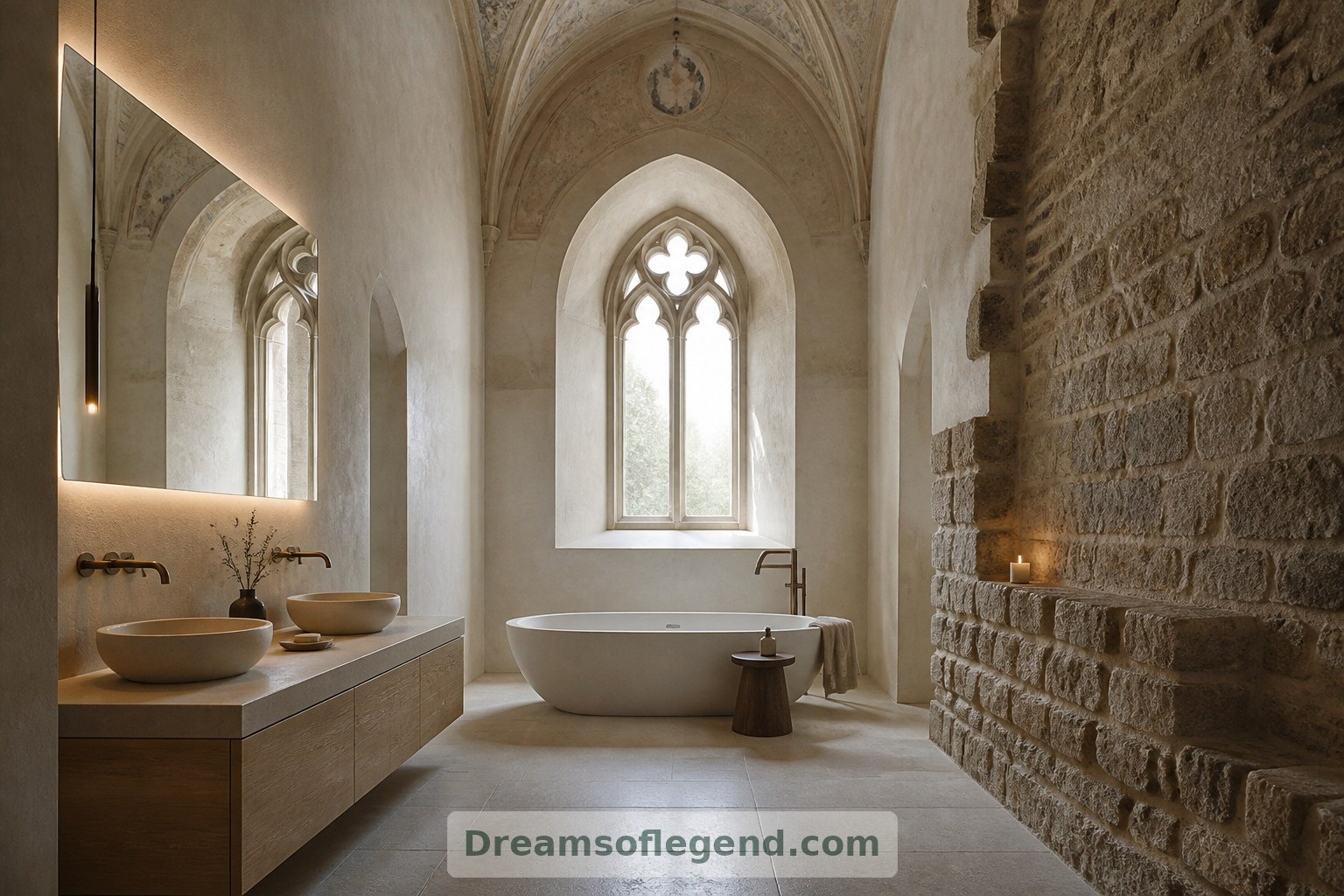
In design terms, a bathroom or other new intervention can be clearly contemporary yet quiet in colour and proportion. The aim is not to disguise every addition as ancient, but to let old and new sit comfortably together.
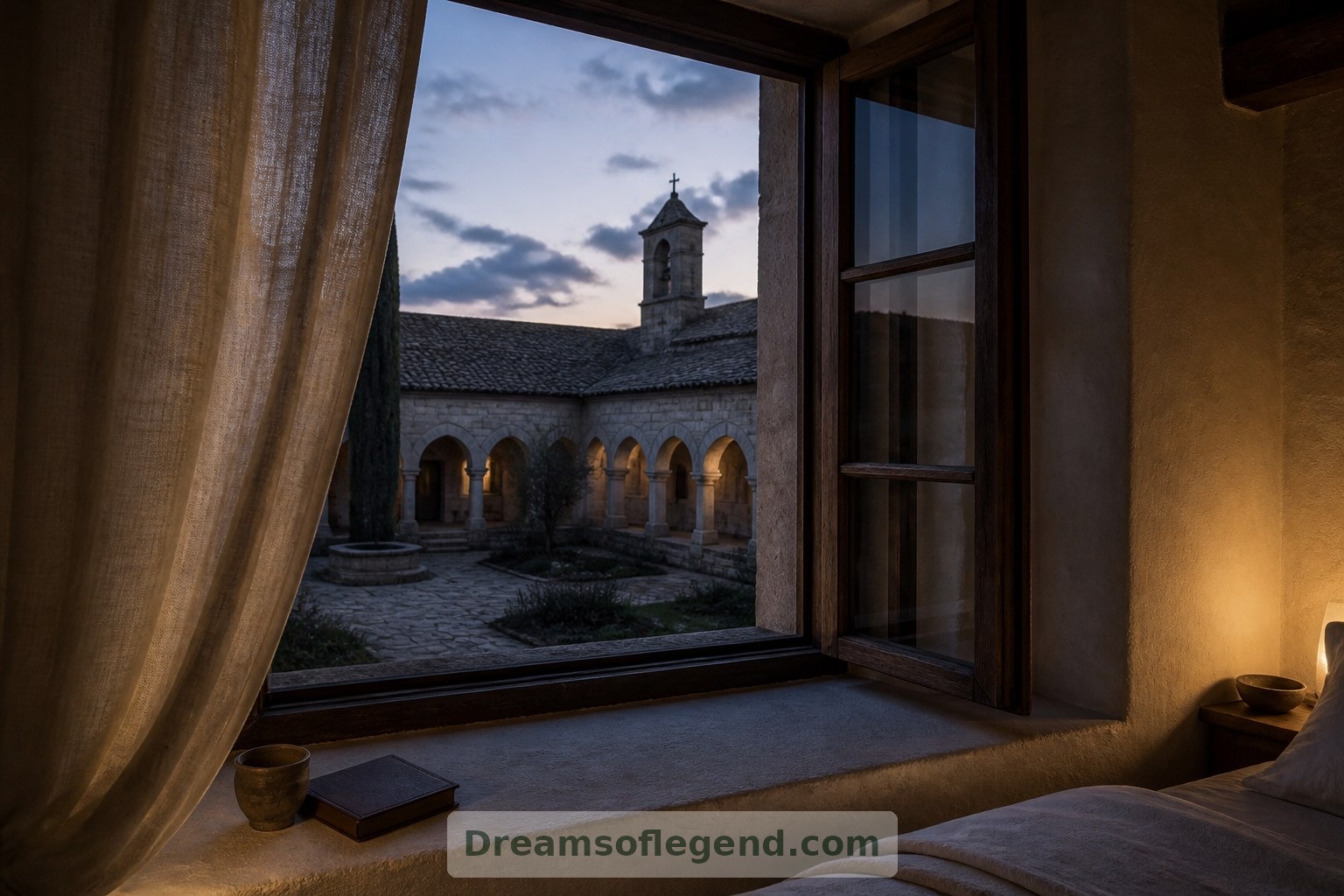
The dream of a monastery hotel is ultimately a dream of attention: to light, materials, silence and the landscape beyond a wall. Bring that sensibility home through fewer distractions, comfortable places to pause and rooms that leave something beautifully unfilled.
How does this inspire you?
Choose one reaction. Click it again to remove it. Your choice is saved with a browser cookie.
Loading reactions…