Floating Homes: Life on the Water, from Urban Canals to Quiet Lakes
From canal-side living rooms to lake-facing bedrooms, floating homes offer a different relationship with light, landscape and daily life. Explore the design details that make living on water both enchanting and practical.
Dreams of Legend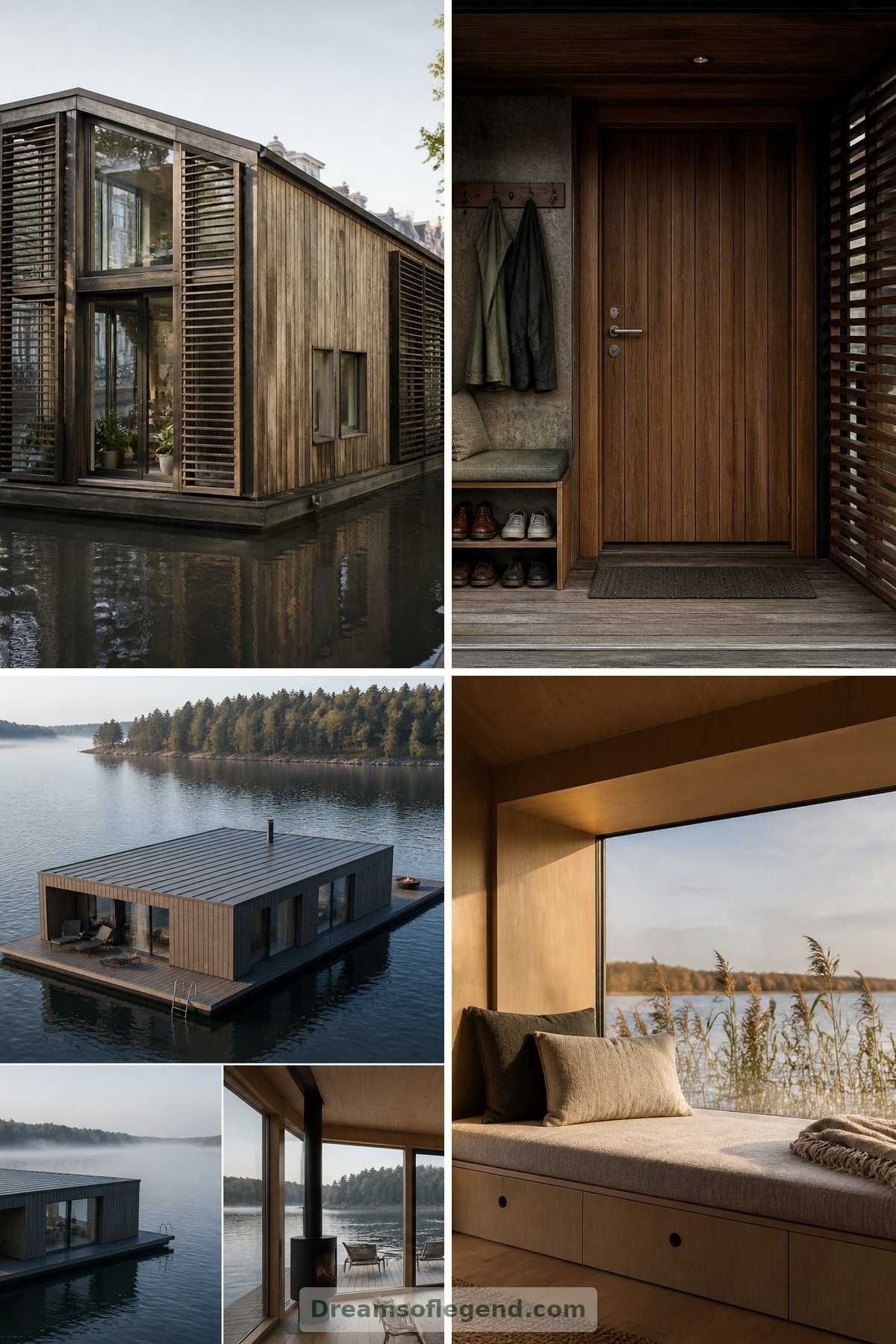
Imagine opening the curtains to reflections moving across the ceiling, then carrying your morning coffee outside to watch the water wake. Floating homes invite this intimate relationship with their surroundings. Unlike cruising houseboats, many are designed primarily to remain moored. The spaces explored below are imagined design possibilities, not specific properties or destinations; all accompanying images are conceptual architectural visualizations.
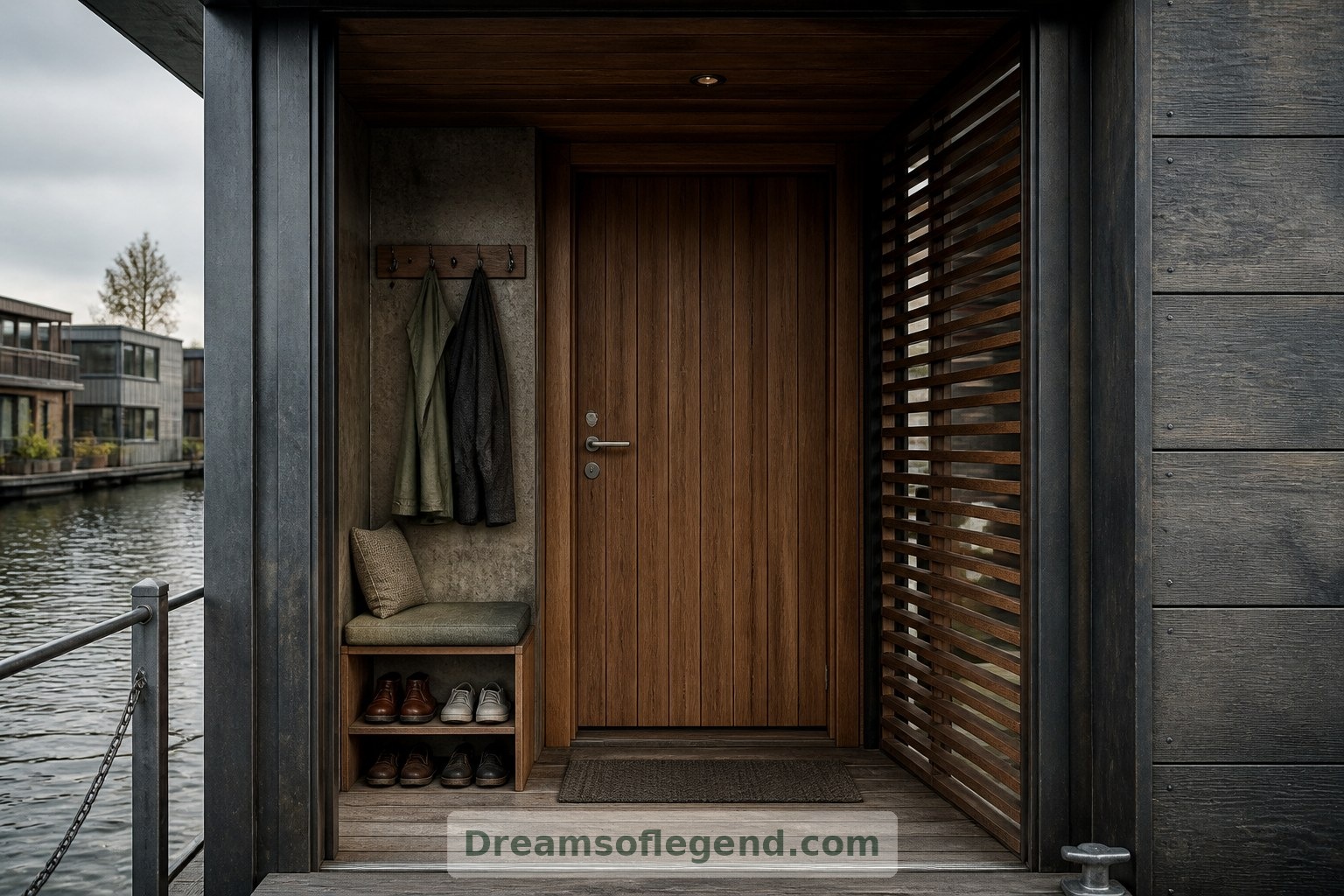
At Home on an Urban Canal
In a city, a floating home can feel both connected and gently removed. Picture a narrow timber-clad dwelling beside a pedestrian quay, with tall windows framing passing bicycles rather than traffic. Slatted screens offer privacy without shutting out daylight. At the entrance, a sheltered threshold provides somewhere for wet coats and muddy shoes: small details that help waterside living feel comfortably ordinary.
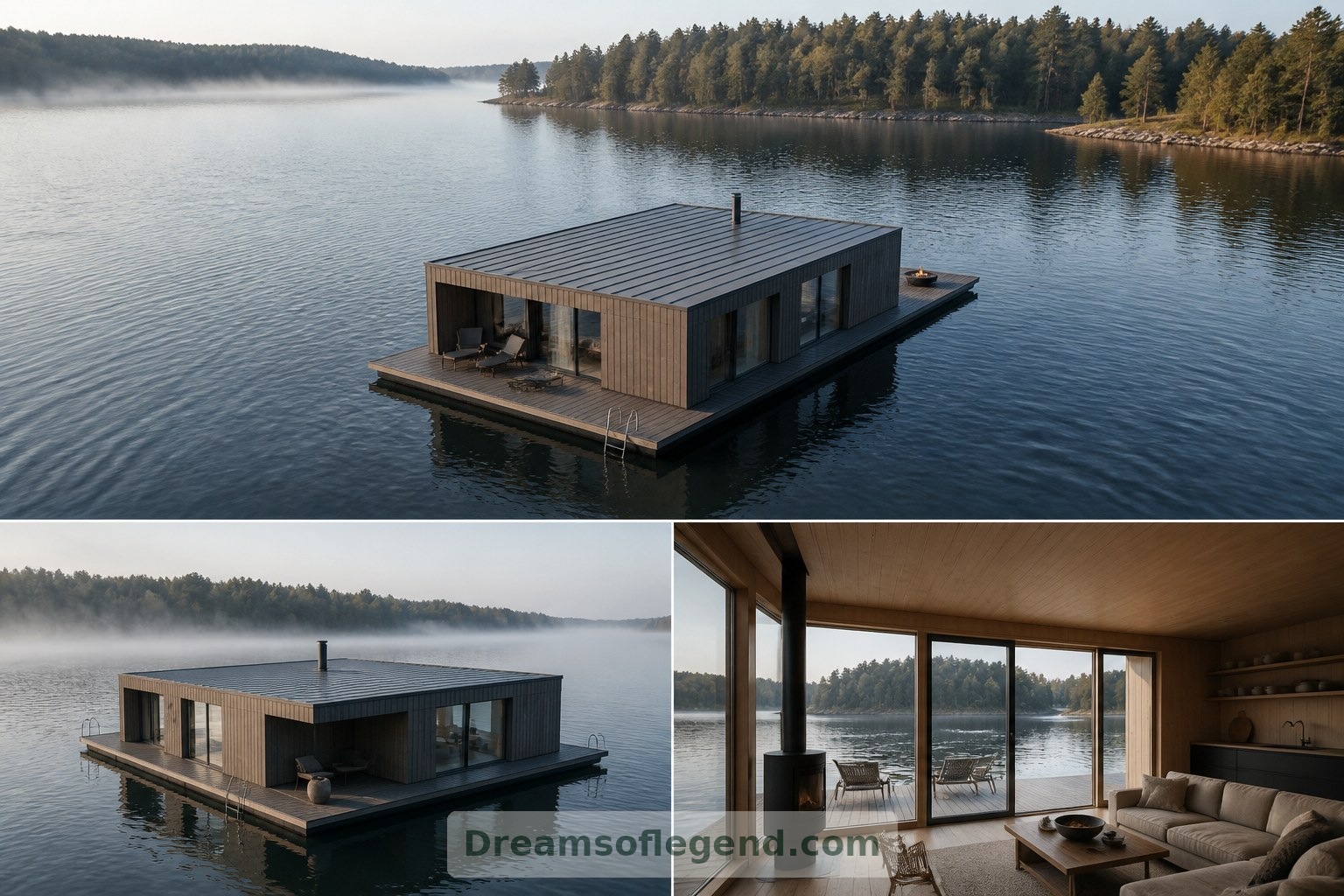
A Quieter Rhythm on the Lake
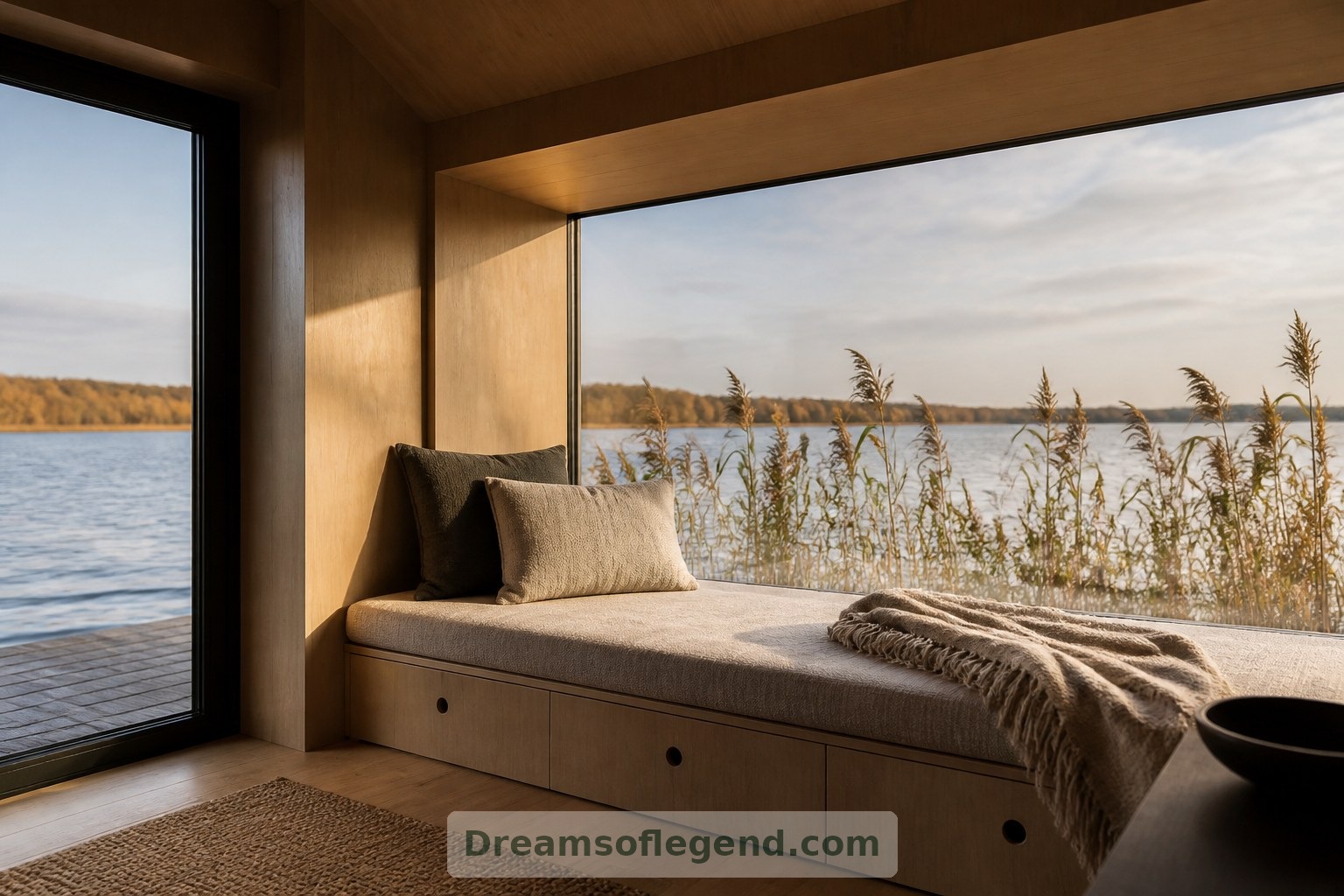
A lake setting suggests a different architectural language: a lower silhouette, muted finishes and windows placed to hold long views. In an imagined retreat, a deep window seat might become the most treasured room of all. Yet the dream depends on local conditions. Wind, waves, seasonal water levels and shoreline protections should shape any real proposal, alongside the question of whether residential mooring is permitted.
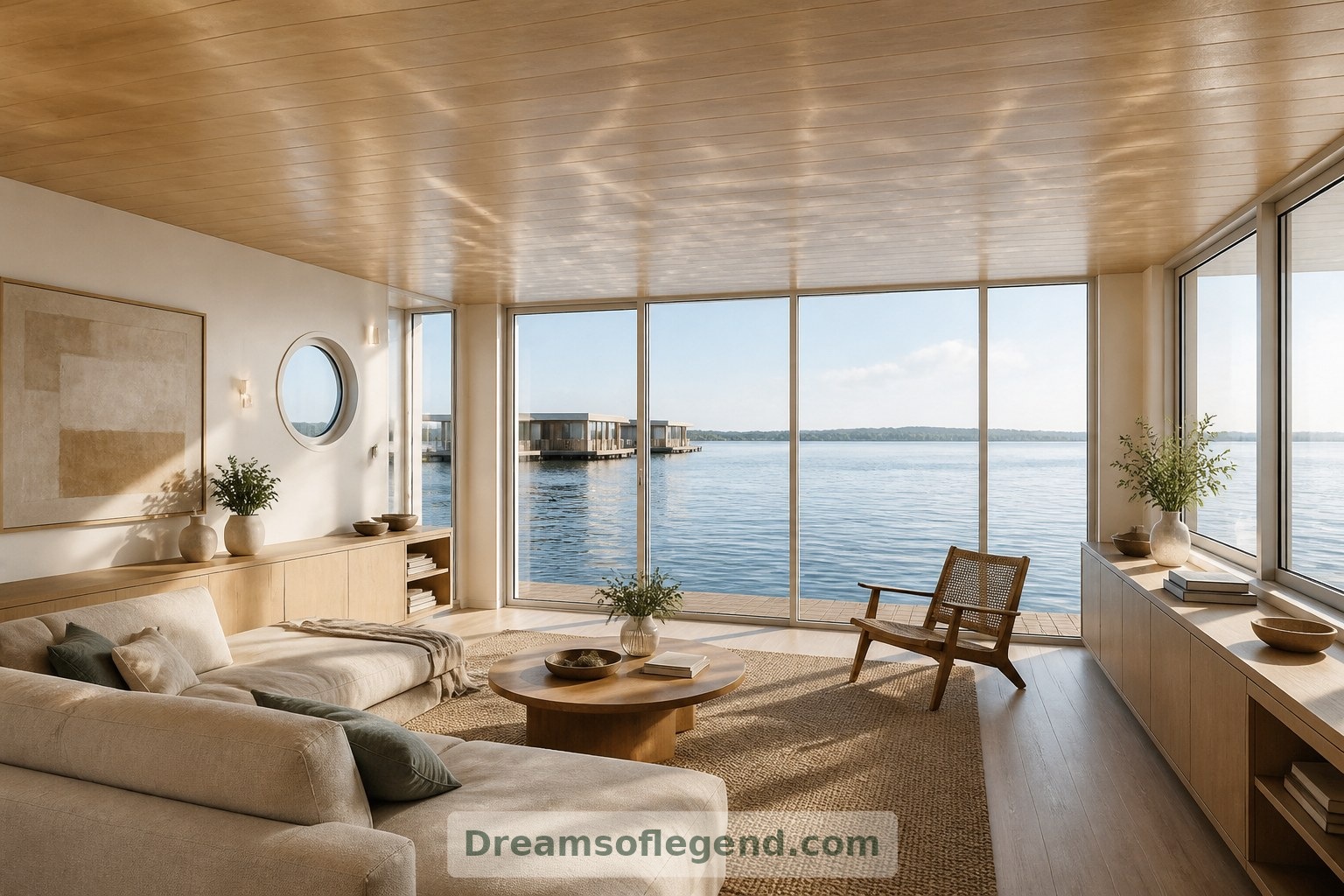
Living Spaces That Borrow the View
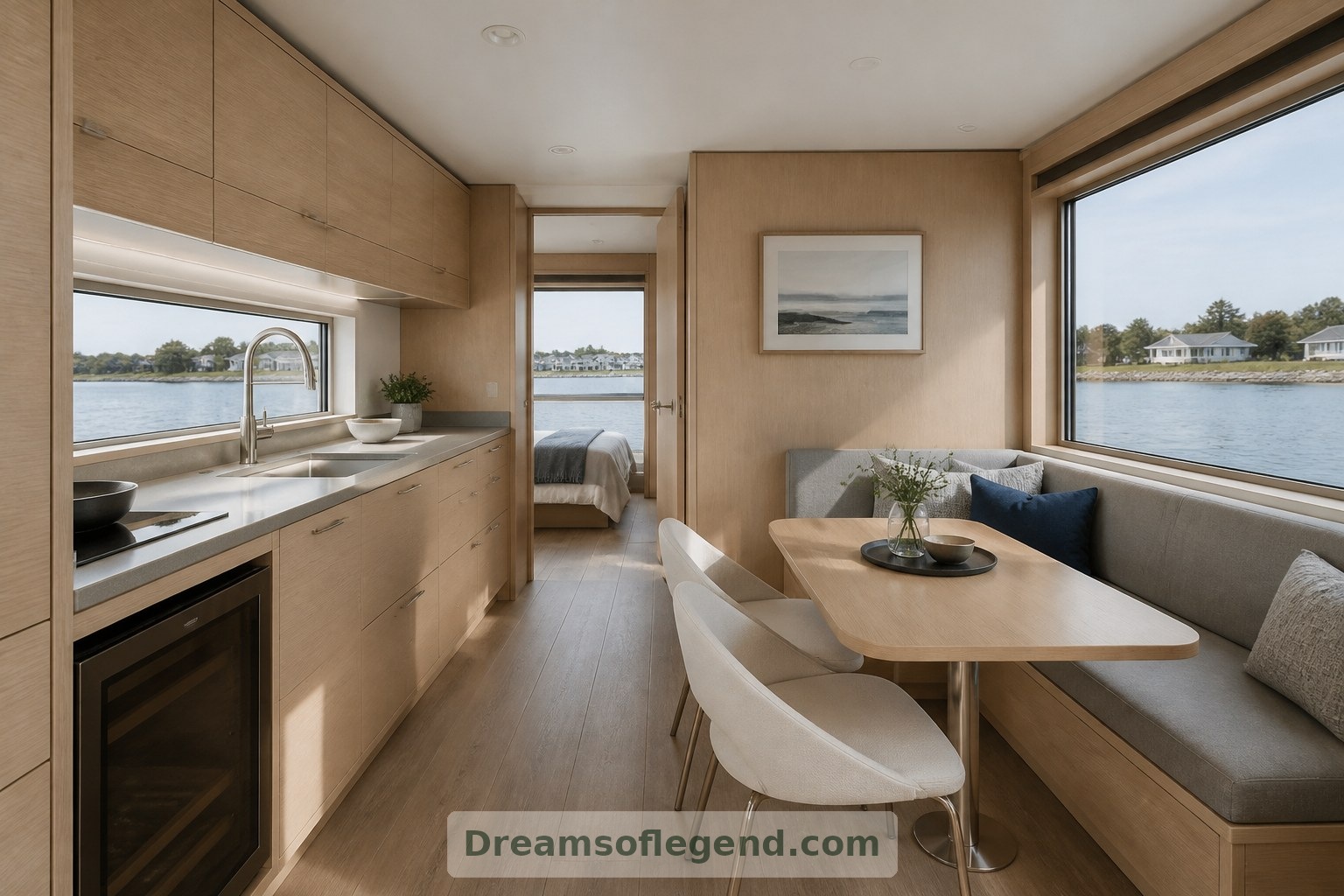
Inside, generous sightlines can make a modest footprint feel expansive. A continuous ceiling and restrained palette of pale timber, warm white and soft grey let reflected light become part of the decoration. Keep bulky storage away from the glazing. In the kitchen, fitted cabinetry and secure catches are practical choices, while a compact dining bench leaves circulation clear without sacrificing convivial meals.
Private Rooms, Gentle Light
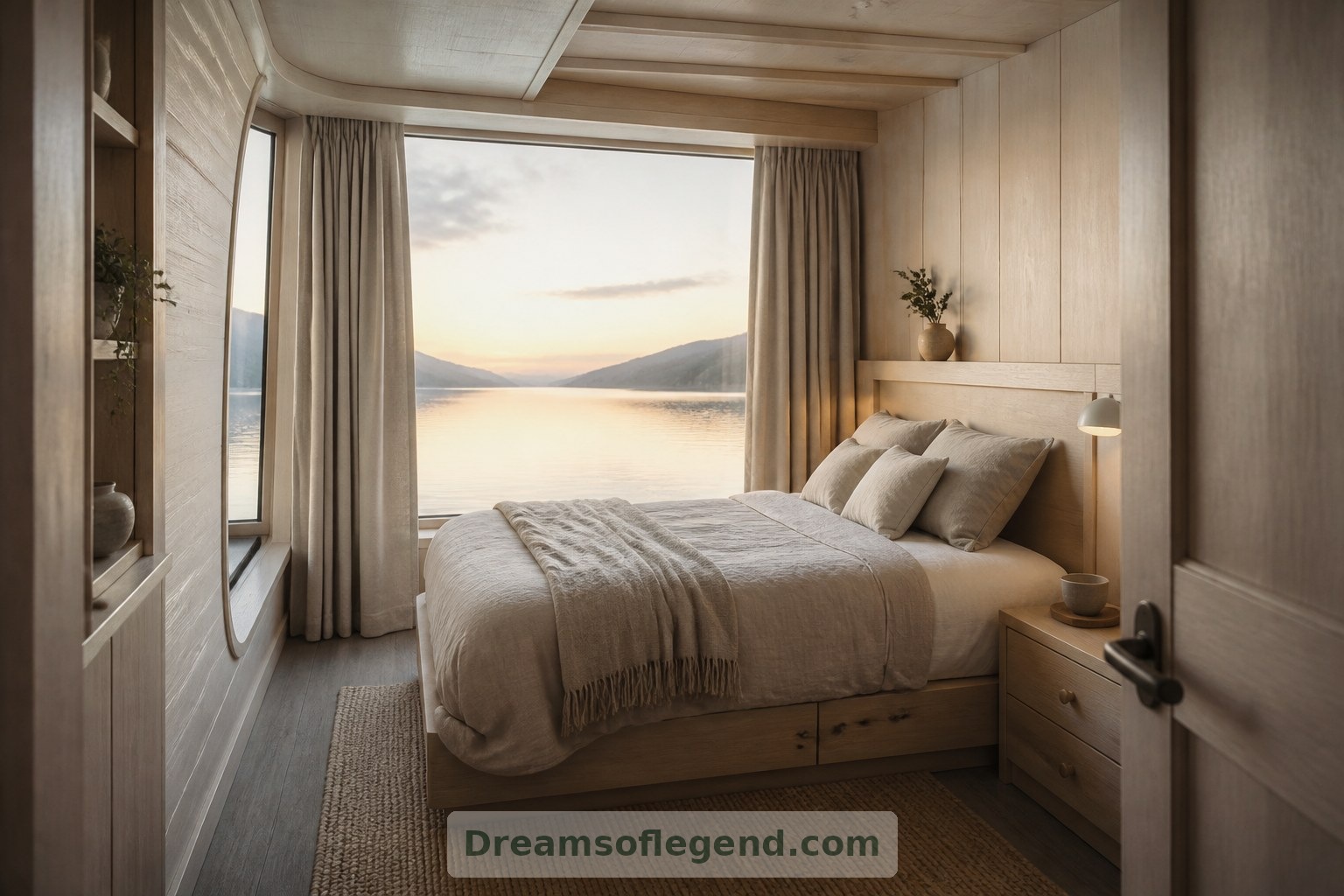
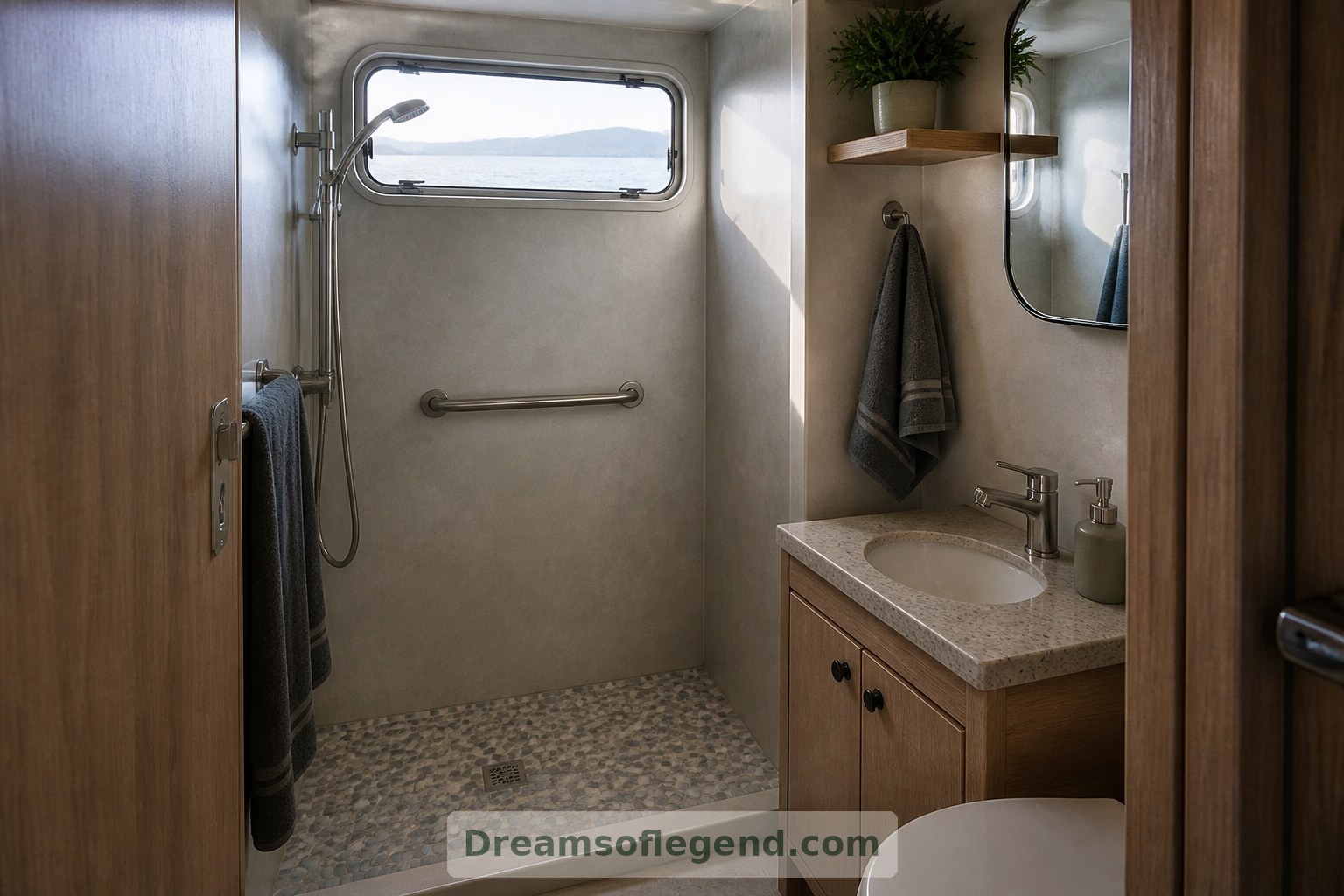
Bedrooms benefit from a more sheltered mood. Positioning the bed beside, rather than directly against, a broad window preserves the outlook while leaving room for curtains and bedside storage. Bathrooms call for particular care: effective ventilation, moisture-tolerant finishes and accessible plumbing matter more than theatrical fittings. A textured floor and a carefully placed grab rail can make a beautiful shower feel reassuringly usable.
The Practical Architecture Beneath the Dream
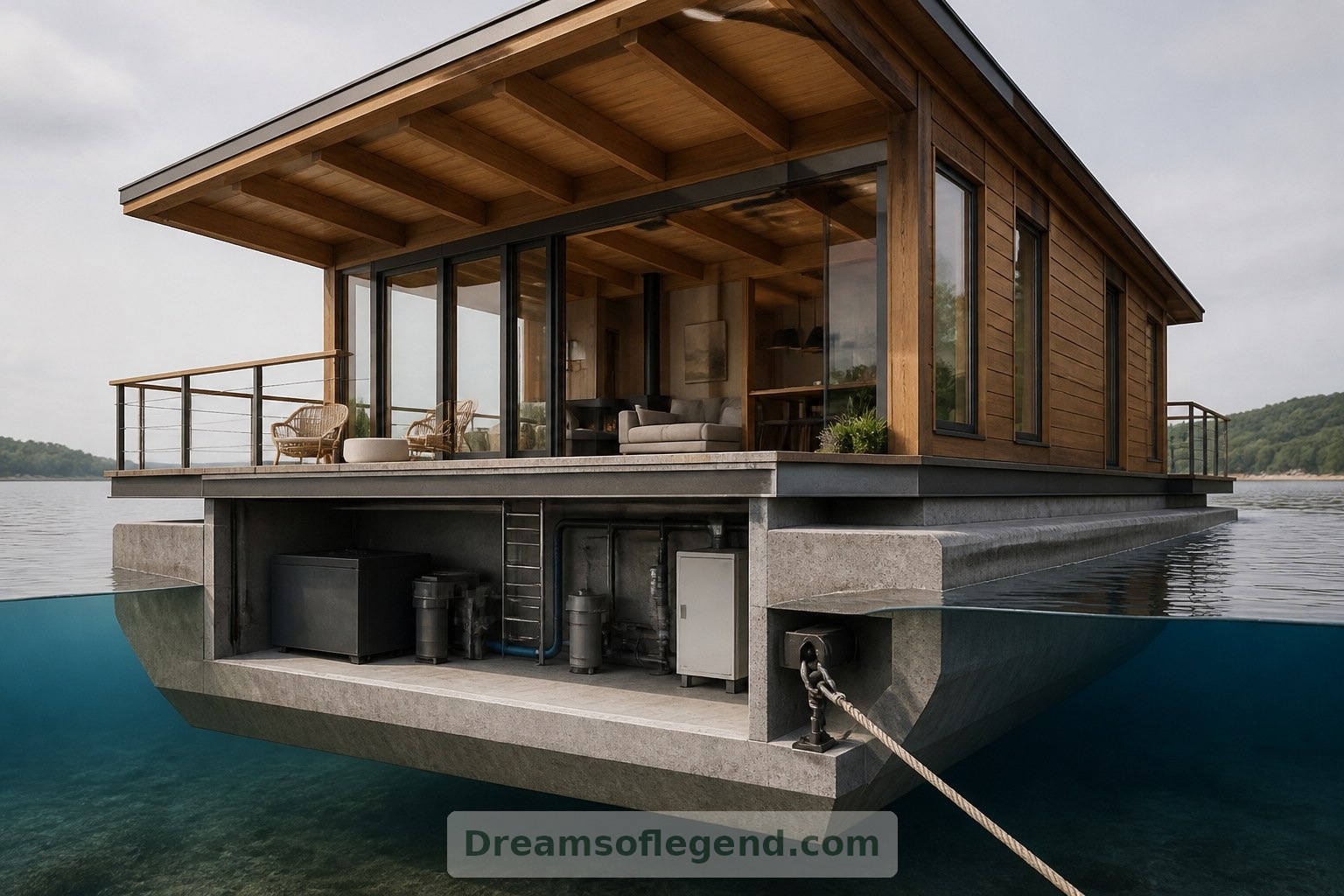
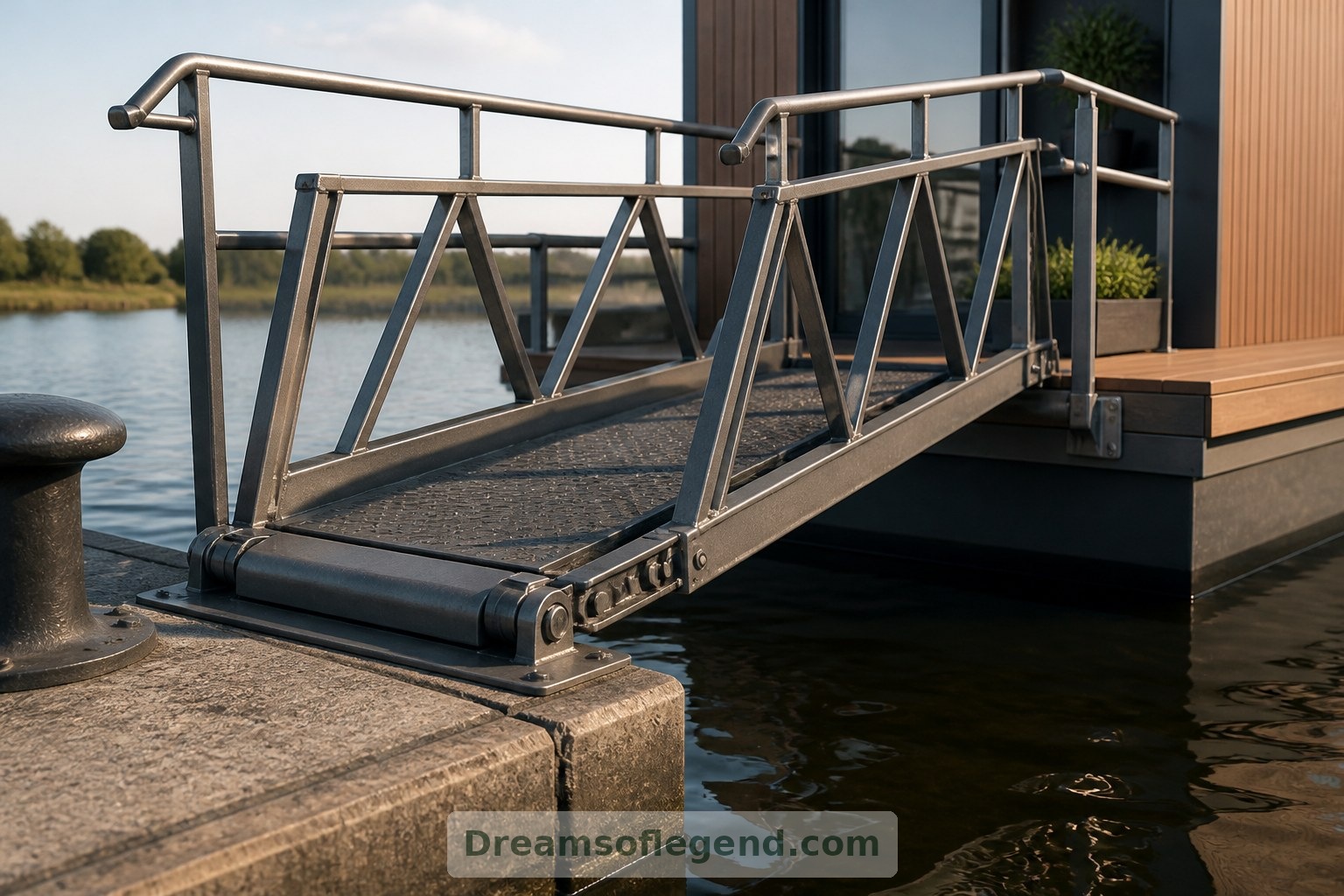
A floating home is a building supported by a buoyant structure, with anchoring or mooring arrangements suited to its site. Stability, loading, utility connections and safe access require specialist design. An access gangway must accommodate changing levels, although accessibility depends on its gradient and detailing. Before choosing finishes, investigate permissions, insurance, wastewater arrangements and maintenance access. These essentials deserve as much attention as the view.
Making Room for Outdoor Life
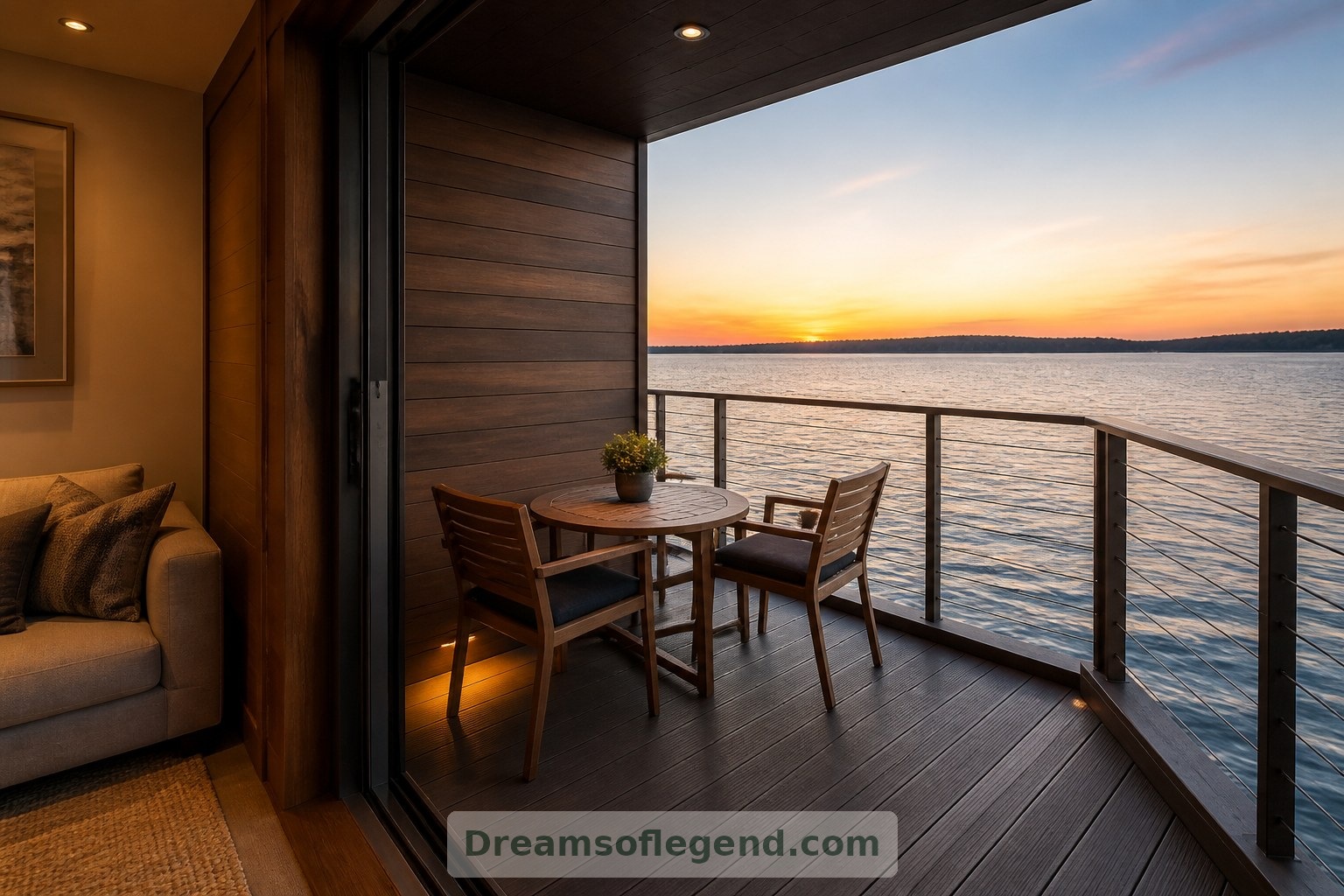
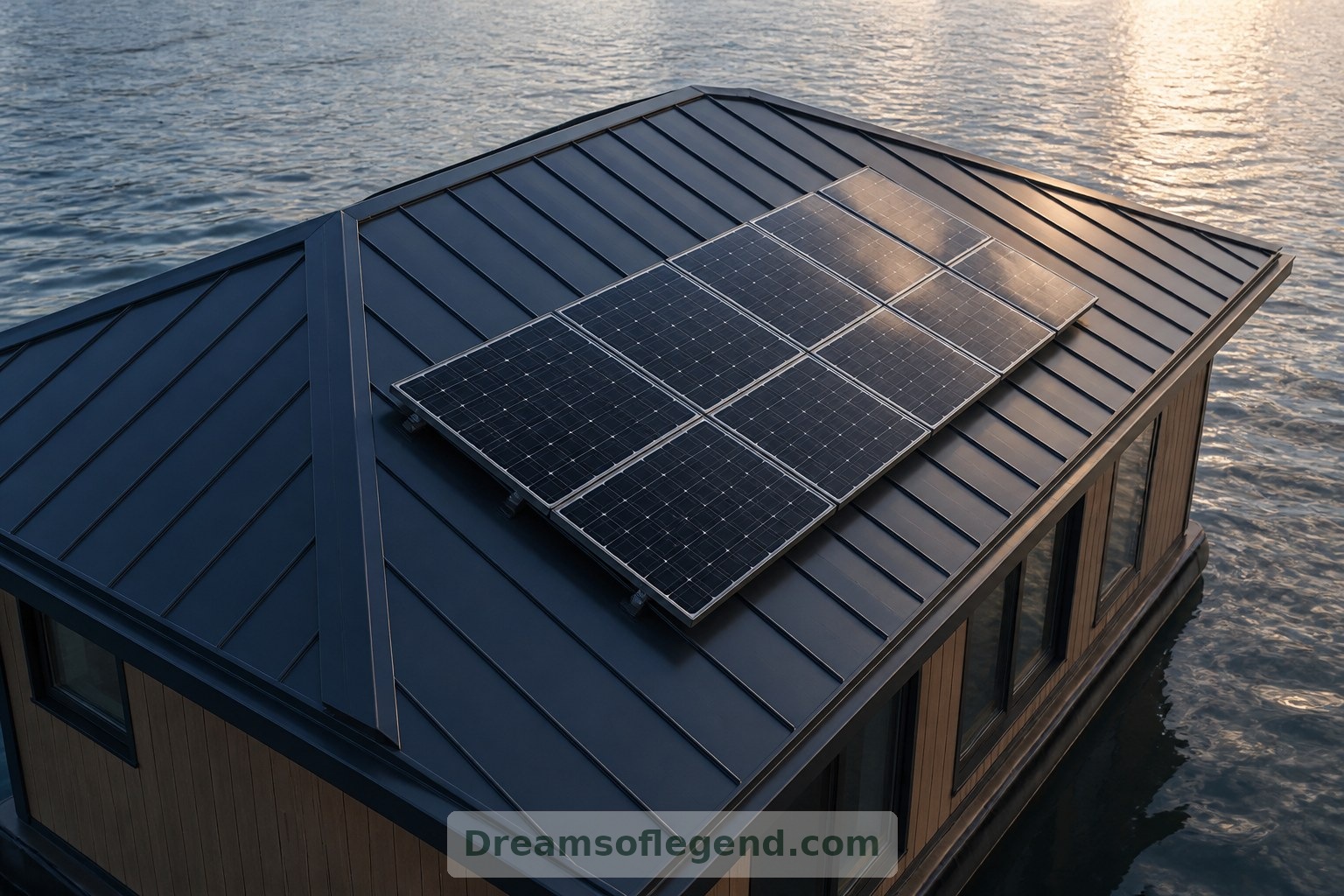
A modest deck can extend everyday living without turning the entire perimeter into exposed circulation. Imagine a recessed terrace with wind shelter, slip-resistant boards and an unobstructed route indoors. Roof-mounted solar panels may be worth exploring where orientation, loading and local rules allow. Low-glare exterior lighting helps preserve the evening atmosphere; ecological effects and discharge requirements should be assessed for the particular waterway.
The loveliest floating home is not simply a conventional house placed on water. It responds to movement, weather, neighbours and habitat. With thoughtful planning, the dream becomes less about spectacle and more about an everyday pleasure: feeling closely, comfortably connected to the world outside.